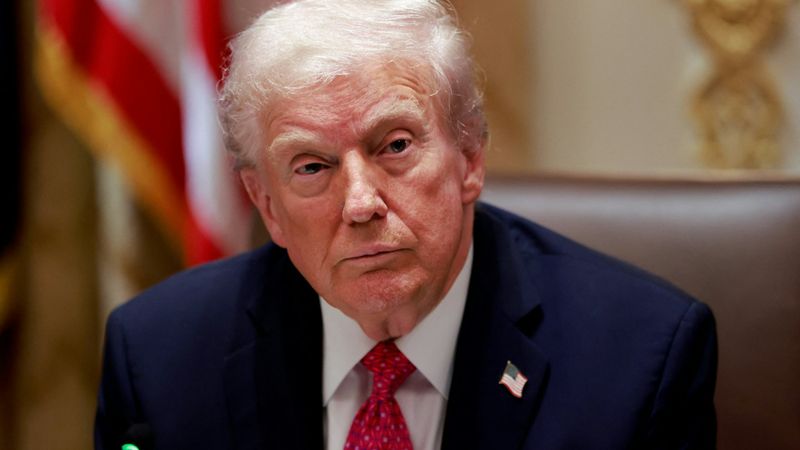
Trump Claims Price Pressure Has Eased, Inflation Issues "Near Resolution"
Recently, President Trump made a statement at the White House indicating that inflation levels in the country have significantly decreased, with prices returning to a normal trajectory. He believes that the current economic environment shows that inflation is in a declining phase, and measures taken by the government have been effective. He emphasized, "Prices are falling, we've brought prices back to normal, and they may continue to slightly decrease in the future."
Trump specifically pointed out that although inflationary pressures have weakened, deflation is not a risk for the U.S. economy. He stressed the importance of carefully balancing policy strength to prevent excessive slowing of demand that might lead to widespread price declines.
Attributing High Inflation to Previous Administration, Emphasizing Policy Continuity
During his speech, Trump once again criticized the Biden administration, claiming the team faced a "high inflation situation inherited" when they took office. He emphasized that the current administration had to respond quickly in a complex economic environment, and the improvement in prices today indicates that the policy direction is correct.
Trump stated that numerous factors have contributed to price increases over the past few years, including supply chain constraints, energy cost fluctuations, and global economic shocks. The new administration is working to restore supply capacity and market balance through more robust economic strategies.
Analysts noted that Trump's statements serve both as a defense of his economic policies and aim to strengthen public confidence in the government's economic management capabilities.
Cautious Optimism in the Market Regarding Inflation Outlook
While Trump expressed optimism, the market remains somewhat cautious. Recent economic data shows that prices for some goods and services in the U.S. have indeed fallen, especially as raw material and transportation costs have declined, easing pricing pressures on businesses.
However, prices in some areas remain high, particularly in housing, medical services, and some food categories. Economists point out that a complete retreat of inflation requires more data validation, and consumers' actual spending experiences still show discrepancies.
Meanwhile, businesses' outlooks on demand differ, leading to structural divergence in current price trends.
Deflation Concerns Dismissed, but Economic Balance Still Needs Observation
Regarding external discussions about deflation, Trump clearly dismissed such a risk. He pointed out that the fundamentals of the U.S. economy remain strong, the job market is resilient, and overall demand has not significantly contracted. He stated, "You wouldn't want to enter a deflationary phase, as that's dangerous for the economy."
Economists generally agree that the current U.S. economy does not yet have conditions for deflation, and consumer and investment activities still hold certain strength. However, they also caution that if prices remain weak and business profits come under pressure, deflation risks may need to be watched over the medium to long term.
They believe that maintaining policy flexibility and moderate stimulus will help avoid the economy falling into a full-scale price decline dilemma.
The Future Path of Inflation Still Depends on Policy and Global Environment
Looking ahead, the inflation trend will be influenced by multiple factors, including the pace of policy adjustments, supply chain conditions, and changes in international energy prices. Some analyses suggest that if global demand continues to be weak, U.S. prices might continue the downward trend; however, if labor costs continue to rise or geopolitical disturbances intensify, inflation might rebound.
Trump stressed that his administration will continue to monitor the economic operating conditions, ensuring that inflation remains within a controllable range while avoiding negative effects from overly tightened policies. Overall, while the U.S. inflation environment has improved, the future path remains uncertain.