

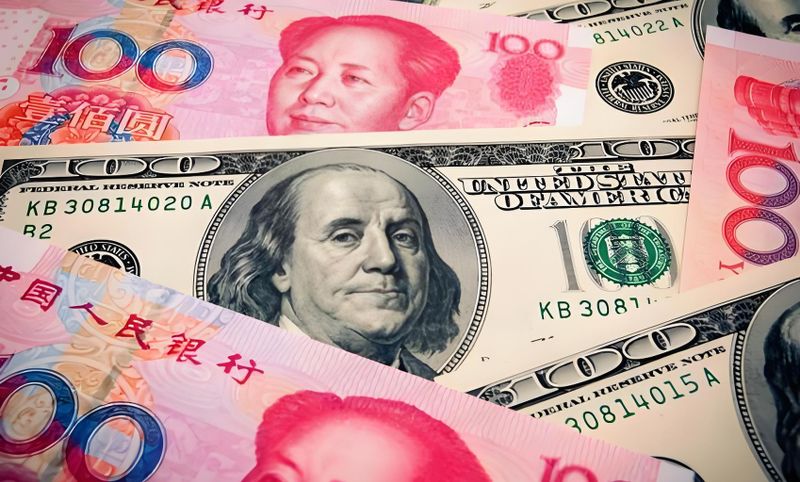
Renminbi Exchange Rate Against the Dollar Reaches Highest Level Since September 2024
According to data from the China Foreign Exchange Trade System, the central parity rate of the renminbi against the US dollar was raised by 49 basis points today, reporting at 7.0523. This adjustment has appreciated the renminbi to its highest level since September 30, 2024. Market expectations for renminbi appreciation have been supported, especially in the context of the global economy and international monetary policy, attracting significant attention.
The increase in the renminbi's central parity rate against the dollar indicates some resilience and attractiveness in the Chinese economy, driven by policies aimed at stable growth. It is generally believed that the renminbi's appreciation reflects not only the momentum of China's economic recovery but may also be influenced by a weakening dollar. As global economic uncertainties increase, the dollar's weakness may partly support the renminbi.
Warmer Market Sentiment and Continued Prospects for Renminbi Appreciation
The appreciation of the renminbi against the dollar is not merely a fluctuation in data but also reflects a warming market sentiment. With the Chinese government's proactive measures for economic growth and financial market stability, investor confidence in the renminbi is gradually recovering. Previously, China's economy began a gradual recovery post-pandemic, with the state introducing several policies to promote stable economic growth, further enhancing the expectation of renminbi appreciation.
Analysts believe that the trend of renminbi appreciation may continue in the short term, especially as the dollar's relative weakness globally might provide more room for the renminbi to rise. Recent adjustments in the US Federal Reserve's monetary policy have also put pressure on the dollar's performance, indirectly supporting the renminbi's appreciation.
Impact of the International Economic Environment
The renminbi's appreciation is also influenced by changes in the international economic environment. Globally, especially in Europe and America, economic challenges remain substantial, with many countries adopting looser monetary policies, leading to a weakening of the dollar and other major currencies. Against this backdrop, the renminbi, as the currency of the world's second-largest economy, is attracting more attention.
The Chinese government's recent announcement of a series of economic reforms has further strengthened foreign investors' confidence in the Chinese market, also contributing to the stronger exchange rate of the renminbi. Investors maintain an optimistic attitude towards China's economic prospects, believing the renminbi is likely to continue strengthening in the near future.
Impact of Renminbi Appreciation on the Market
The impact of renminbi appreciation on domestic and international markets is quite complex. Firstly, renminbi appreciation helps lower import costs, which is a positive signal for Chinese consumers and businesses. As the renminbi appreciates, the prices of imported goods may decrease, aiding in relieving inflationary pressures and enhancing purchasing power.
However, renminbi appreciation may also exert certain pressures on China's exports. A stronger renminbi may render Chinese export products relatively more expensive in the international market, potentially challenging the competitiveness of export enterprises. Particularly against the backdrop of slowed global economic growth, renminbi appreciation could intensify pressures on these businesses.
Looking Ahead
Looking ahead, the exchange rate trend of the renminbi against the US dollar remains uncertain. Although the current appreciation trend of the renminbi is relatively clear, global economic uncertainties remain a crucial factor. Changes in US monetary policy, the extent of China's economic recovery, and shifts in global political and economic conditions could all impact the renminbi exchange rate.
Overall, the renminbi-dollar exchange rate may continue to experience upward fluctuations in the short term, especially against a weaker dollar. However, changes in market sentiment, fluctuations in the international economic landscape, and the direction of Chinese government policy could introduce new variables for the future trajectory of the renminbi's exchange rate.

