
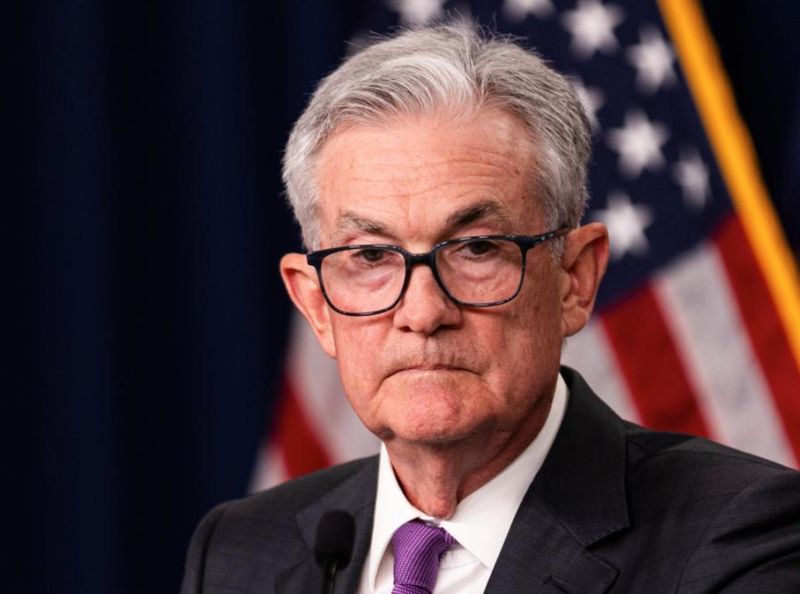
Powell's Speech Raises Concerns of Policy Shift
At the Jackson Hole annual meeting, Federal Reserve Chairman Powell unexpectedly released a strong dovish signal, becoming the major focus of the conference. Unlike the cautious tone after July's FOMC, his growing concern over the labor market was evident, even using the rare expression "sharp deterioration," which quickly led the market to bet on a series of interest rate cuts within the year. This abrupt change in attitude made investors question not only the true trend of economic data but also whether political factors are exerting a new influence on monetary policy.
Employment Risk Replaces Inflation Pressure
In his speech, Powell defined the labor market as "weak in both supply and demand" and bluntly stated that the downside risks to employment could quickly materialize. This indicates that the Federal Reserve's vigilance against worsening employment has surpassed concerns about inflation. Market analysts point out that this stance adjustment may not entirely stem from the latest data but could be closely related to policy pressure from the White House. In other words, the independence of the Federal Reserve is once again under scrutiny.
Policy Framework Returns to Flexible Mode
Powell also proposed a revision to the monetary policy framework, reemphasizing the "dual balance" of inflation and employment. The "average inflation targeting" introduced in 2020 has been softened, and the Federal Reserve has returned to a more ambiguous and flexible goal setting. This means that future policy fluctuations might be more pronounced, the intervals between rate cuts and hikes shortened, and the forward guidance of monetary policy weakened, with a greater reliance on data. The market generally views this as a policy stance akin to a "magnified version of the Fed put."
Rate Cut Path and Market Response
Under the new policy framework, the threshold for not cutting rates at the September meeting has been significantly raised. If the non-farm payroll data does not show a notable improvement, the Federal Reserve may opt for a one-time "compensatory rate cut" of 50 basis points. Meanwhile, the market has increased its expectations for the rate cut magnitude within the year to 75 basis points. The dollar's movement has become more complex: although rate cuts usually pressure the dollar, if the market believes that easier policies may help support the economy, the attractiveness of U.S. assets might actually increase.
Long-end Rates and Bond Market Challenges
The performance of long-end U.S. Treasuries has become another major uncertainty. Even if rate cuts are implemented, deficits, credit, and liquidity risks may still push up term premiums, thus weakening the suppressive effect of rate cuts on long-term rates. Analysts warn that if long-end rates remain high, it will continue to constrain demand for real estate and manufacturing financing, increasing pressure on Trump before the midterm elections. To cope with this situation, the Federal Reserve may have to consider more aggressive measures, including stopping the reduction of its balance sheet or even implementing curve control.
The Interplay of Politics and Economics
In the current environment, monetary policy is no longer a purely economic issue. The shift in the tone of Powell's speech may very well be the result of the interplay between political forces and economic reality. The market must face not only the risks at the data level but also the long-term concerns arising from the weakening independence of the Federal Reserve. It is foreseeable that in the coming months, the direction of Federal Reserve policy will continue to influence global financial markets, with Powell's shift at Jackson Hole already laying a crucial groundwork for this round of rate-cutting cycle.

