

Sources indicate that China's major state-owned banks have been actively selling the US dollar and purchasing the Chinese yuan in both onshore and offshore spot foreign exchange markets this week, aiming to weaken the yuan's depreciation trend. Although state-owned banks often conduct transactions in their own names or carry out client orders, they tend to operate in the foreign exchange markets as per policy authorities' directives when the yuan faces upward or downward pressure.
On Thursday, two sources with direct knowledge of the matter stated that this week, the overseas branches of China's state-owned banks sold dollars and bought yuan during the London and New York trading hours. Such actions of selling dollars might limit the offshore yuan's fall and prevent the offshore yuan exchange rate from aligning with the onshore yuan exchange rate.
A Shanghai-based trader implied that the state-owned banks selling US dollars has become the new norm in slowing down the pace of the yuan's depreciation. The yuan's exchange rate against the US dollar has dropped by about 2.4% since the beginning of this month and by 6% since the start of the year.
The recent intensification of the yuan's depreciation is attributed to the widening interest rate differential between China and the US, investor concerns over China's slowing economic growth, and heightened fears of default risks among major real estate developers and financial institutions. This week, investors anticipate further interest rate cuts by the People's Bank of China, even if it might lead to further depreciation of the yuan, following an unexpected rate cut earlier this week, thus widening the interest rate differential between China and the US to the highest level in 16 years.
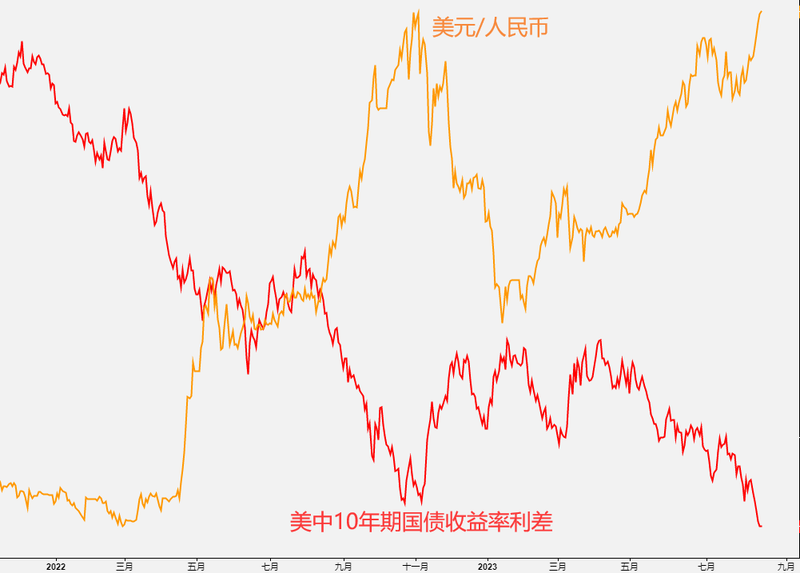
In recent weeks, despite efforts to slow the yuan's depreciation, including setting higher-than-expected daily midpoint rates and state-owned banks selling dollars to buy yuan, the People's Bank of China has not been able to stop the yuan's decline. Loose monetary policies aimed at boosting economic growth, weak economic growth prospects, and increased default risks among major real estate developers and financial institutions have led to significant capital inflow pressure and yuan depreciation.
The strategy of state-owned banks selling US dollars to buy yuan emerged in September 2022. At that time, the People's Bank of China asked state-owned banks to conduct such transactions in the offshore market to curb the yuan's depreciation.
In July this year, the People's Bank of China adjusted its policy, allowing enterprises to borrow more overseas. This enabled them to bring foreign exchange into the country and exchange it, thereby supporting the yuan's exchange rate. However, the rising cost of overseas borrowing due to interest rate hikes by central banks worldwide has weakened the impact of this policy on the yuan's exchange rate.
On Wednesday, the Hong Kong Interbank Offered Rate (CNH HIBOR) for the yuan increased across the board, with the overnight borrowing cost of the yuan jumping to its highest level since April 2022. Market traders had previously suggested that by reducing the scale of yuan loans in the Hong Kong offshore market, state-owned banks could tighten liquidity in Hong Kong, thereby limiting the yuan's depreciation.
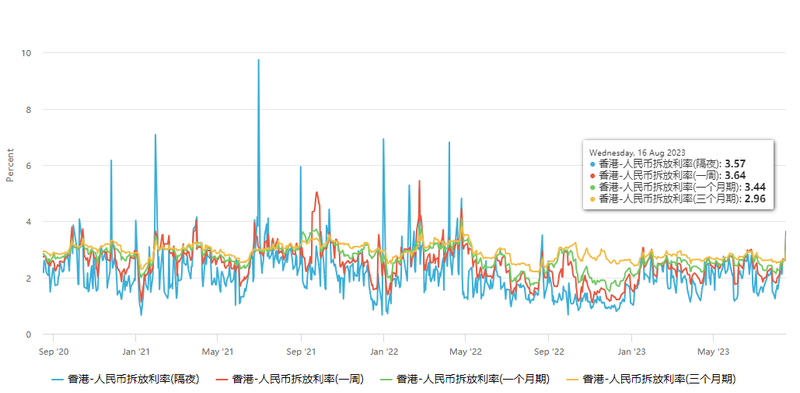
However, such actions could impact the bond market. An unnamed banker noted that there's no immediate risk of liquidity crunch in China's financial markets, but artificially inducing a liquidity crunch in Hong Kong's financial market could affect the bond market. Additionally, it is challenging to assess the negative impact on other financial assets due to liquidity tightness.