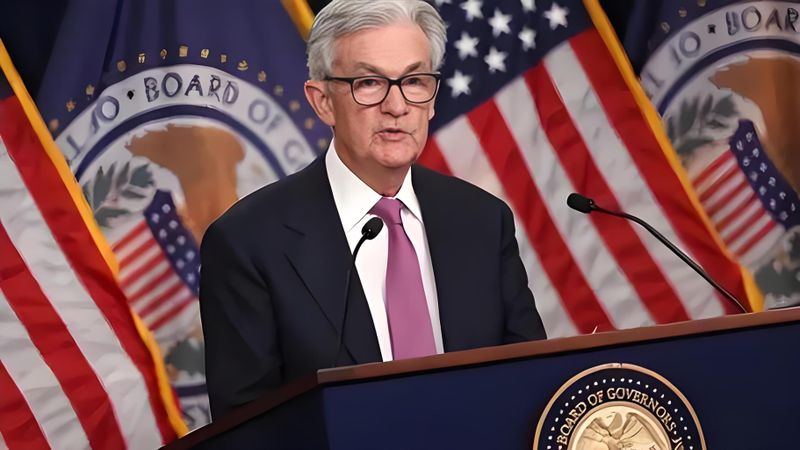
President Denies Dismissal Rumors, Yet Leaves More Uncertainty
Amidst a series of expanding controversies, U.S. President Trump publicly denied any immediate intention to replace Federal Reserve Chairman Powell. However, his remarks did not entirely assuage market concerns, as he emphasized that he "would not rule out any possibility" and stated that unless Powell committed fraud, dismissal would not be considered.
Despite denying a clear plan for a replacement at present, Trump's ambiguous stance and continued criticism of Powell cause people to question if he is setting the stage for future personnel changes. Sources from within the White House indicate that Trump has indeed discussed dismissal plans with some Congress members and received partial support, further raising concerns about the stability of Federal Reserve policies.
Fed Building Renovations Become a New "Target"
In addition to questioning interest rate cut policies, the Trump administration recently focused its criticism on the spending related to the Federal Reserve's historical building renovation project. The project, initiated in 2017 for safety maintenance of the Fed headquarters and surrounding buildings, saw costs rise due to asbestos contamination and groundwater issues, being used by the presidential camp as grounds to criticize Powell for "mismanagement."
Nevertheless, whether these accusations constitute "just cause" remains legally questionable. Under current law, senior Fed officials cannot be dismissed due to policy disagreements unless there is clear misconduct. Outsiders generally believe that the building renovation cost issue does not constitute legitimate grounds for removal.
Wall Street and Market Stability Sentiment Is Strong
Although significant attention has been drawn to senior personnel disputes, financial markets have remained relatively calm. While U.S. stocks and the dollar saw a slight dip initially, they soon stabilized. Analysts point out that the market remains cautious about whether the President will indeed cross the "institutional red line."
Financial giants continue to call for the preservation of Federal Reserve independence. Goldman Sachs CEO Solomon and Bank of America CEO Moynihan both stated that the neutrality of central bank policy is crucial to national economic security, and even if the President has the authority to make changes, there should not be interference in daily decisions.
Especially in the current context of high inflation and fiscal deficits, the market is more inclined towards professional central bank policy direction, rather than arbitrary political cycles.
Succession Planning Initiated in Advance, Hassett’s Influence Rises
In an interview, Trump explicitly mentioned that he is considering his economic adviser Kevin Hassett as a replacement for Powell, highlighting that the President has begun planning for the post-Powell era. Treasury Secretary Besant also confirmed that the White House team is scouting for potential candidates and hopes to achieve a power transition after Powell's term ends next year.
However, if this personnel change is guided by “political loyalty,” it may lead to concerns about the Federal Reserve’s credibility. Experts warn that once the Fed is perceived as serving executive interests, foreign investment in dollar assets may decrease, and long-term interest rates could rise rapidly.
Legal and Institutional Boundaries Remain Key Checks
The Supreme Court recently ruled that the Fed Chairman can only be removed for "cause," establishing an institutional firewall for senior Fed officials. Without substantial evidence of illegal or improper conduct, an abrupt dismissal might face legal challenges.
Therefore, even though Trump's intentions are clear, the actual risks of implementation remain limited. Powell himself has also stated that he would take legal action if unlawfully removed, indicating a firm stance.
Overall, this controversy, while not causing market panic, undoubtedly adds layers of complexity to the upcoming change in Fed leadership and intensifies market focus on the long-term direction of monetary policy.