

Argentine Government Maintains Exchange Rate Control to Stabilize Market Expectations
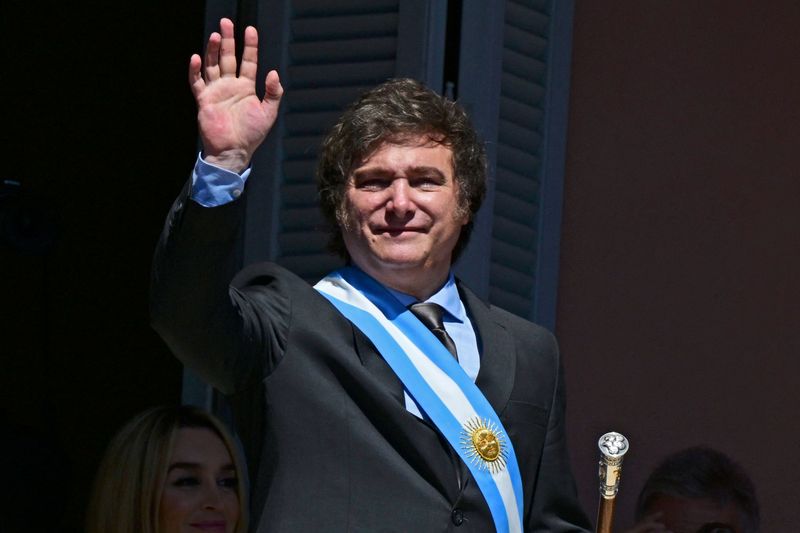
Following the victory in the midterm elections, Argentine President Javier Milei publicly expressed his decision to reject advice from investment institutions and some economists—he will not let the peso float freely. He emphasized that the current "crawling peg" exchange rate system remains a key tool for ensuring macroeconomic stability, with plans to maintain it at least until the end of his term in 2027.
In an interview, Milei stated that maintaining range management helps reduce inflation expectations, smooth market volatility, and provide a predictable exchange rate environment for businesses and families. He pointed out that the peso's trajectory should reflect economic fundamentals rather than the impact of short-term capital flows. "We seek sustainable stability, not short-lived prosperity," Milei stressed.
Government Strives to Balance Stability and Reform
The exchange rate mechanism currently implemented in Argentina allows the peso to adjust gradually against the dollar within a preset range, expanding by about 1% each month, forming a controlled "crawling" depreciation path. Milei believes this method can prevent a sharp currency plunge from triggering an inflation surge, while maintaining export competitiveness and allowing time for policy-making.
He also dismissed external criticism that the peso is "overvalued," stating that the exchange rate level is determined through comprehensive evaluation and aligns with Argentina's current needs for external balance and financial stability. Milei emphasized that the government will continue to promote market-oriented reforms but will not take "unnecessary risks" in the exchange rate domain.
Investment Community Worried About Slowed Reform Pace
Milei's statement disappointed some international investment institutions. Previously, several foreign banks suggested that Argentina should use post-election political capital to relax foreign exchange controls in order to rebuild foreign reserves and attract capital inflows. Analysts believe Milei's cautious stance indicates Argentina might continue its "gradual reform" approach rather than adopting radical monetary liberalization measures.
Financial experts note that maintaining the exchange rate range in the short term indeed helps stabilize the market, but in the long term, it may curb foreign exchange inflows, weaken investment signals, and delay the opening of capital accounts. However, they also acknowledge that in the context of high inflation and limited reserves, fully liberalizing the exchange rate could bring more severe volatility risks.
Peso Stability is Key to Curbing Inflation
Argentina is struggling to tackle high double-digit inflation rates. The Milei government believes that prematurely implementing free float could further increase import costs due to currency devaluation, thus affecting consumption and investment. Maintaining "controlled devaluation" helps gradually relieve market pressure and creates a buffer space for fiscal rectification and industrial reform.
Analysts claim the government's goal is to gradually restore market confidence through dual strategies of stabilizing exchange rates and prices. As economic data stabilize and trade surpluses improve, the volatility of the peso has significantly decreased since the beginning of the year.
Stable Yet Dynamic, Reforms Continue
Despite refusing free float, Milei has stated he will continue to push for the modernization of the financial system and deepen economic cooperation with the United States. He plans to introduce more market-oriented mechanisms in areas such as capital project management, fiscal discipline, and foreign debt restructuring to mitigate external vulnerabilities.
Economic observers believe Argentina's move is not a reversal of reform directions but a policy decision prioritizing stability. In the future, if inflation continues to decline and foreign reserves recover, the peso exchange rate range may further expand, forming a "gradual relaxation" reform path.
Overall, Milei's choice of exchange rate policy reflects a pragmatic approach: maintaining monetary policy independence while gradually enhancing market trust, laying the foundation for Argentina's economy to seek long-term balance amid turbulence.

