Ueda: Policy Rates Still Far from Tightening Range
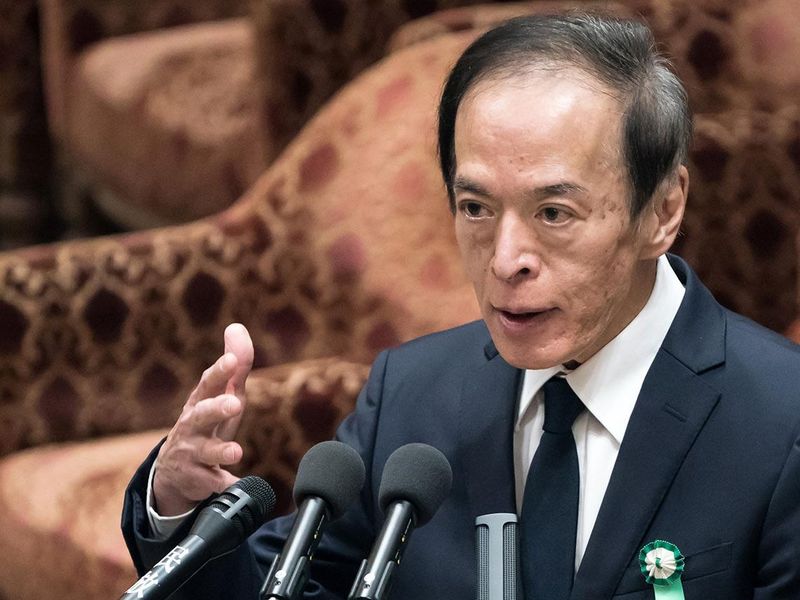
The Governor of the Bank of Japan, Kazuo Ueda, recently stated in a parliamentary session that Japan's benchmark rates remain at a significantly accommodative level, far from the range that might have a restrictive impact. He emphasized that it is still challenging to pinpoint the "neutral rate" for the Japanese economy in this cycle. The neutral rate is influenced by factors such as potential growth rate and capital costs and will adjust dynamically due to changes in economic structure, making precise judgment difficult.
Economists generally believe that Japan is exploring policy normalization after years, but its rate path will be slower and more cautious compared to Western economies. Ueda's comments further affirm that the Bank of Japan is inclined to maintain a low-interest-rate environment for some time.
The Terminal Rate Remains Unclear, Policy Path Dependent on Economic and Price Performance
The Endpoint of the Rate Cycle Depends on Inflation and Wage Trends
Facing frequent inquiries about future interest rate levels, Ueda said it is currently impossible to judge the endpoint of the ongoing rate hike cycle. He noted that Japan's long-term inflation expectations are still forming, and factors such as sustainable corporate wage growth, demand recovery strength, and the global economic environment will affect the ultimate rate level.
Market analysts point out that the Bank of Japan has emphasized "data dependence" in recent years, indicating it will not rush into a substantial tightening phase before confirming sustained improvements in prices and wages. This suggests a high variability in the pace of future rate adjustments.
Government Stimulus May Support Economy, Short-Term Inflation Pressure Expected to Subside
Economic Measures to Boost Demand, Price Subsidies Stabilize Household Burden
Regarding economic policy, Ueda pointed out that Prime Minister Sanae Takaichi's newly announced stimulus package last month will provide some support for the economy. He stated that a policy mix of investment expansion, enhancing consumption capacity, and supporting corporate R&D is expected to aid the economy in maintaining moderate expansion.
Meanwhile, the government's price relief measures are expected to ease household cost burdens in the short term, leading to some decline in overall inflation rates. Analysts believe this policy might allow the Bank of Japan more time to observe, enabling it to more calmly assess whether monetary policy adjustments are necessary, rather than hastily raising rates to counter short-term inflation.
The Market Closely Watches the Next Steps of the Bank of Japan, Balance Between Rates and Inflation Key
Accommodative Stance Unchanged, but Market Awaits Clearer Policy Guidance
Although Ueda reiterated that current rates remain low and the policy tone stays accommodative, the market continues to pay close attention to the next steps of the Bank of Japan. As major global economies undergo monetary policy shifts, the stance of the Bank of Japan has become a significant variable in the forex and bond markets.
Investors note that if Japan's inflation remains high and wages continue to rise, the central bank might be compelled to gradually increase rates. However, if the economic recovery falls short of expectations, the bank might maintain the current low-rate framework to avoid harming the economy.
The Bank of Japan Remains in Policy Adjustment Observation Period
Overall, Ueda's latest statements indicate that the Bank of Japan will prioritize stability to avoid adding an additional burden to economic recovery. As government stimulus measures take effect and the inflation trajectory becomes clearer, the bank’s future policy adjustment space will further depend on domestic fundamentals and changes in the external macro environment.