
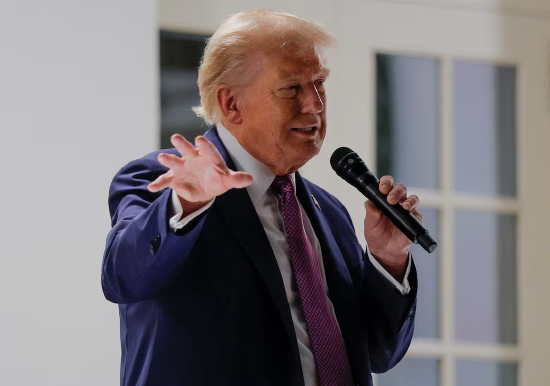
Trump's Remarks Spark Controversy Again
Recently, during a flight on Air Force One, President Trump stated that television networks overly critical of him might face license reviews or even revocation. This statement is widely seen as a direct challenge to freedom of the press and has garnered significant public attention. Trump accused several TV networks of persistently attacking him and his administration, openly remarking that "perhaps their licenses need to be revoked."
Media Freedom and the Legal Boundaries
The First Amendment of the U.S. Constitution clearly protects freedom of speech and the press, and previous administrations have typically avoided direct government intervention in media operations. Trump's statement breaks this traditional boundary, raising concerns that the government might use its power to suppress critical voices. Scholars and media observers note that even if the president intends to push for such actions, the Federal Communications Commission (FCC), as an independent agency, would find it difficult to revoke licenses for political reasons, as it would face serious legal and social backlash.
Controversy Stemming from Show Cancellation
The trigger for this latest controversy was ABC's decision to indefinitely suspend the late-night show hosted by Jimmy Kimmel. Kimmel's comments regarding Republican Charlie Kirk's shooting incident were widely disputed, making him a target for conservative attacks. Trump seized this opportunity to once again criticize mainstream media and target a range of late-night talk show hosts, accusing them of serving as opposition platforms.
Divergent Reactions Within the Republican Party
In Congress, reactions among Republicans were mixed. Some prominent lawmakers understood Trump's statements, attributing them to a perceived long-standing bias in mainstream media. However, other members emphasized that ABC's suspension of Kimmel's show was a corporate decision unrelated to the federal government. Most senior Republicans remained silent, avoiding public division on this sensitive issue.
The Political Test of Free Speech
The tension between Trump and the media has a long history. He has repeatedly criticized mainstream outlets like The New York Times and The Washington Post in public and launched lawsuits against media organizations. Critics argue that this pattern of "pressuring the media" undermines public trust in the media and challenges the core principles of American democratic institutions.
Public Concern Over Free Speech
There is widespread concern that if the government frequently threatens media outlets with license revocation, it could create a chilling effect, limiting the diversity of public debate. Some legal experts warn that if such rhetoric turns into action, it could meet strong resistance from the judicial system, but the political repercussions are already enough to diminish the U.S.'s international image as a beacon of press freedom.
Future Outlook and Impact
In the coming weeks, discussions around Trump's remarks are expected to continue. Media industry associations and civil rights organizations are likely to speak out further, advocating for the protection of press freedom and the public's right to know. Regardless of whether any actual policy actions are taken, this controversy has pushed the critical issue of "political power and media independence" to the forefront, once again highlighting the fragile balance of free speech in American society.

