

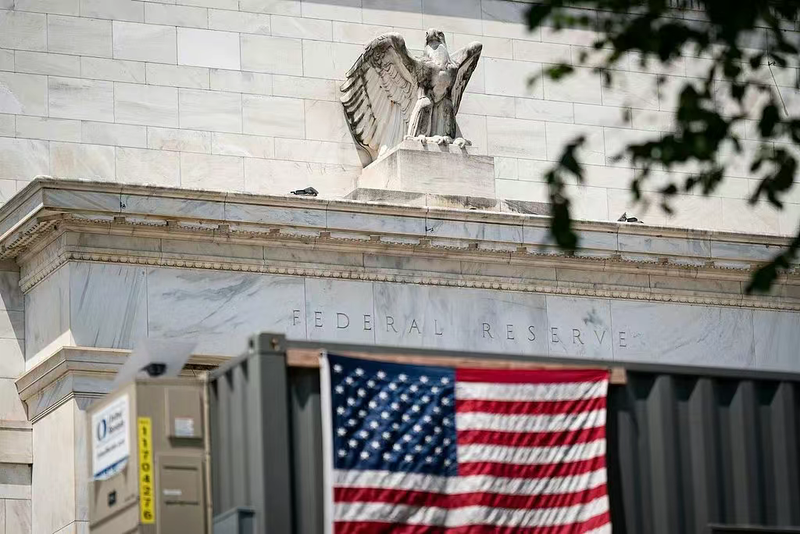
Federal Reserve Focuses on "Ample Reserves"; Bond Purchases May Become Reality Again
New York Federal Reserve President Williams recently hinted that the Federal Reserve might resume asset purchases in the short term to maintain the "ample reserves" level of the banking system. He stated at a New York Treasury market conference that as reserves gradually shift from "abundant" to "ample," the Fed needs to take measures to prevent a lack of market liquidity and maintain effective control over short-term interest rates.
Williams pointed out that future asset purchases will be viewed as technical operations rather than a signal of easing. He said the Fed is closely monitoring multiple indicators in the federal funds market, repo market, and payment systems to assess the dynamic changes in reserve demand. Industry insiders believe this means the balance sheet reduction actions may end completely by the end of the year.
Analysts noted that the Fed's quantitative tightening since 2022 has reduced the balance sheet size from $9 trillion to about $6.6 trillion. If bond purchases restart in the future, it would mean transitioning from a tightening cycle to a stable phase to ensure the stability of the short-term financing market.
Tight Market Liquidity Triggers Expectations of Policy Adjustments
Recently, the U.S. short-term funding market has experienced frequent volatility, with repo rates rising at times, highlighting liquidity pressure. Some investment banks believe this tense situation might accelerate the Fed's policy shift. Recent reports from Barclays and Goldman Sachs both suggest that if liquidity risks persist at the end of the year, the Fed might be forced to take "fine-tuning" actions, such as asset purchases or increasing Standing Repo Facility (SRF) operations, to prevent the market from falling into a financing bottleneck.
In his speech, Williams emphasized that the SRF tool is functioning well and encouraged banks to actively use this mechanism when liquidity is constrained. He stated that borrowing Fed tools should not be seen as a "negative signal" but rather as an important guarantee for the smooth operation of the financial system.
Milan: Stablecoins May Weaken Neutral Interest Rate, Need to Guard Against Systemic Impact
On the same day, Federal Reserve Governor Stephen Milan once again issued a warning about stablecoins. In a public speech, he pointed out that the rapid expansion of stablecoins could lead to a significant downward shift in "r-star" (neutral interest rate), thereby changing the Fed's policy baseline in the long term. He expects the savings effect of stablecoins could reach 30% to 60% of the savings scale between 2000 and 2010.
Milan emphasized that stablecoins are quietly altering fund flows and interest rate structures by attracting global investors to purchase U.S. Treasuries and other dollar-denominated assets. He described this trend as a "multi-trillion-dollar elephant in the central bankers' room."
He also reiterated that the current Fed policy rate is far above the neutral level, putting significant pressure on the economy. He called for more aggressive rate cuts to alleviate economic constraints and prevent further tightening of financial conditions.
Policy Outlook: Coexistence of Technical Easing and Structural Risks
The market generally believes that the remarks by Williams and Milan reveal the complex game within the Fed in balancing technical operations and policy orientation. On one hand, the Fed seeks to maintain liquidity and market stability; on the other hand, emerging factors like stablecoins are challenging the traditional monetary policy framework.
Analysts pointed out that if future funding market pressures persist, the Fed may end the quantitative tightening cycle earlier and shift to the asset reinvestment phase. This adjustment may not indicate comprehensive easing but could mark a new phase where monetary policy moves from "compression" to "balance."

