

From Texas to Tokyo, this summer's high temperatures have once again raised alarm, highlighting an increasingly severe problem facing our energy systems: extreme heat poses a serious threat to energy supplies.
This summer has been particularly tough. Following the high temperatures in June, July became the hottest month on record globally. In addition to the surge in electricity demand due to cooling devices like air conditioners, the high temperatures also triggered a series of refinery shutdowns. This not only kept U.S. gasoline prices high but also allowed diesel prices to easily surpass the increase in crude oil prices.
Data from Macquarie Group shows that high temperatures led global refiners to cut oil processing volumes by at least 2% over these two months. Though this figure may not seem large, the sweltering heat has severely impacted refined oil supplies, due to years of underinvestment and supply tensions caused by the Russia-Ukraine conflict.
Ben Luckock, co-head of oil trading at Trafigura Group, stated that this year's extreme weather conditions are indeed a big problem. High temperatures have put pressure on refineries in Europe and America, and this pressure is difficult to alleviate in the short term.
Industry consulting firm FGE expects Europe's crude oil processing volume this summer to be reduced by 700,000 barrels/day compared to the same period last year. According to the latest data from BP Plc's Statistical Review of World Energy, this figure accounts for about 6% of the region's energy supply.
While Opec+ restricts supply, rising temperatures have increased the demand for fuel oil. Moreover, high temperatures have lowered the water levels of crucial waterways such as the Rhine and the Panama Canal, increasing the transportation costs of energy supplies. Steve Sawyer, head of refining and downstream business at FGE, said that this summer's extreme weather is one of the main factors in the rise of energy market transportation costs and fuel supply tensions.
Serena Huang, chief Asia analyst at Vortexa Ltd, pointed out that rising environmental temperatures limit the operational efficiency of refineries, while aging equipment exacerbates fuel price volatility and the uncertainty of shipping business.
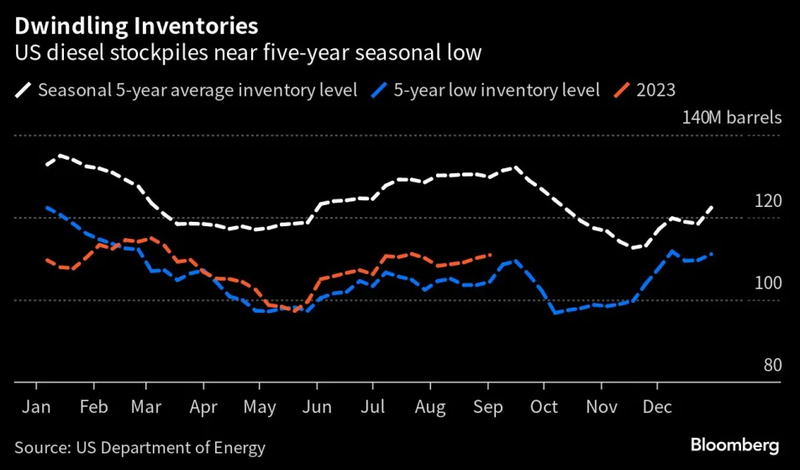
Meanwhile, reductions in stockpiles have amplified the impact of rising oil prices on the fuel market, including U.S. distillate inventories, which are near a five-year seasonal low (see below image). Data shows that U.S. diesel futures have seen their largest spot premium since March of this year, meaning spot contracts are trading higher than longer-term contracts. And Singapore's profits from using crude oil to produce industrial and heating fuels are near a seasonal high.
However, besides high temperatures, frequent occurrences of cold winters in recent years also threaten refinery operations and fuel prices. Henning Gloystein, director of energy, climate, and resources at Eurasia Group, stated that climate change has led to more extreme winter weather in the Northern Hemisphere, significantly increasing the frequency of cold weather in North Asia, Europe, and North America above historical averages.
At the end of December last year, frozen production by U.S. energy companies was a typical example of how cold weather poses threats to energy supplies. Parsley Ong, head of Asia energy and chemicals research at JPMorgan, said that during the freeze at the end of last December, daily production at U.S. refineries was reduced by about 2 million barrels.
The disruption to refinery production by extreme weather signals that, as the globe attempts to move away from reliance on fossil fuels, efforts also need to be made to counteract the threats that extreme weather poses to fossil fuel supplies.
Frederic Lasserre, director of global research and analysis at Gunvor Group Ltd., stated that the current low energy inventories and supply restrictions have made the energy market unusually sensitive to any surprises.