
Interest Rate Path Guidance Becomes Clearer
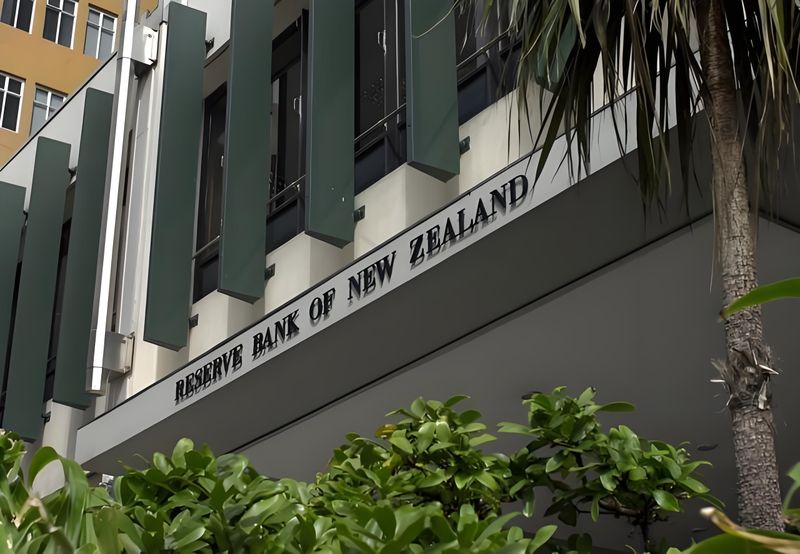
The Reserve Bank of New Zealand announced at its August meeting that it will lower the Official Cash Rate (OCR) to 3%, in line with market expectations. This is a further clarification of the policy path following previous signals of easing. The bank's latest forecasts indicate that the OCR will further decrease to 2.7% by the end of the year and reach a low of 2.5% in the first quarter of next year, before stabilizing.
This forecast is slightly lower than in May, reflecting a gradual shift in monetary policy focus towards "defensive easing." Market observers believe this suggests New Zealand's easing cycle may continue for several subsequent quarters.
Economic Recovery Stagnation Becomes a Major Constraint
In its statement, the bank frankly stated that the economic recovery stalled in the second quarter, mainly due to rising international policy uncertainties, a cooling labor market, price increases for some essential goods, and falling house prices. These factors combine to weaken overall demand.
Particularly, the pressure in the labor market is significant, with the unemployment rate expected to reach a peak of 5.3% this quarter, higher than previously forecast. The unemployment rate is not expected to fall below 5% until the fourth quarter of next year. This employment weakness further pushes the central bank towards more relaxed monetary policies.
Inflation Trend Remains Controllable
Regarding prices, the bank believes the CPI will remain at a high of 3%, still within the upper target range. Although short-term inflation is slightly higher than earlier expected, it is expected to fall significantly from the fourth quarter onwards. The end-of-year quarterly CPI is projected to increase by only 0.3% and maintain moderate fluctuations over the next two years.
The bank forecasts that by the first quarter of 2026, the year-on-year inflation rate will rise to 2.3%, slightly above previous expectations, and then remain around 2%, indicating that inflation risks are generally controllable.
Growth Expectations Modestly Lowered
For economic growth, the bank maintains a cautious stance. GDP growth this quarter is expected to be slightly faster at 0.3%, better than previously forecast, yet momentum is weak for the rest of the year. Fourth-quarter growth is expected to be only 0.8%, lower than May’s forecast. Growth rates in the first and second quarters of next year are also marginally lowered, indicating a lack of strong recovery momentum.
This suggests that the New Zealand economy may enter a "low growth–eased" structural phase, and monetary policy may not quickly return to a tightening mode.
Market and Analyst Reactions
Some economists have adjusted their forecasts to consider further rate cuts. BNZ Chief Economist Stephen Toplis noted that policy and the central bank’s forecasts are gradually aligning, and market pricing is also adjusting towards a more easing direction.
In the financial markets, the New Zealand dollar came under slight pressure following the announcement, as investors perceive the path of rate cuts to be largely clarified, yet attention remains on the international economic environment and commodity prices affecting New Zealand’s outward-oriented economy.
Easing Cycle May Continue Until 2025
Considering current signals, the Reserve Bank of New Zealand is cushioning economic downturn pressures through gradual rate cuts. Amidst slowing employment and falling inflation, the policy inclination towards easing strengthens.
In the coming quarters, should external uncertainties remain high, monetary policy may stay at low levels for an extended period. It is widely expected that before the first half of 2025, New Zealand's interest rate policy will continue to focus on "stable growth and risk control" until more sustainable recovery momentum emerges.

