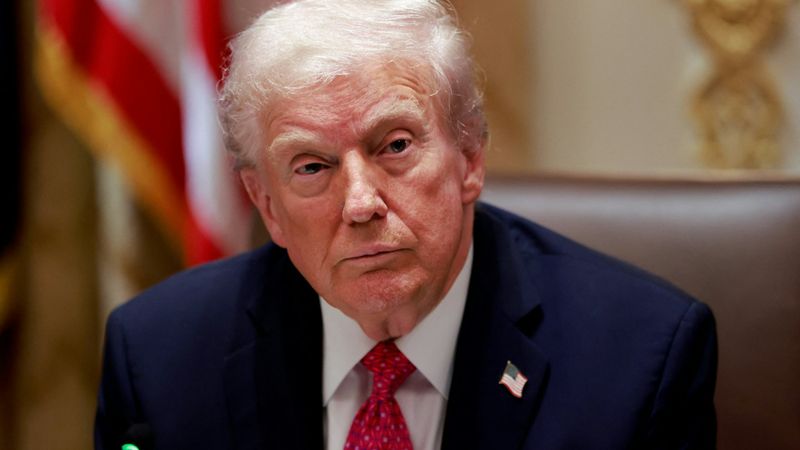
Trump Proposes "Direct Healthcare Payment" Plan
In his latest speech, President Trump proposed a controversial compromise plan, urging Republican lawmakers to support the idea of distributing federal healthcare funds, originally designated for insurance companies, directly to the public. This move aims to push Congress to quickly resolve the government shutdown. The statement has sparked intense debate between both parties, plunging the already stalled budget talks into further complexity.
Trump posted on the social platform Truth Social that the current Affordable Care Act (ObamaCare) system "wastes hundreds of billions of dollars on ineffective healthcare services." He suggested allowing Americans to use these subsidy funds freely to purchase more competitive healthcare plans. "This approach can provide better protection for the people and save costs," he wrote, though he did not provide execution details or budget source explanations.
Congress Deadlock Persists: Shutdown Becomes Longest in History
Trump’s proposal comes at a critical moment when Congress is deadlocked. Previously, Senate Republicans rejected a funding proposal from Senate Minority Leader Chuck Schumer, leading to a shutdown since October 1st, marking the longest "shutdown crisis" in U.S. history.
The Democratic proposal initially planned to extend the Affordable Care Act's subsidies for a year, ensuring that over 20 million Americans relying on the policy would not lose healthcare support by the end of the year. As a concession, Democrats abandoned the inclusion of permanent tax credit clauses in the temporary funding bill. However, Republicans insist that the bill will further expand the fiscal deficit and "continue the failed ObamaCare system."
Senate Majority Whip John Thune from South Dakota bluntly stated that the Democratic proposal is "doomed to fail," and Trump's "direct to public" suggestion might become a new bargaining chip among Republicans.
Political Stalemate Intensifies: Cautious Reactions from All Sides
The White House has not yet formally responded to Trump’s proposal. Within the Republican party, opinions are divided; some lawmakers believe direct payments to the public may ease public dissatisfaction, while others worry that this approach lacks feasibility and may further enlarge the budget deficit.
Democrats criticize Trump’s move as a "political gimmick," arguing that the plan does not address the fundamental issues of the healthcare system nor restore government operations. The office of New York Representative and Democratic Minority Leader Hakeem Jeffries declined to comment, only stating that "the focus should be on reopening federal agencies."
Meanwhile, the Treasury Department warned that if the shutdown continues beyond 45 days, funding disbursements and approval processes for public healthcare subsidies in key departments will come to a complete halt, affecting millions of low-income families.
“Filibuster” Rule Becomes a Focus
Aside from healthcare issues, Trump repeatedly called over the weekend for Republicans to support abolishing the Senate’s "filibuster" rule. He claimed that the rule is a "systemic obstacle" to legislative efficiency and encouraged party members to use the "nuclear option" to modify the rules to allow bills to pass by a simple majority.
Currently, Republicans hold 53 seats in the Senate, Democrats 45, with 2 independent senators allied with Democrats. Without changing the rules, Republicans struggle to push any major legislation through alone. Despite the opposition from many senior party members, Trump claims "progress has been made" and asserts that Democrats are "panicking" over the shutdown issue.
Shutdown Outlook Remains Uncertain
Analysts point out that while Trump’s "direct healthcare payment" proposal creates public pressure, it is unlikely to change the Congressional stalemate in the short term. Democrats are unlikely to make significant concessions on healthcare policy, and fiscal spending and executive power divisions within the Republican party are becoming increasingly prominent.
Washington political observers believe that if both parties fail to reach a consensus on healthcare subsidies and budget size in the coming days, the U.S. government shutdown may continue to extend and inflict deeper damage on economic confidence.
The market worries that a prolonged shutdown will impact fourth-quarter economic growth and weaken the Federal Reserve's policy space to address inflation and employment slowdown. Although Trump’s proposal has created a new political topic, whether it can transform into a real policy remains uncertain amid the challenging negotiations in Congress.