
The New US-EU Trade Paradigm: The Balance and Conflicts Behind the Unified 15% Tariff
The EU Pays an Unprecedented Price for “Market Access”
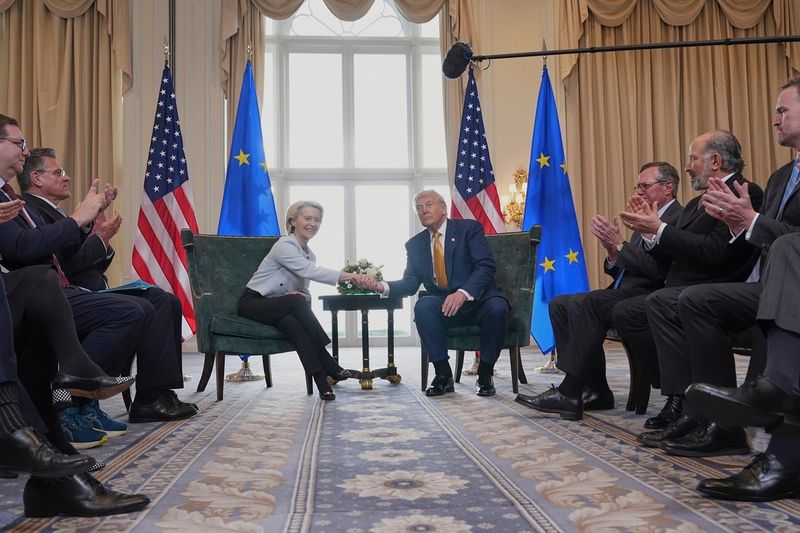
In the US-EU trade agreement reached on July 27, 2025, the EU pledged to invest $600 billion in the US and purchase $750 billion of US energy products. This enormous investment has generally been interpreted externally as a strategic concession by the EU to maintain stable economic relations with the US. According to the agreement, the US will impose a uniform 15% tariff on all EU exports to the US, including automobiles and pharmaceutical products. European Commission President Ursula von der Leyen defined this as a “market stability guarantee measure,” but this statement has triggered significant controversy within Europe.
The Motives Behind the Unified Tariff
While von der Leyen’s proposed “uniform tax rate” in the agreement seems to reduce trade friction on the surface, it actually means that the EU has opened its standards to the US in several sensitive areas. Key industries such as automobiles and pharmaceuticals must adhere to US industrial standards. This not only could impact the operation of the EU’s internal supply chains but also weaken its autonomy in external trade. Von der Leyen emphasized the need for the EU to break its dependency on Russian energy and thus increase imports of US natural gas, but this energy policy shift has prompted some lawmakers to question whether there is an element of “passive acceptance.”
Internal Dissatisfaction and Backlash in Europe
Bernd Lange, Chairman of the European Parliament’s International Trade Committee, bluntly stated that the agreement is “neither satisfactory nor in Europe’s fundamental interests.” He believes that the unified 15% tariff superficially provides legal predictability, but in essence, it is a unilateral concession that could even cause long-term harm to European manufacturing and domestic employment. Lange specifically pointed out that the EU’s extensive procurement of US military technology would dilute Europe’s defense autonomy and impact local defense industry development. He further criticized this move as being similar to the Trump administration’s strategy of using tariffs as a negotiation tool.
Initial Success of Trump’s Economic Strategy
From the US perspective, the agreement has initially demonstrated strategic intentions for an economic and diplomatic “win-win.” The US Treasury Secretary revealed on the same day that the new tariffs have brought $27 billion in fiscal revenue to the government, showing clear short-term effectiveness of the tariff leverage policy. Additionally, the US will continue to advance tariff negotiations with three to four countries, expected to issue specific explanatory documents before August 1. These actions demonstrate that the US is systematically reshaping global trade rules and striving to achieve an overwhelming advantage in terms of dominance.
Doubts on Whether the EU Truly Benefits
Although von der Leyen attempts to convince the European public with the logic of “market for stability,” the EU’s massive investment and procurement obligations in the agreement appear unequal compared to the openness and economic benefits obtained by the US. The EU’s concession has only secured a unified tariff treatment, rather than a truly mutual benefit mechanism. As details of the agreement will continue to be disclosed in the coming weeks, internal controversies within Europe are expected to persist. How von der Leyen manages to balance the internal criticism will become a key observation point in the EU’s political landscape.

