

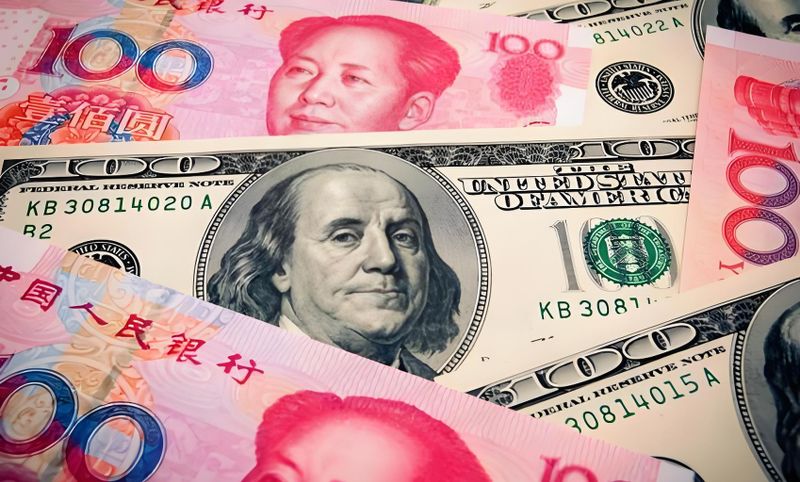
Renminbi Midpoint Rate Hits Nearly One-Year High
On October 29, data from the China Foreign Exchange Trade System showed that the renminbi to US dollar midpoint rate was at 7.0843, rising 13 basis points from the previous trading day, reaching its highest level since October 15, 2024. This trend indicates the continued strong recovery of the renminbi's exchange rate against the backdrop of a declining US dollar index and a stabilizing domestic economy.
Market analysts pointed out that recently, the renminbi has outperformed most emerging market currencies, benefiting from the positive release of policy signals and increased cross-border capital inflows. Since September, the renminbi midpoint rate has appreciated by more than 300 basis points, with the renminbi's spot exchange rate strengthening simultaneously in both onshore and offshore markets.
Strengthened Policy Control Keeps Exchange Rate Fluctuations Manageable
Analysts believe that the People's Bank of China has demonstrated a "steady progress" policy approach in its recent foreign exchange market operations. The midpoint rate mechanism has played a crucial role in smoothing market expectations and stabilizing cross-border capital flows.
The Huatai Securities Research Institute pointed out that the People's Bank is guiding market expectations through a counter-cyclical adjustment factor, keeping renminbi fluctuations within a reasonable range. As economic data improves, exports rebound, and foreign investors increase their willingness to hold bonds, the fundamental support for the renminbi's exchange rate is further solidified.
Wang Yifeng, chief analyst at the China Forex Investment Research Institute, stated: "The recent strengthening of the renminbi reflects both improved market supply and demand conditions and the regulatory authorities' determination to maintain exchange rate stability. The renminbi will not form a one-sided appreciation or depreciation, but will enter a more flexible, two-way fluctuation phase."
Global Environmental Changes Support Renminbi's Upward Trend
In the international market, the US dollar index has continued to decline after reaching a peak in mid-October, currently hovering around 98.7, mainly influenced by growing expectations of a Federal Reserve rate cut. Investors widely anticipate that the Federal Reserve will announce another 25 basis point rate cut at this week’s policy meeting, prompting a trend of capital flowing out of US dollar assets and driving a rebound in non-US currencies.
Meanwhile, capital flows in Asia have generally stabilized, with foreign investments increasing in Chinese bond and stock market assets. According to the latest data from the China Foreign Exchange Trade System, since October, net northbound capital inflows have exceeded 18 billion yuan.
Market analysts noted that the global shift to a more accommodative monetary policy makes the renminbi relatively favorable among regional currencies. The stable recovery of the Chinese economy, improved manufacturing sentiment, and enhanced consumer resilience all provide strong support for the renminbi.
Investor Confidence Warms Up with Prominent Signs of Foreign Capital Inflow
Recently, international financial institutions have been increasing their allocation ratios of renminbi assets. Morgan Stanley noted in its latest report that the risk-return ratio of renminbi assets has significantly improved, and the policy certainty and fundamental advantages of the Chinese market will attract medium to long-term capital to re-position.
Moreover, the use of renminbi in international settlements continues to rise. Data from the Society for Worldwide Interbank Financial Telecommunication (SWIFT) shows that the renminbi has risen to the fifth position in global payment currencies, with a share of 4.8%, setting a new historical high.
This trend signifies the steady advancement of renminbi internationalization, with renminbi assets gradually being regarded as "safe allocation options" in global investment portfolios.
Exchange Rates Expected to Maintain a Strong Fluctuating Pattern
Looking ahead, it is generally believed that the renminbi still has upward momentum. If the Federal Reserve's rate cut cycle continues while China's economic recovery momentum remains, the renminbi's exchange rate might continue to test the 7.05 level in the short term.
The China International Capital Corporation's foreign exchange strategy team expects that the renminbi may operate within the 7.00 to 7.10 range for the rest of the year and further strengthen in the first half of 2025. Analysts point out that the stability of exchange rate policy will continue to be an important pillar in boosting foreign investment confidence and maintaining the smooth operation of financial markets.
Overall, the continued rise of the renminbi’s midpoint rate against the dollar reflects not only the improvement in economic fundamentals but also the precision of policy-makers in managing market signals. With the global monetary environment softening and domestic demand in China rebounding, the trend of "steady growth" for the renminbi is expected to continue until the end of the year.

