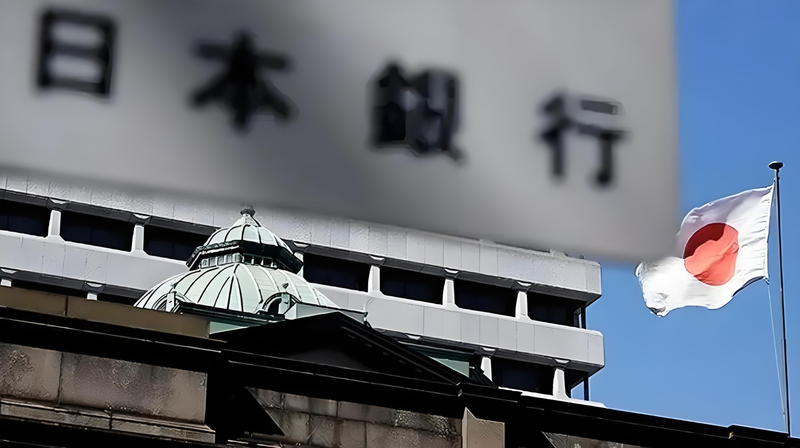
Tokyo's March inflation data exceeded market expectations, providing a reason for the Bank of Japan to raise interest rates further. According to data released on Friday, due to the accelerated rise in processed food prices, Tokyo's core CPI excluding fresh food rose by 2.4% year-on-year in March, exceeding the previous value of 2.2% and the economists' forecast of 2.2%, while the Tokyo CPI increased by 2.9% year-on-year, remaining flat with the previous value and slightly above economists' forecast of 2.8%.
After the data was released, the USD/JPY exchange rate fell slightly to 150.79. The latest inflation data may prompt Bank of Japan Governor Kazuo Ueda to consider further rate hikes at an appropriate time. Although the global economic outlook has dimmed due to Trump's tariff policies, recent domestic data in Japan suggests that the Bank of Japan has made progress in stabilizing the inflation target. This has fueled speculation about the timing of the Bank of Japan's rate hike.
Most economists believe that the Bank of Japan may wait until June or July to further raise rates, but some economists suggest there could be an early rate hike at the May policy meeting. Nobuyasu Atago, Chief Economist at Rakuten Securities Economic Research Institute, believes that due to the strong rise in food prices, the Bank of Japan should accelerate its rate hikes, with the possibility of another rate hike in May.
Thursday's overnight swap index indicated about a 25% possibility of a rate hike at the Bank of Japan's May policy meeting. However, some economists are skeptical about a May rate hike, especially after Trump announced a new 25% tariff on imported cars starting April 2.
The continued depreciation of the yen, rising raw material, and labor costs have prompted companies to pass these costs on to consumers. Data shows that the pressure for price rises in food inflation remains, with non-fresh food prices rising by 5.6% year-on-year, and rice prices soaring by about 90%. Moreover, major food companies raised the prices of 2,343 products in March, three times as much as last year, with further increases expected when the new fiscal year begins in April.
Service prices have also risen by 0.8% year-on-year, up from 0.6% last month, marking the largest increase since December last year. Changes in service prices are closely monitored by the Bank of Japan as they help assess underlying inflation.
Taro Kimura, an economist at Bloomberg Economics, stated that Tokyo's March inflation data surpassed market expectations and suggested that the underlying inflation trend might reach the Bank of Japan's 2% target by summer, supporting further rate hikes.
Currently, Japan's benchmark interest rate is at 0.5%, the lowest among the Group of Seven (G7). Kazuo Ueda defends the gradual normalization of monetary policy by the Bank of Japan, arguing that although Japan's main inflation indicators are at or above the 2% target, the basic price trend remains slightly below target.