



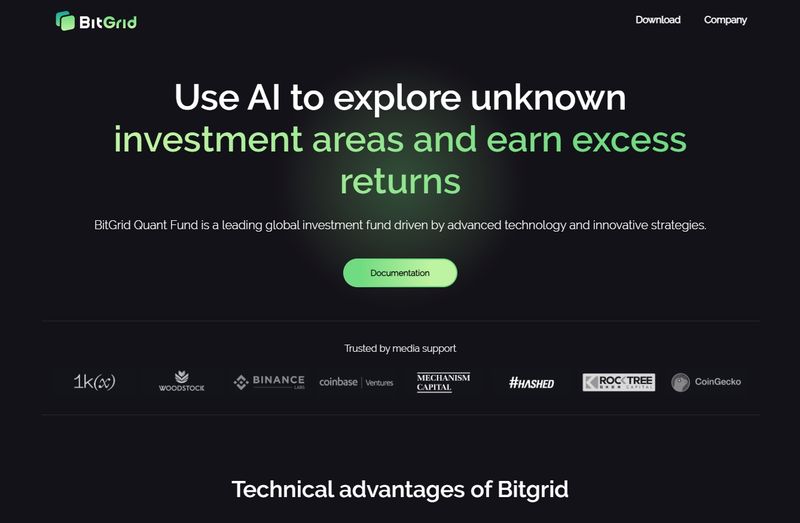
BitGrid markets itself as a “profit-focused quantitative platform and fund built on the BitGrid GPT Driver.” Leveraging AI and big-data analytics, it executes crypto-asset strategies such as grid trading, contract-grid strategies, and signal-driven trading bots.
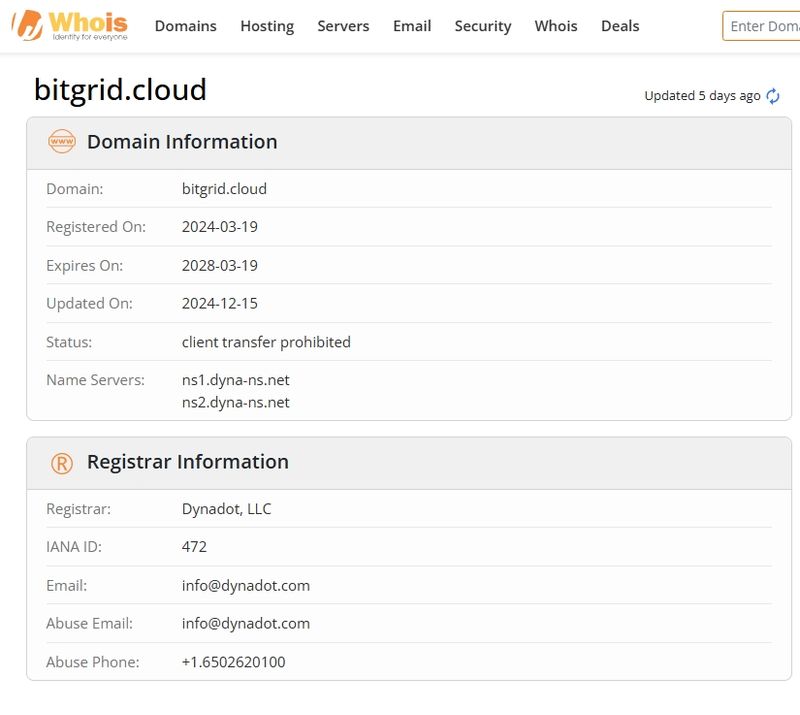
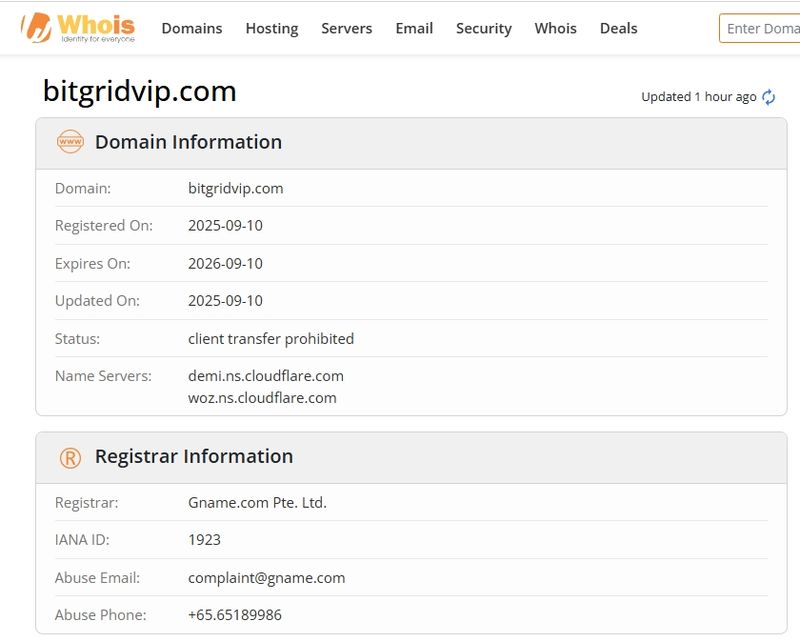
Website Domain Information and Registration Time
BitGrid operates two websites—bitgrid.cloud and bitgridvip.com—with different functions. The former is used for promotion, while the latter serves as their platform. This is a tactic commonly used by scam platforms: one promotional site up front and a behind-the-scenes trading site.
According to whois data:
- bitgrid.cloud was registered on March 19, 2024, and was last updated on December 15, 2024.
- bitgridvip.com was registered on September 10, 2025, and was last updated on September 10, 2025.
For investors, the timeline of the promo site is a red herring. The center of gravity is bitgridvip.com, which aligns with BitGrid’s true objective—to harvest investor funds. In effect, this points to a newly minted Ponzi-style scheme. Why run two domains?
- Dodging scrutiny and takedowns: route ads, SEO, and social acquisition to the promo site; rotate the trading domain the moment platforms block it.
- White-label, multi-shell rollout: replicate one backend across multiple brand skins—US/EU, Southeast Asia, Chinese—at the push of a button.
- Cleaner footprint management: let the promo site capture leads; bind the trading site to support ticketing and remote-access tooling.
AI quantitative fund—what, precisely, are they doing with your money?
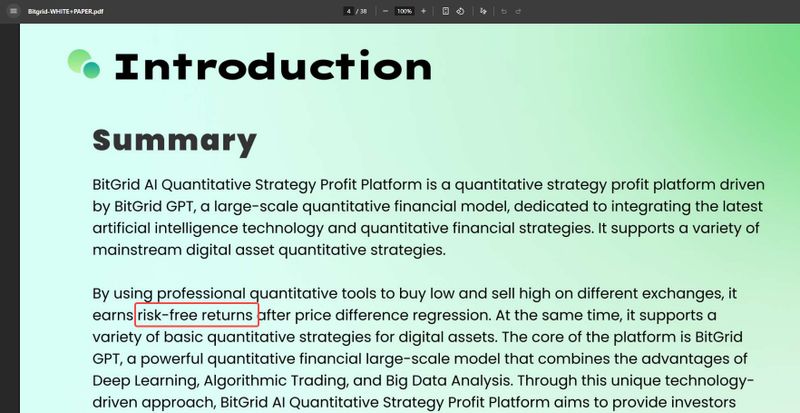
In its white paper, BitGrid touts “risk-free returns”—a conspicuous red flag in its own right. No quantitative fund operates free of risk.
BitGrid touts a GPT-driven investing model, but the critical question remains: are you willing to let an algorithm steward your funds? If AI truly delivered “easy money,” premier quant shops—Renaissance Technologies, Two Sigma, and the like—would hardly ignore it.
App distribution: not through official stores
BitGrid advertises three routes—“Apple Store,” “Google Play,” and an APK—yet none correspond to an authentic store listing. The “Apple Store” link lands on a fenzh1sj page and requires a QR scan, while the other two simply push direct installer packages for Android.
Why this matters
- Bypass risk controls: sideloaded packages can skirt standard review and security checks.
- Rapid re-skin: swapping shells/domains is easier when distribution isn’t tied to a verified store listing.
- Payment-policy evasion: operating outside official stores can help dodge enforcement on in-app payments.
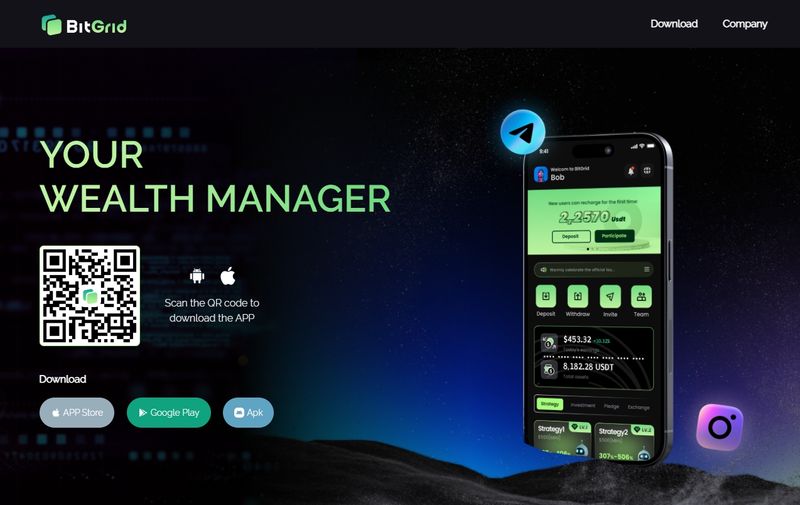
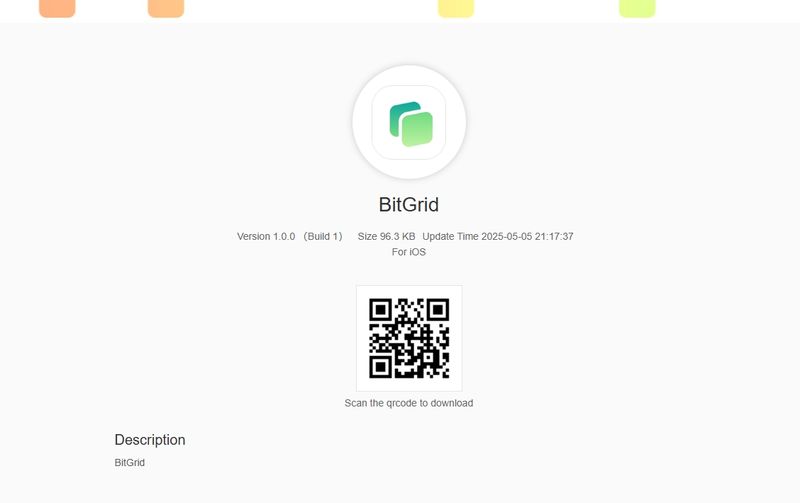
BitGrid’s “Regulation,” or Just Registration? A Game of Semantics
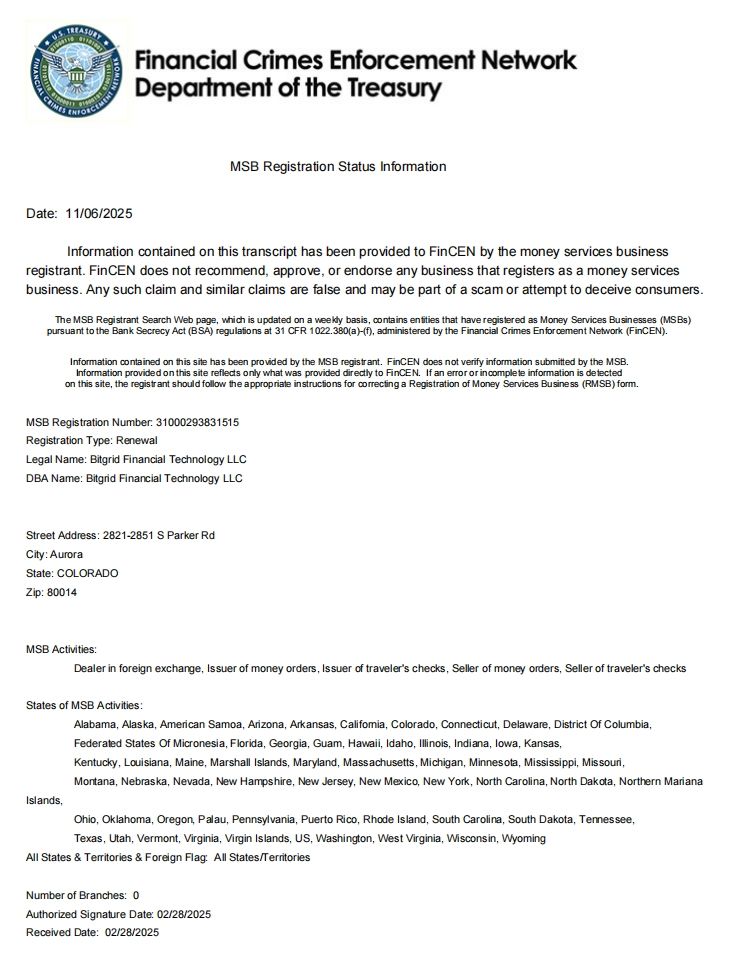
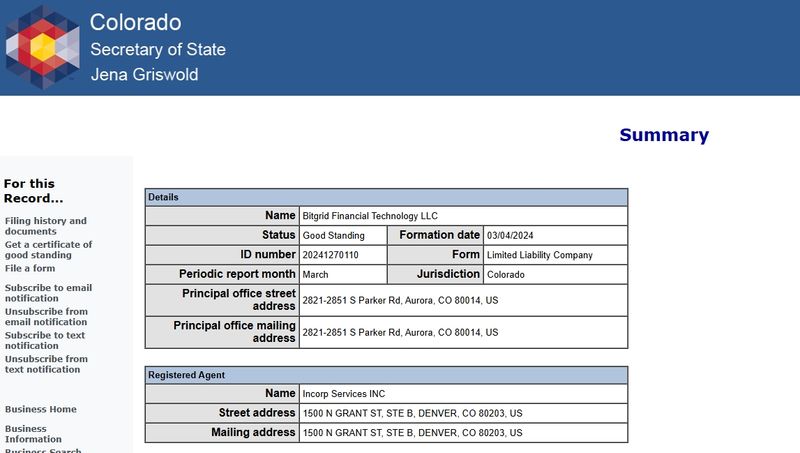
To draw in client money, BitGrid has touted an “MSB compliance license.” In practice, that label almost always refers to a Money Services Business (MSB) registration with the U.S. Financial Crimes Enforcement Network (FinCEN). Registration is not supervision. It is not a regulatory license, and it does not restrain how the business operates. It confers no authority to raise money from the public, manage client assets, or sell investment products—nor does it provide investor protection.
FinCEN is unambiguous: a listing in its database simply means the entity filed a registration. It is not an endorsement or approval, and it should not be read as proof of compliance or reliability. Investors should resist treating “we’re in the database” as a trust signal.
Bottom line: When a template-built “broker/quant platform” rebrands a basic MSB registration as a “compliance license,” that’s classic misleading marketing. Until there is a clearly identified licensed entity, qualified custody with audit oversight, a verifiable performance record, and credible cross-border compliance in place, treat it as high risk—possibly a suspected scam—and keep your money out.
Website Traffic
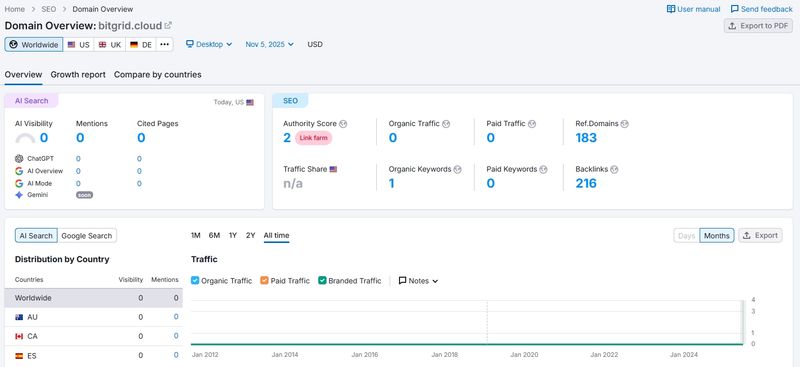
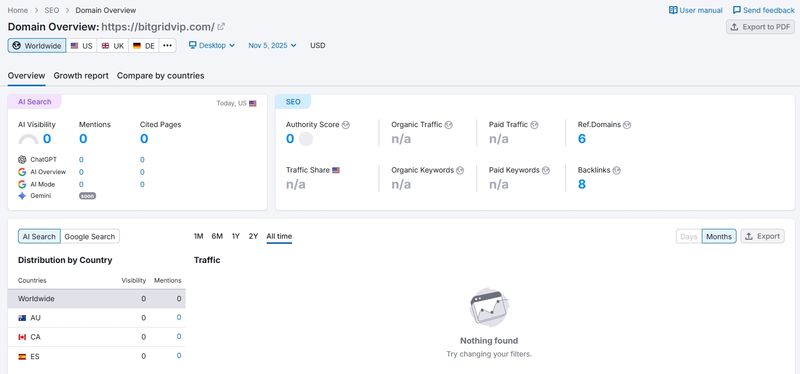
According to semrush, BitGrid's two websites, bitgrid.cloud and bitgridvip.com, both record zero traffic, indicating that there is virtually no usage of BitGrid's platform.
Offline Rallies: The Trust Factory Behind Ponzi-Style Schemes
Stage a crowd, dim the doubts. Offline rallies manufacture trust by swapping real oversight—licenses, audits, custody—for emotion and social endorsement. Put familiar faces on stage, book a tangible venue, line up selfie-friendly KOLs, and defenses drop; the “last push” to deposit follows.
- Social proof, staged: photos, awards, keynote cameos, sponsor walls, and arena/booth décor plant “this is official” visual anchors—so noise is misread as legitimacy.
- Herding + sunk-cost mechanics: check-ins, raffles, ticking-clock giveaways, and on-site rebate ladders induce on-the-spot onboarding and first deposits. Once time and cash are in, the “top-up to unlock” escalator does the rest.
- Authority by collage: deck slides stuffed with AI, quant, MSB registrations, and partner logos mimic gravitas while sidestepping what matters—licensed entities, independent audits, and qualified custody. The funnel closes with links to downloads or mini-programs.
- Referral fission: bind “bring a guest” to commission tiers and the hall becomes a recruitment line; the more “real” the scene, the faster the spread.
- Risk insulation: separate domains for event pages and trading access, sideloaded apps via QR + enterprise signatures—when backlash or delisting lands, a new skin rolls out and the harvesting continues.


Trustpilot: manufactured praise—don’t be fooled
BitGrid’s Trustpilot trail is lopsided: English-language reviews that flag it as a scam paired with same-day, five-star swarms in Portuguese. That signature mix—reputation whitewashing plus region-targeted astroturfing—tracks with how cash-pooling plays varnish their image. Set against BitGrid’s own “AI quant/steady-returns” pitch, the more credible English complaints fixate on withdrawals that don’t clear and head-count recruiting—classic red flags. Net-net, the platform’s online reputation is neither independent, nor sustained, nor consistent across languages; treat it as high risk.
Summary
Stack the signals: dual domains (promo bitgrid.cloud; trading bitgridvip.com), a white paper dangling “risk-free returns,” off-store app distribution, MSB registration masquerading as a license, offline rallies to manufacture trust, and a Portuguese five-star surge on Trustpilot. The vector points squarely at the Lusophone market—with very high risk. Guidance for Portuguese-speaking investors: don’t download, don’t transfer, don’t pay “processing/unfreeze” fees. If you’ve already paid, preserve evidence and initiate a chargeback with your card issuer; file reports with regulators and law enforcement (e.g., Portugal’s CMVM and Brazil’s CVM).
