


Hashnote.com is a digital asset management and tokenized yield platform targeting institutions and qualified investors. Its focus differs from the traditional retail exchanges, which typically involve spot matching or multiple currency trades. Instead, it emphasizes on-chain cash management, mainstream crypto asset allocation, and yield hedging strategies. According to public information, the platform focuses on products like USYC, emphasizing the introduction of short-term U.S. dollar yield assets into on-chain scenarios, with access achieved through account opening, compliance questionnaires, KYC/AML review, and wallet whitelists. When examining its website disclosure, domain timeline, regulatory statements, contact information, and traffic performance, hashnote.com aligns more closely with a digital asset management tool platform rather than a standardized retail trading platform.
Platform Overview
The official website of hashnote.com positions itself more as a "regulated asset manager" rather than a traditional trading site. Its primary clientele consists of institutional clients and qualified investors. The platform's core value does not lie in offering high-frequency trading interfaces or retail trading functions. Instead, it revolves around digital asset yield management, capital allocation, and risk management. In terms of business model, hashnote.com operates more like a platform that brings short-term yield products, fund shares, and crypto asset strategies from traditional finance to an on-chain environment.
Background & Business Positioning
From a business structure standpoint, hashnote.com is not a typical comprehensive cryptocurrency exchange, nor is it a broker brand focused on forex, CFDs, or similar products. Its core product, USYC, is described as an on-chain token representing shares in the Hashnote International Short Duration Yield Fund, with underlying assets primarily invested in short-term U.S. Treasuries and repurchase, reverse repurchase agreements. The platform aims for on-chain settlement, asset transparency, and composability, making its overall positioning closer to a tokenized money market fund or on-chain cash management tool platform rather than a generic trading site for the masses.
Entity Information
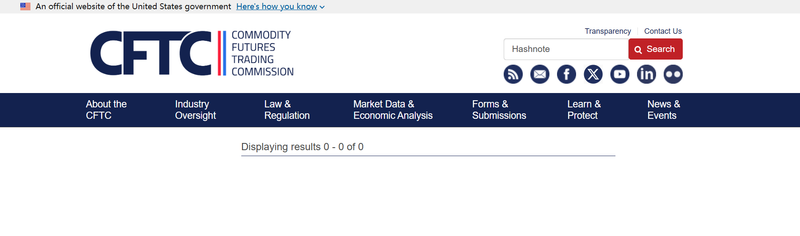
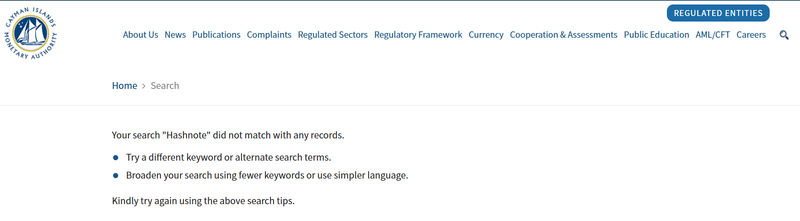
According to the platform's statements, hashnote.com claims to be registered with the Commodity Futures Trading Commission (CFTC) in the United States as a Commodity Pool Operator (CPO), providing related services to U.S. investors. It also claims registration with the Cayman Islands Monetary Authority (CIMA) as a mutual fund to serve non-U.S. investors. However, based on the provided information, there's no confirmed and clearly verified company entity corresponding with hashnote.com found in the CFTC and CIMA public queries. Therefore, there remains room for further verification between the stated entity background on its website and the public databases.
Domain Information and Website Timeline
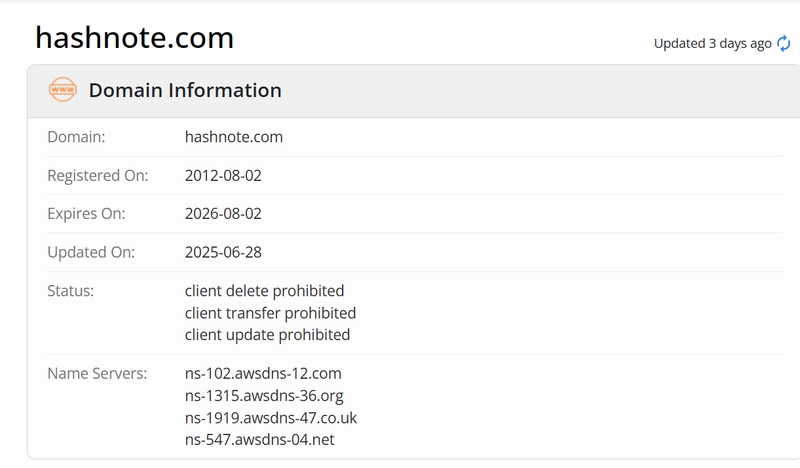
According to Whois information, the domain name hashnote.com was registered on August 2, 2012, and was last updated on June 28, 2025. The domain itself has existed for quite some time.
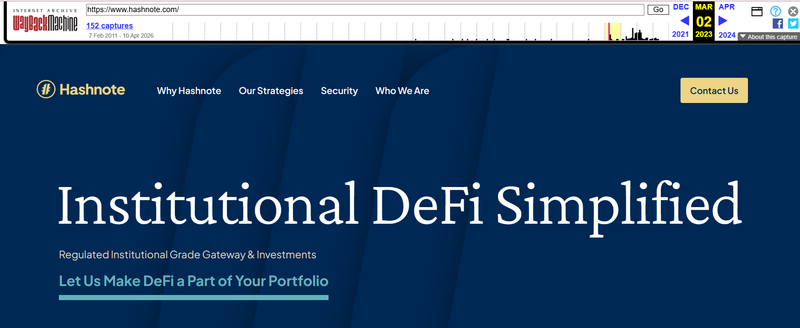
Based on Wayback Machine archives, the website first appeared under this domain as early as 2013. However, it did not show consistent and complete business content between 2013 and 2023, only revealing clearer business information around March 2023. This indicates that while the domain was registered much earlier, the current business content presented by the platform appeared at a relatively later date.
Product & Service Range
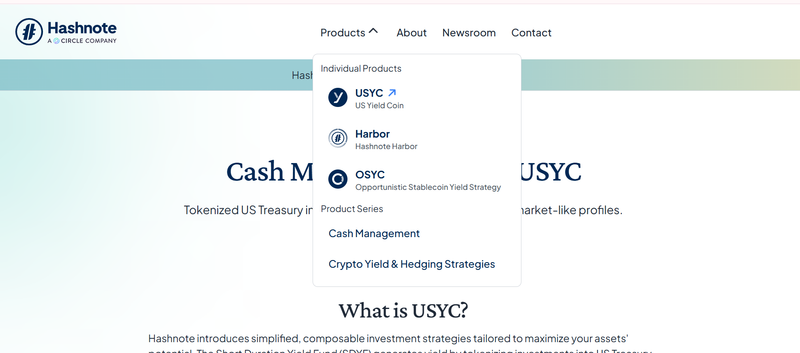
The "trading varieties" offered on hashnote.com (https://www.hashnote.com/) do not conform to traditional currency lists or derivative trading menus. Instead, they focus on on-chain cash management, mainstream crypto asset allocation, and yield hedging strategies. The platform leans more towards fund management and strategic configuration, emphasizing yield management, risk hedging, and asset portfolio operations rather than providing a high-frequency trading environment for retail users. Thus, Hashnote's product structure is closer to a digital asset fund strategy platform rather than a matching-type trading platform.
Trading Software Information
As of the latest public pages, hashnote.com does not disclose independent trading software information like traditional brokers or exchanges, nor is there mention of MT4, MT5, self-developed apps, WebTrader, or desktop trading terminals. This implies that the platform's core service logic may not be established on standardized trading terminals but rather relies more on account access, product subscriptions, strategy participation, and on-chain asset management processes to complete the business loop.
Account Types
The official website of hashnote.com (https://www.hashnote.com/) does not publicly show tiered account types, such as standard accounts, professional accounts, or VIP accounts common in retail platforms. Based on existing public information, its service system appears to differentiate based on investor access conditions, customer attributes, and service content, rather than the account levels common in retail trading platforms. This aligns with its institutionalized, compliant access-oriented platform positioning.

Regulatory Information
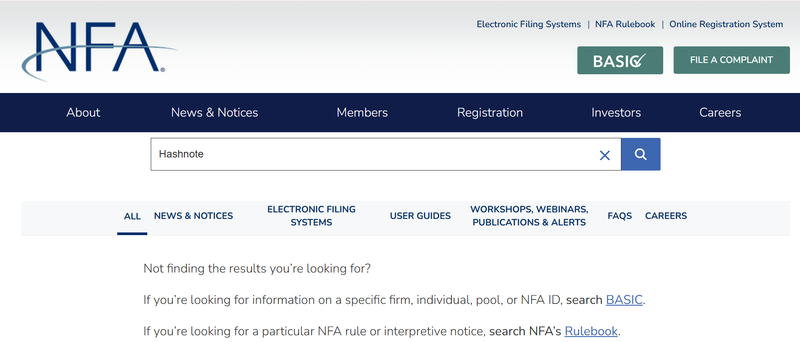
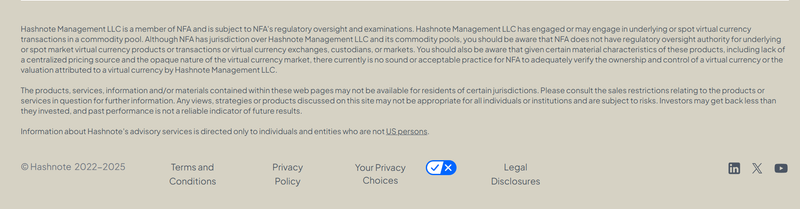
Hashnote.com claims to be a member of the National Futures Association (NFA) in the U.S. and states it is under NFA oversight and scrutiny. However, the results provided do not show clearly verified regulatory information for hashnote.com in NFA listings. Additionally, it should be noted that the NFA does not have complete regulatory authority over virtual commodity spot products, spot market transactions, virtual currency exchanges, custodians, or the related markets themselves. Public disclosures also mention that due to characteristics of virtual currency markets such as lack of centralized pricing sources and limited market transparency, the NFA does not currently have a widely accepted method to comprehensively verify the ownership, control, or valuation of virtual currencies. Therefore, even if the platform cites related statements, it should not be easily equated with having obtained complete, direct, and comprehensive crypto asset regulation for its associated business.
Contact Information
Contact options on the hashnote.com website (https://www.hashnote.com/) mainly involve online forms, divided into customer support and media & news categories. Users must fill in their name, email, reason for contact, and message content before submitting, following a form-based communication path. At the same time, the platform offers an email subscription option to receive newsletters or updates. However, from currently available public pages, the platform does not directly display phone numbers, customer service emails, or real-time online customer support, hence its external contact mechanism is more inclined towards unified collection and centralized processing.

Social Media Information
In terms of social media, the hashnote.com website (https://www.hashnote.com/) provides access to LinkedIn, X, and YouTube. This means its external communication channels are focused on professional networking, information dissemination, and video content platforms. While not extensive, it covers common uses for brand announcements, industry communication, and content spreading. From its public setup, its social media system appears to be relatively streamlined.
Website Traffic Performance
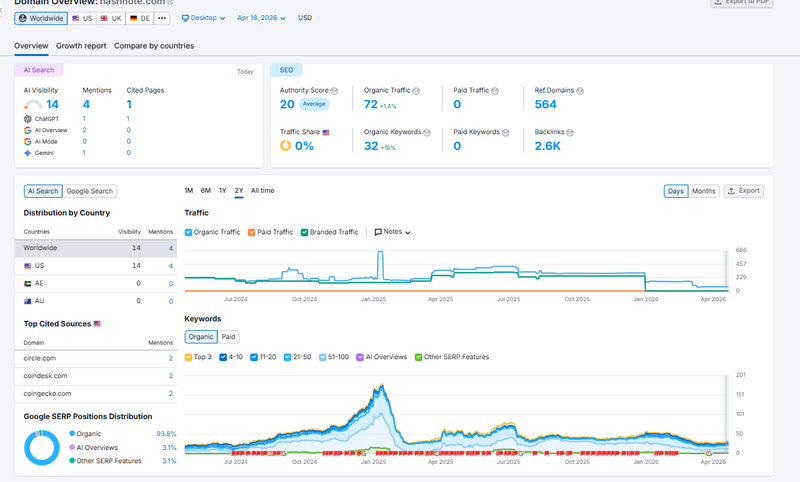
Based on Semrush data, hashnote.com currently has a small overall website traffic volume, primarily organic, with little obvious paid traffic support. From trend changes, the website experienced notable growth for a period but later regressed and maintained volatility within a low range. Traffic source structure shows its access focus is primarily concentrated in the U.S. market. This performance suggests that hashnote.com had temporary search exposure boosts, but its overall traffic size remains relatively limited.
Comprehensive Characteristics
Based on available public information, the platform characteristics of hashnote.com are primarily reflected in three aspects: firstly, its business model leans towards institutionalization, emphasizing asset management and on-chain yield tools rather than retail trading matching; secondly, its product form is closer to tokenized fund shares, cash management tools, and strategic configuration solutions; thirdly, although the website provides corresponding explanations of entity, regulation, and platform positioning, some registration and regulatory information's correlations within public databases remain to be further verified.

