


Dato Durian is a platform that integrates durian plantations with blockchain technology, focusing on the tokenization of real-world assets (RWA). It aims to involve investors in agricultural revenue distribution through the issuance of digital tokens. Conceptually, this model merges agricultural investment with financial securitization logic. However, it faces unresolved issues regarding physical information, regulatory compliance, revenue verification, and operational transparency. Overall, it is more akin to an asset digitization project reliant on platform credibility.
The Story of Tokenized Agricultural Assets: Real Investment or Financial Packaging?
The core narrative of Dato Durian centers around "real farms + blockchain tokenization." The platform uses durian plantations as underlying assets, breaking them down into tradable digital units, allowing investors to partake in agricultural revenues without directly owning the land. This design is logically similar to traditional financial asset securitization or REITs structures, transforming long-term, low-liquidity assets into tradable products.
However, unlike traditional financial systems, this model is not grounded in mature legal and regulatory frameworks. Asset rights, revenue distribution, and risk-bearing mechanisms are largely dependent on the platform's own rule design. This means investors do not hold strict asset ownership rights but rather a revenue mapping relationship based on the platform's commitment.
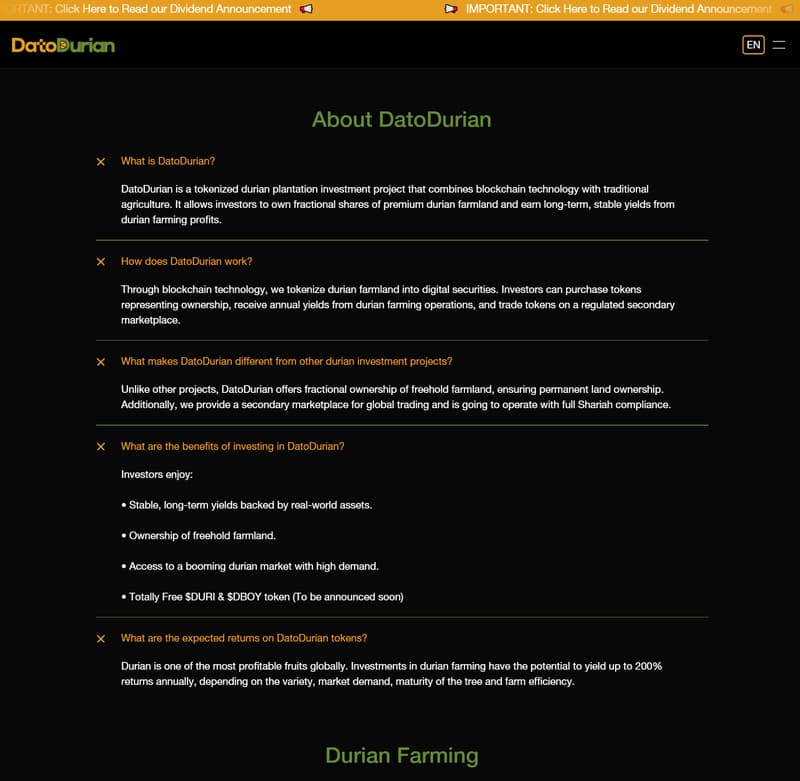
Lack of Physical Information: Who Actually Operates This Project?
The information disclosed on their website lacks clear corporate entity details. This omission makes it difficult for outsiders to verify its actual operating entity or find its registration information or legal affiliation through public channels.
For a platform involved in fundraising and asset investment, an undefined entity implies blurry boundaries of responsibility. If financial disputes or operational issues arise, investors may find it challenging to hold parties accountable. This scenario is not uncommon in Web3 projects, but the risks are more pronounced when real assets are involved.
Domain Name and Development Trajectory: Discrepancies Between Launch Time and Project Narrative
According to Whois domain information, Dato Durian's current website domain (https://datodurian.com/) was registered on August 19, 2024, with the last update on July 28, 2025. Further examination using the Wayback Machine shows that this domain first featured Dato Durian-related content on January 14, 2025. As of November 28, 2024, the domain was still associated with other companies or different content.
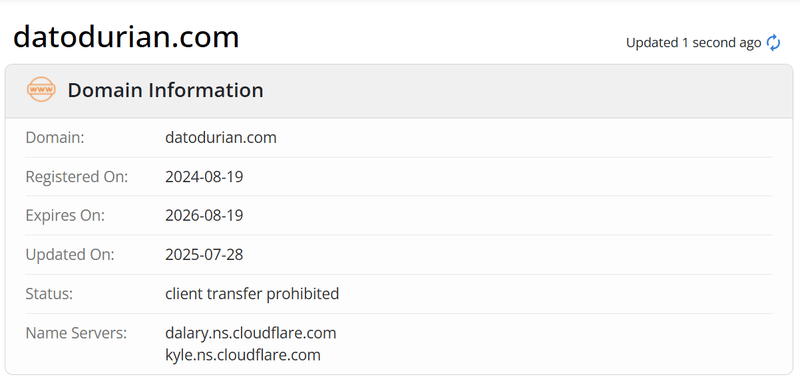
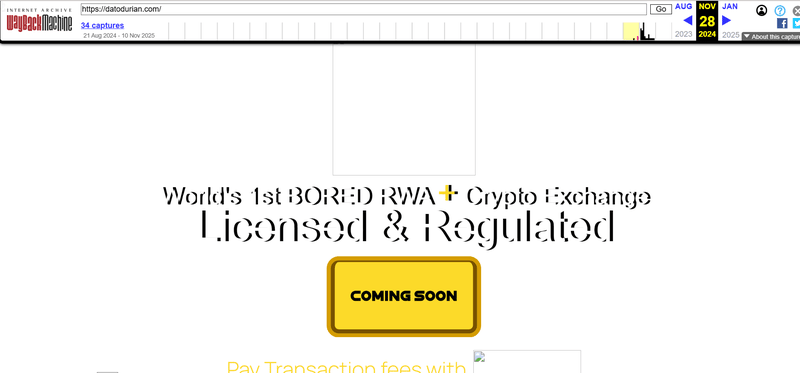
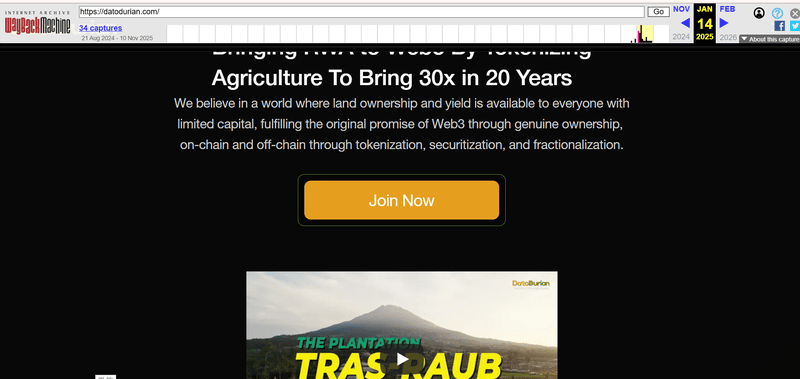
This timeline indicates that Dato Durian's online brand and business systems have been established relatively recently, making it a typical new project launch. From an information disclosure perspective, there is a gap between this and its narrative of "mature farm assets" and "stable income sources."
Narrative of “Harvested Assets”: Verifiability Remains a Key Issue
The platform repeatedly emphasizes only tokenizing farms that have completed initial or secondary harvesting to mitigate risks and ensure revenue. This claim aims to establish a credible basis for “verified assets.”
However, in practical terms, this premise lacks third-party verification. Whether the farms truly exist, whether yields are stable, and whether past earnings meet expectations are all crucial data points that have not been independently audited or publicly disclosed. Without external validation mechanisms, such "harvested" statements are mostly unilateral declarations by the platform, with their authenticity and sustainability remaining uncertain.
Stable Income Narrative: Is Agricultural Risk Being Downplayed?
Durian, as a high-value agricultural product, certainly has a market demand, but agriculture itself is not an industry of stable income. Climate change, pests, market price fluctuations, and policy factors all directly affect output and profit.
In this context, the platform’s description of "stable returns" and "controllable risks" frames agricultural investments like fixed-income products. This simplification or even downplaying of complexity in financial terms requires investors to distinguish between “theoretical income models” and “actual operational fluctuations.”
Decentralized Farm Structure: Scale Advantage or Management Challenge?
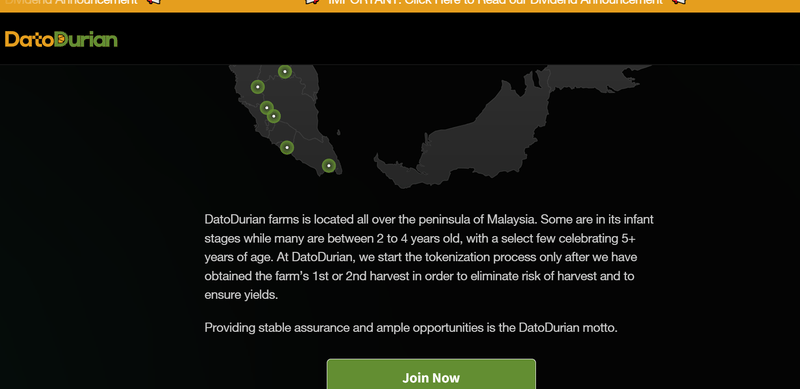
According to the platform, its farms are distributed across various regions in Malaysia and are at different growth stages. This structure can, to some extent, disperse the risk of single assets but also brings higher management complexity.
Different regions have varied climate conditions, yield cycles, and operational costs, meaning the multiple farm combination results in more dispersed income sources, while also increasing the difficulty of information disclosure. Without transparent data, it is difficult for investors to accurately assess the true performance of the overall asset portfolio.
Compliance Statements: The Gap Between Technical Capability and Regulatory Reality
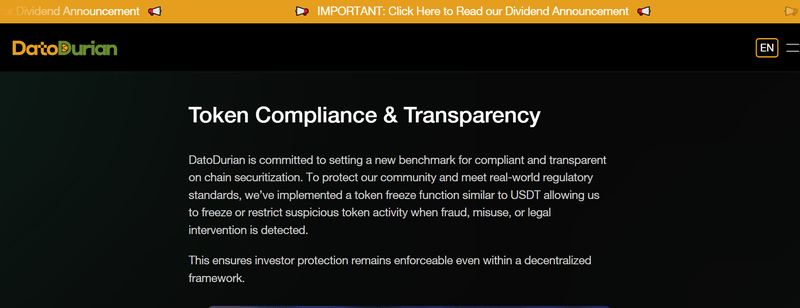
Dato Durian emphasizes its token's freeze mechanism similar to stablecoins in its "compliance and transparency" section, allowing transaction restrictions under certain conditions. This design shows some level of risk control technically but essentially reflects centralized control authority.
Real financial compliance usually involves regulatory licenses, legal frameworks, and investor protection mechanisms, but these key details are not clarified in the current disclosure. In other words, the platform's emphasis on "compliance" remains mostly at the technical level rather than having regulatory endorsement legally.
"Securitization 3.0": Technical Innovation or Structural Reorganization?
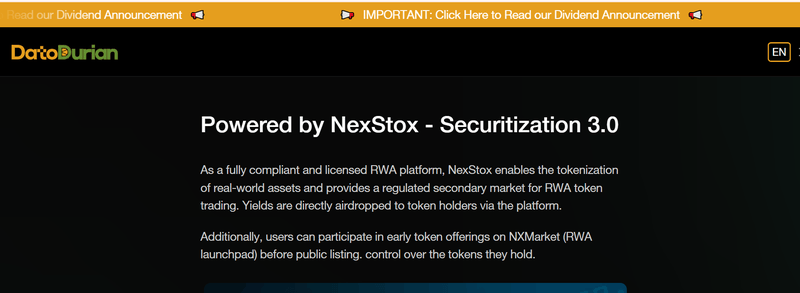
The platform introduces "Powered by NexStox - Securitization 3.0," aiming to build a new financial technology framework. Its structure largely consists of asset tokenization, revenue distribution, and secondary market trading.
This logic does not fundamentally differ from traditional asset securitization; its innovation mainly lies in digitizing processes and incorporating blockchain elements. However, key steps still rely on centralized platforms for completion, including asset review, income distribution, and trading matchmaking. This means its operational nature is still based on platform credibility rather than fully relying on on-chain mechanisms.
Team Composition: Financial Orientation Evident, Limited Agricultural Capability
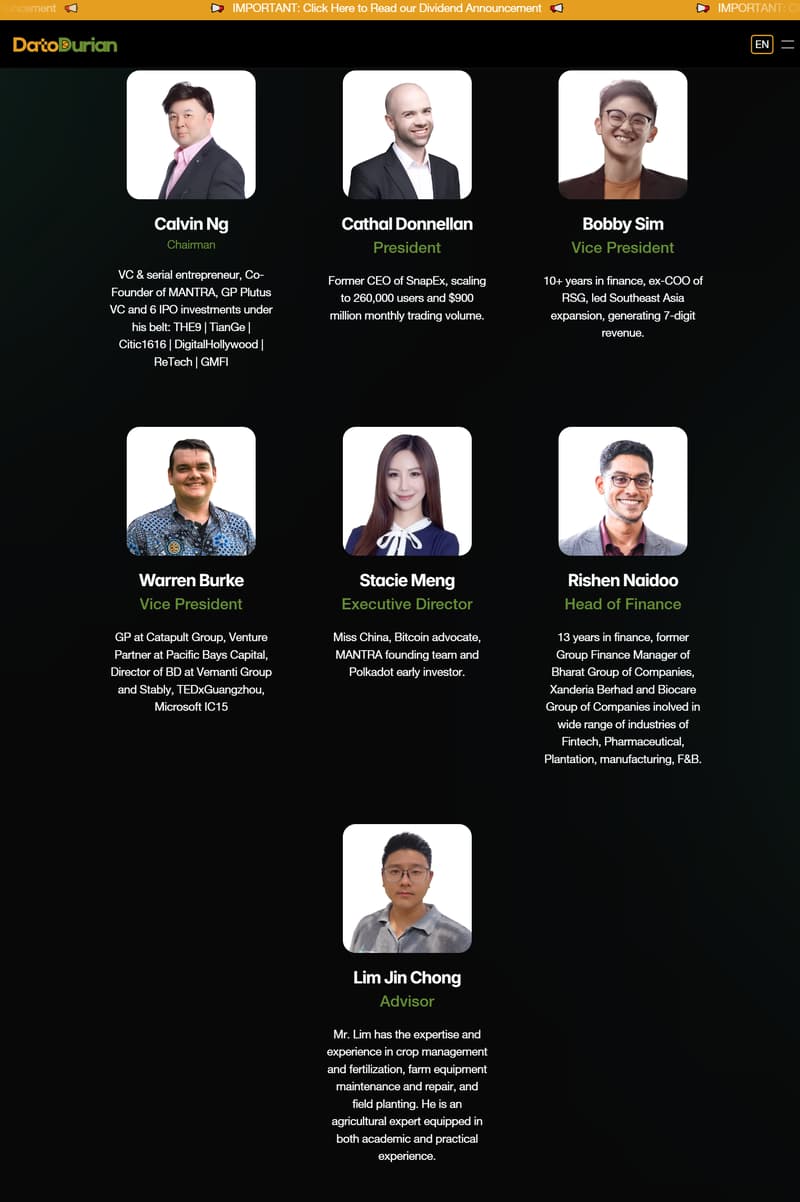
Based on the team background, many of Dato Durian's core members come from finance, investment, and the Web3 fields, emphasizing capital-raising experiences and market expansion capabilities. This structure aids the project's capital operations and marketing, but its expertise in agricultural asset management seems relatively limited.
Although the platform has introduced agricultural advisors, this role is not part of the core decision-making layer. This configuration suggests that the actual operation of agricultural assets might depend on external teams or partners rather than internal core capabilities. Furthermore, team resumes mostly provide generalized descriptions, lacking verifiable detailed information, which increases due diligence difficulty.
Social Media and Traffic: Market Presence Still Limited
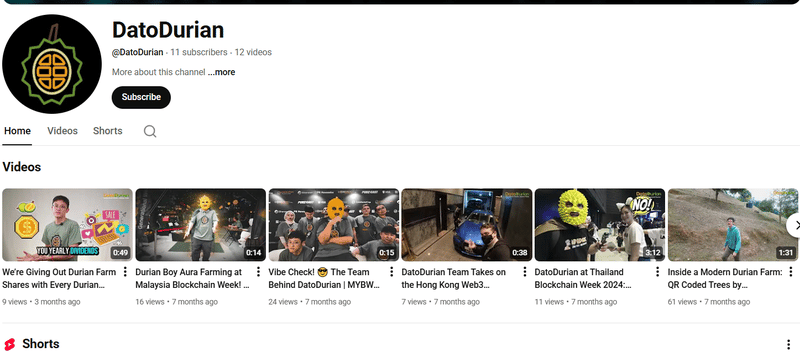
Dato Durian is present on multiple mainstream social platforms, including LinkedIn, X, Facebook, Telegram, and YouTube, but overall activity is low with limited content updates and interaction. Similarly, views on platforms like YouTube remain low, failing to create a significant spread effect.
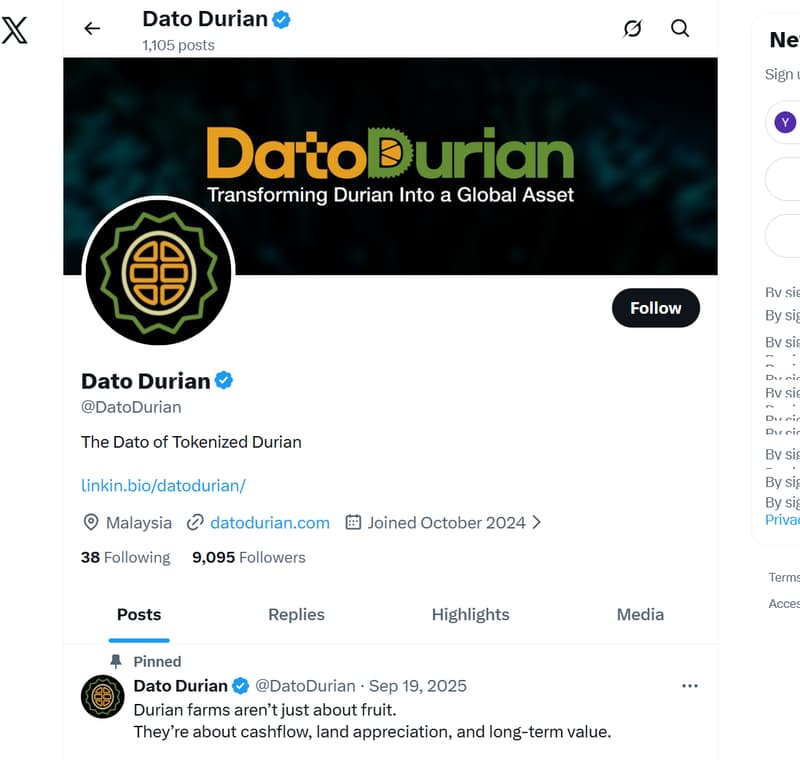
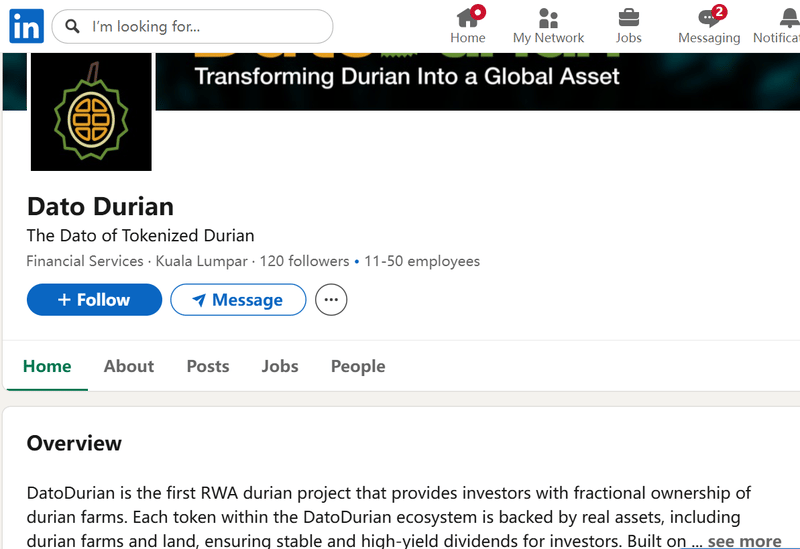
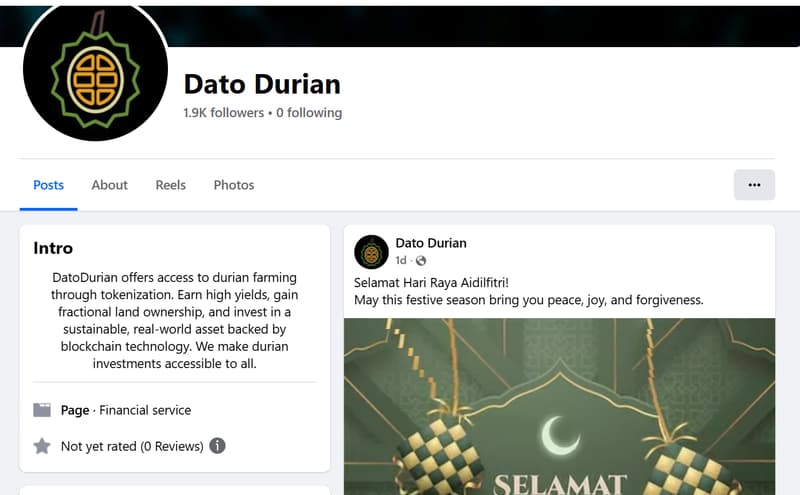
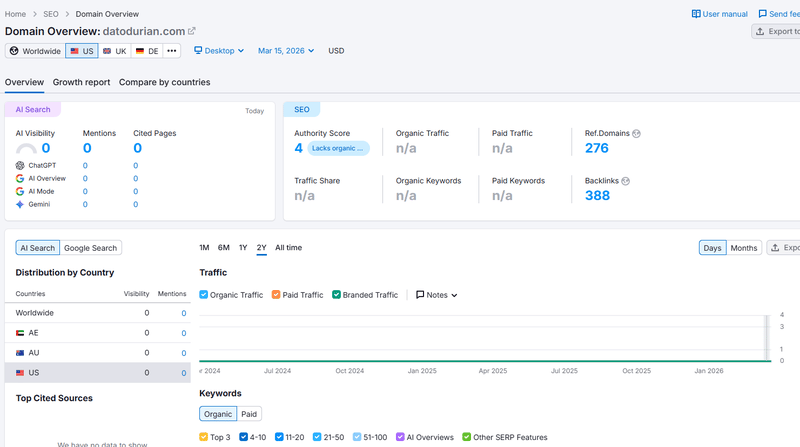
Simultaneously, data from third-party traffic tools like Semrush indicate that its website (https://datodurian.com/) has nearly zero visits. This phenomenon suggests that the platform's current user base and market recognition are in early stages, with limited external feedback and actual usage data.
Conclusion: Concept is Valid, but Key Verification is Missing
Overall, the "agricultural asset + blockchain" model constructed by Dato Durian is conceptually appealing and aligns with the development trend in the RWA track. However, its core issues lie in key aspects still relying on the platform's own descriptions and promises, including asset authenticity, revenue sources, compliance status, and operational transparency. Without third-party verification and regulatory support, this project is closer to a narrative-driven asset digitization attempt. Investors should understand its underlying structure while paying more attention to the completeness and verifiability of its information disclosure.
Disclaimer: This article is based on publicly available information and third-party data analysis and does not constitute investment advice. Information may change over time, and readers should verify and judge independently.

