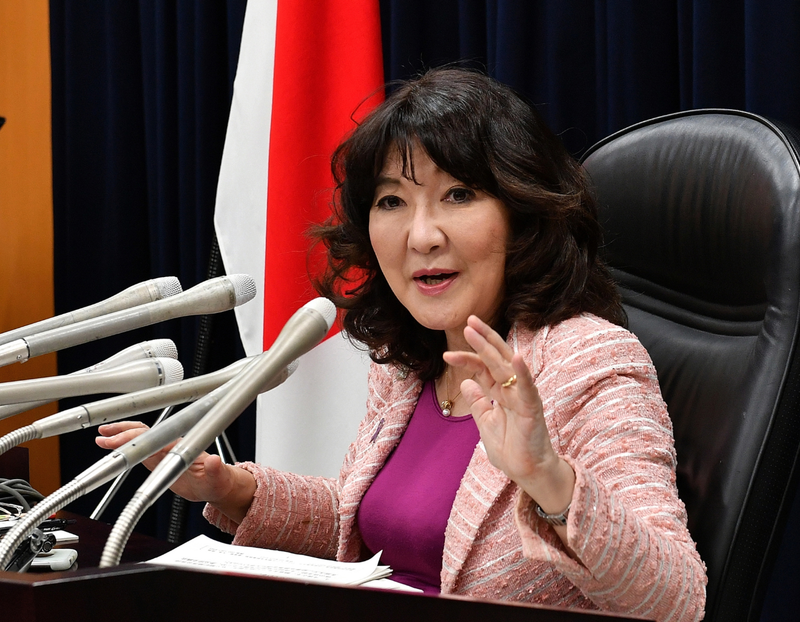
Katayama Satsuki Reaffirms Japan's Autonomy in Market Intervention
Japan’s Finance Minister, Katayama Satsuki, recently stated that the Japanese government possesses full autonomy in its interventions in the foreign exchange market, which fully aligns with the monetary agreement reached between Japan and the United States this September. She emphasized that should market exchange rate fluctuations exceed the fundamental scope, especially if caused by speculative behavior, the Japanese government will take necessary measures to respond.
In a public speech, Katayama explicitly pointed out that recent observed exchange rate fluctuations are clearly inconsistent with economic fundamentals. Without speculative capital intervention, the market should not exhibit such significant volatility. She further stressed that the government will not commit to a specific exchange rate or yield level but will intervene appropriately in excessive market fluctuations. This indicates that the Japanese government is confident in ensuring exchange rate stability and the health of financial markets through market intervention when necessary.
Measures to Address Market Volatility by Katayama Satsuki
In her speech, Katayama made it clear that the Japanese government is prepared to take appropriate action to address excessive market volatility, including speculative fluctuations. She noted that changes in exchange rates are influenced not only by market supply and demand but also by various external factors. Regarding fluctuations in the yen's exchange rate, Katayama did not commit to specific intervention measures but stressed that Japan will act prudently based on actual situations.
She specifically mentioned that although exchange rate fluctuations are subject to various factors such as market investor sentiment and the international economic situation, the government will not blindly pursue a specific exchange rate target but will make judgments and decisions based on the actual market situation. Katayama Satsuki's statement emphasizes the Japanese government's flexible response strategy to market fluctuations, indicating they will not distort market mechanisms through excessive intervention.
Japan Government Focus on Economic Growth, Fiscal Status Not Questioned
Additionally, Katayama Satsuki responded to questions regarding Japan's fiscal status. She stated that Japan’s fiscal status has not raised concerns among high-level officials in the Group of Seven (G7). She emphasized that the Japanese government is currently focused on promoting economic growth and expanding fiscal spending, particularly in supporting economic recovery, where fiscal policy has played an important role.
Katayama pointed out that although the Japanese government has increased fiscal spending, this does not imply severe issues with fiscal status. In fact, senior officials from other G7 countries also recognize Japan's fiscal policies and economic growth goals, considering Japan’s measures to drive economic development as appropriate. Katayama's statement shows that despite certain fiscal pressures, the Japanese government remains firmly supportive of economic growth as a primary policy goal.
Background and Future Outlook of the Japan-US Monetary Agreement
In this September's Japan-US monetary agreement, the two countries reached a consensus on the stability and cooperation of the foreign exchange market. Katayama Satsuki's remarks once again reaffirmed that Japan's intervention in the foreign exchange market is autonomous and aligns with the spirit of this agreement. This means that in cases of significant yen exchange rate volatility, the Japanese government will take necessary measures based on the agreement and its own economic interests.
Looking ahead, with changes in the global economic situation, especially influenced by factors such as US interest rate hikes, the yen may continue to face volatility. Katayama Satsuki’s speech provides a clear signal to the market that the Japanese government will flexibly respond to potential exchange rate fluctuations and market pressures based on economic and market conditions.