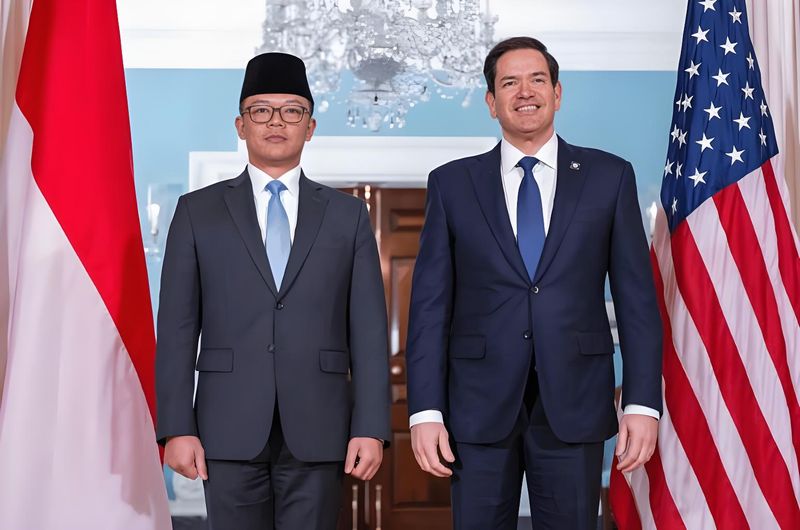
Indonesia and the United States Reach Trade Agreement, Resolving Substantial Issues
The Indonesian government announced that it has resolved all substantial issues in trade negotiations with the United States, with a formal agreement expected to be signed in late January 2025. This agreement is anticipated to bring economic stability to Indonesia and eliminate major uncertainties currently faced. Coordinating Minister for Economic Affairs Airlangga Hartarto stated in an online briefing on Tuesday that both parties have agreed on "key issues" in the draft agreement, emphasizing that the agreement aims to safeguard the shared economic interests of the two countries.
According to Hartarto, he previously met with U.S. Trade Representative Jamieson Greer in Washington and reached a consensus on the critical issues. The signing of the agreement will occur during Indonesian President Prabowo’s visit to the United States, and the two presidents are expected to officially sign the agreement at the end of January.
Core Content of the Trade Agreement
The core elements of this trade agreement include tariff exemptions, access to key minerals, and market access liberalization. The United States has agreed to exempt some tariffs on significant Indonesian products, including palm oil, coffee, and tea. Additionally, the U.S. will gain access to Indonesia’s key mineral resources, critical for U.S. industrial demands.
According to the framework announced in July, Indonesia will eliminate tariffs on over 99% of U.S. goods and will remove various non-tariff barriers. This means Indonesia will welcome U.S. products in a more liberalized market, while the U.S. will reduce tariffs on Indonesian goods from an earlier threat of 32% to 19%. Furthermore, Indonesia has agreed to purchase approximately $19 billion worth of products from the U.S., including 50 Boeing aircraft and substantial agricultural produce.
Negotiation Hurdles and Solutions
Despite reaching a consensus on the draft agreement, the negotiations encountered some hurdles. Certain requirements proposed by the U.S. could limit Indonesia's autonomy in signing strategic trade and investment agreements with other nations. To this, Hartarto responded that Indonesia's policies will not be restricted by this agreement, maintaining that the Indonesian government retains its independence in deciding policies in other trade negotiations.
Hartarto emphasized that the agreement is fundamentally both commercial and strategic, capable of fostering the economic interests of both nations. He pointed out that the agreeement's realization not only facilitates the opening of the Indonesian market but also provides more opportunities for U.S. goods to enter Indonesia, promoting closer economic cooperation between the two countries.
Outlook for Indonesia's Economy and Future Challenges
As the largest economy in Southeast Asia, Indonesia's trade agreement with the United States is set to significantly boost its economic growth and stability. The signing of this agreement is expected to further enhance Indonesia's position in the global market and infuse new vigor into its economy. However, despite addressing numerous trade barriers and market access issues, Indonesia still faces multiple challenges from the global market, particularly amid increasing uncertainties in the international trade environment.
Looking ahead, Indonesia needs to further solidify its economic cooperation with other countries while addressing potential external pressures and market fluctuations. Moreover, Indonesia must strengthen domestic economic reforms and enhance industrial competitiveness to ensure sustainable and healthy economic growth.
Overall, the trade agreement between Indonesia and the United States creates greater room for economic development for both nations and lays a solid foundation for Indonesia's future growth.