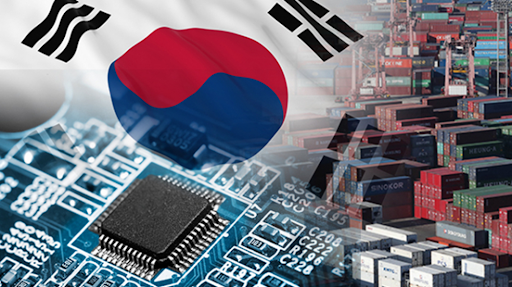
Record High in Ten Days of Export, Manufacturing Momentum Evident
South Korea's latest trade data indicates that global demand recovery is driving the country's manufacturing into a new expansion cycle. According to data released by Korean Customs, exports in the first ten days of December surpassed $20.5 billion, setting a historical high for the same period. This growth, benefitting from increased workdays, also reflects the regaining strength of key industrial chains, providing significant support to Korea's economy at the year's end.
The Korean trade structure, dominated by high-value-added manufacturing, is often seen as a leading indicator of global demand changes. The robust growth in this data highlights South Korea's crucial position in the supply chain against the backdrop of a rebound in global electronic manufacturing and industrial production.
Semiconductors Lead Growth, Technology Sector Recovery
Most notably, semiconductor exports have once again become the main engine of growth. Shipments in this category have increased by more than 45% year-on-year, providing significant momentum to overall exports. Industry observers generally attribute this trend to the rising demand for AI servers, memory chips, and high-performance computing.
Supply chain experts point out that a new cycle in semiconductors is emerging, with global tech giants accelerating investment in computational infrastructure, leading to a noticeable increase in orders for Korean companies. Meanwhile, petrochemicals and steel, among other basic industrial products, are also showing steady expansion, indicating a synchronous recovery in the manufacturing chain.
However, the decline in automobile and ship exports serves as a reminder of the segmented recovery of the Korean economy. The fall in car exports is linked to adjustments in global consumer demand, while the shipbuilding industry is significantly influenced by delivery cycles, resulting in considerable volatility.
Divergent Regional Market Performances, Recovery in Exports to China
Looking at export destinations, South Korea's performance with major trade partners shows significant variations. The renewed strength in exports to China suggests a recovery in East Asia's supply chain synergy. Multiple analyses indicate that China's inventory replenishment in electronics manufacturing and accelerated industrial production provide solid support for Korea's upstream industries.
Simultaneously, exports to Vietnam have risen sharply, offering additional evidence of strong growth in the Southeast Asian market. Vietnam's continued strengthening role in the global electronics supply chain makes it a key downstream manufacturing base for Korean enterprises.
In contrast, exports to the United States have seen a slight decline. Observers point out that recent stricter trade measures by the US on some Asian products are exerting pressure on certain Korean industries. Furthermore, the slow recovery of US manufacturing in a high-interest-rate environment also affects short-term import demand.
Slight Trade Deficit as Supply Chain Dynamics Continue to Evolve
Despite the record high in exports, the significant growth in imports during the same period resulted in a slight trade deficit. This reflects South Korea’s industrial system's high dependence on intermediate goods and energy, implying that manufacturing expansion generally accompanies increased imports.
From a broader perspective, the data from the first ten days of the month reinforces a trend: the global supply chain is concentrating around high-tech industries, with South Korea's semiconductor advantage making it a direct beneficiary of this shift. As more countries increase investments in digitization, energy transition, and AI infrastructure, Korea's export momentum is expected to continue through 2025.
Interplay of Demand Recovery and Policy Environment
Economists suggest that Korea's export rebound is supported by both the upward technological cycle and adjustments in regional economic policies. Over the coming months, trends in semiconductor prices, shifts in global monetary policy, and changes in trade policies will all affect Korea's external trade conditions.
Overall, Korea's bright start in December provides a strong conclusion to its annual export recovery and offers a new window for observing the global trade rebound in 2025.