If you've come across ads online lately for something like IntBlt, a "Web3 Era Contract + AI Intelligent Trading Platform," you might be drawn in by its flashy promotional phrases: covering more than 150 countries, 24-hour multilingual customer service, professional risk control team, trusted by global users... At first glance, it appears to be a well-established cryptocurrency exchange that's been in the industry for years.
But when we compare the official site’s promotions, domain information, compliance qualifications, app download methods, social media presence, and third-party reviews, we notice several cautionary indicators with IntBlt: an incredibly new website, using an MSB to portray "compliance," apps distributed solely through QR codes, and virtually no genuine user feedback found.
This article will not promote IntBlt neutrally nor will it repeat the official narrative, but will instead dissect the platform's background, regulatory truths, product and technology risks, customer service and social media absences, and external "praise packaging" from available public information. After reading it, you can decide for yourself: is IntBlt an opportunity, or a meticulously orchestrated high-risk trap?
A Platform Claiming "Global Reach" Turns Out to Be a Brand New Website
IntBlt presents itself beautifully: Web3 era, contract + AI intelligent trading, covering over 150 countries, 24-hour multilingual customer service. It sounds like an established exchange that's been operating for several years.
But digging deeper, the picture changes.
According to public whois information, the domain for IntBlt's official website, intbitinc.com, was registered on September 8, 2025, with certificate validity just beginning, and registrant information protected by privacy.
In layman's terms: this website is essentially a "brand new site," lacking operational history and reputation buildup.
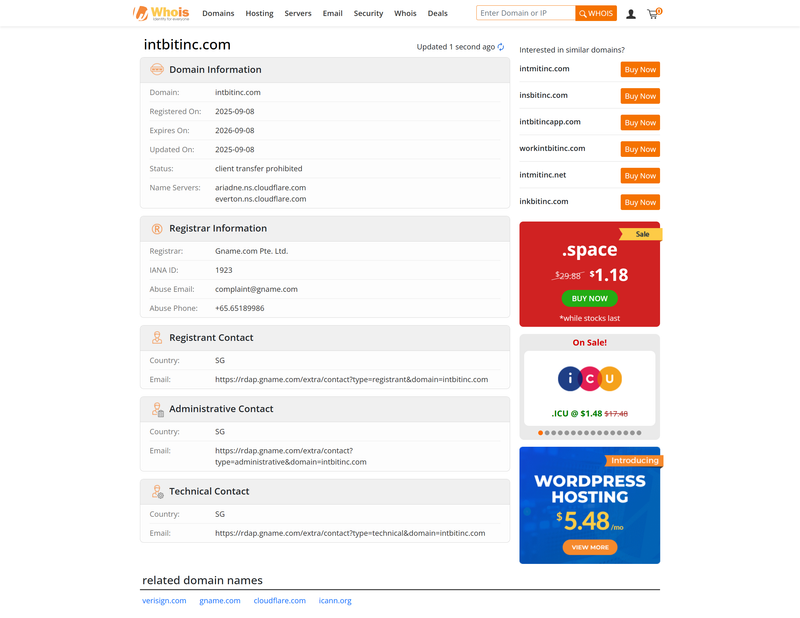
Even more intriguingly, some "third-party information sites" have emerged online, spinning tales for IntBlt—like "stable operation since 2017," "years of risk control experience," "user feedback from years of global use," and so on. When a domain has been registered for only a few months but claims to have been operating safely for many years, such timeline discrepancies are usually a glaring red flag in risk investigations.
Desperately Brandishing an MSB License, Still Far From Being a "Compliant Exchange"
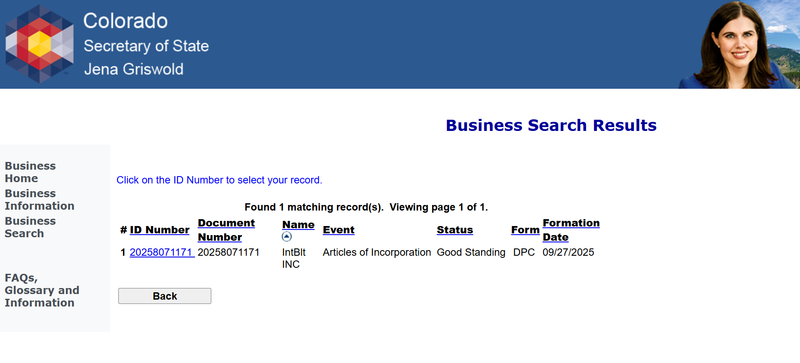
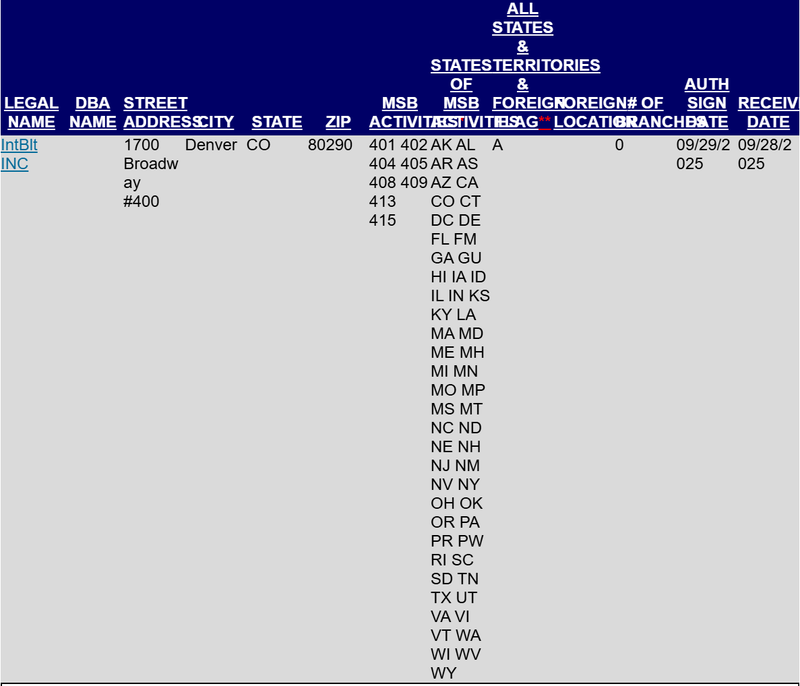
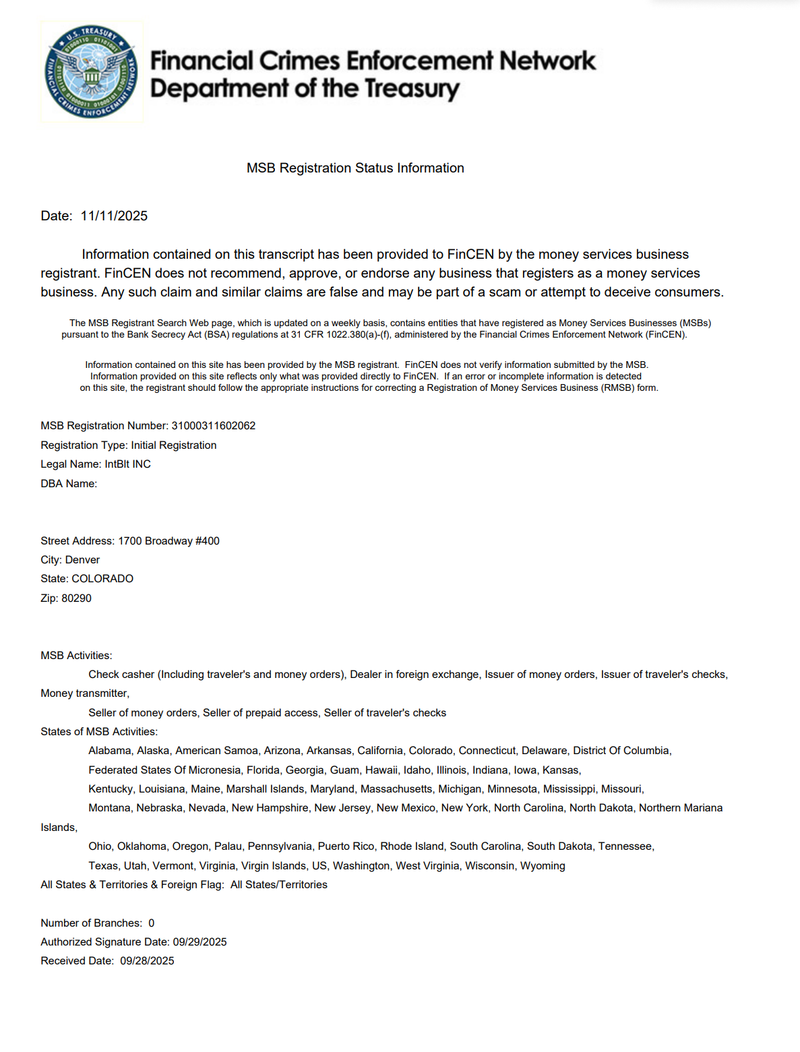
In terms of compliance, the favorite claim of IntBlt is that "the company is listed on the MSB registration list of the United States FinCEN."
At first glance, many newbies might think: wow, this is a platform recognized by US regulations.
But that's not the case.
According to the official rules of the US FinCEN, an MSB is merely a registration as a "Money Services Business," which is more of a filing nature under anti-money laundering and anti-terrorism financing frameworks, covering typical businesses such as currency exchange, remittances, traveler's checks, and prepaid cards.
It is not a license specifically for cryptocurrency exchanges, nor is it equivalent to substantial supervision like that for securities, futures, or digital asset exchanges.
Most critically, FinCEN itself emphasizes repeatedly in public statements that it does not "approve, endorse, or certify" any MSB business, and any publicity claiming to have "official FinCEN certification" is inherently misleading.
In other words:
- IntBlt is indeed on the FinCEN's MSB registration list;
- But this does not mean it has obtained a license to "legally conduct global cryptocurrency contracts & AI trading business";
- If a platform packages this as "global compliance" or "U.S. official endorsement," that is a very typical case of information misrepresentation.
We've seen the same tactic on many platforms alleged to be fraudulent: equate a low-threshold registration/filing with "international authoritative regulation," specifically targeting areas that are confusing to novices.
App Available Only Through QR Code, No Trace in Major App Stores
A normal cryptocurrency exchange would have its app listed on AppStore or GooglePlay, or at least provide a verifiable official link.
IntBlt's approach seems very "primitive":
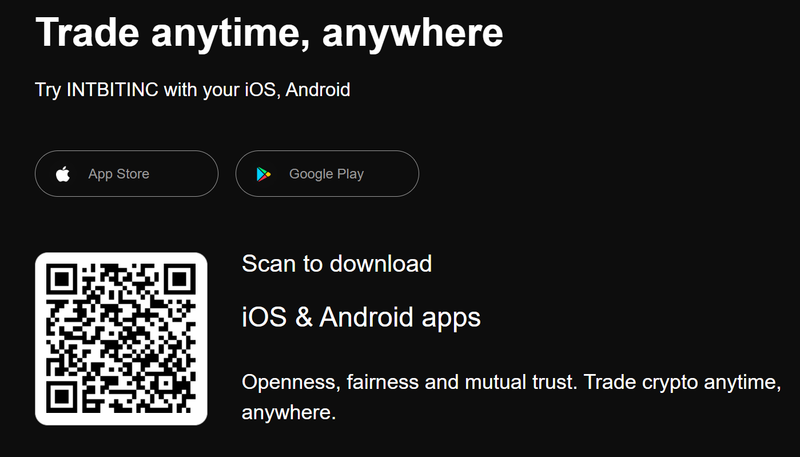
The official website only provides a QR code for users to scan to download the iOS/Android client, but searching "IntBlt," "IntBltExchange," or "intbitinc" in the AppStore and GooglePlay yields no official listing records.
What does this mean for ordinary users?
- They have no idea who signed the installation package they scanned;
- There's no basic safety review or historical evaluation from app stores to reference;
- If the app contains backdoors, malicious code, or remote control modules, there's virtually no technical means to detect it in advance.
In numerous examples of "black market platforms," apps available only through QR code downloads or not distributed through mainstream store channels are very common risk characteristics. The simple reason: if something happens, changing the domain, rebranding the app, and reviving it is much faster and cheaper.
Virtually No Social Presence, Customer Service Almost Nonexistent—Is This Really a "Global Platform"?
Let’s examine the platform's external communication channels.
According to IntBlt’s own promotions, it is a global blockchain asset trading platform offering 24-hour multilingual services and covering global markets. But all that's visible is a single email: [email protected].
There are no proper Twitter accounts, no LinkedIn company page, no publicly operating Telegram group/Discord community, and barely any basic brand exposure.
For a self-proclaimed "international" exchange, this "invisible operation" method is very unusual.
In a practical test conducted by TraderKnows via IntBlt's official website LiveChat, attempts to initiate a consultation resulted in messages being sent with no response, no visible customer service online status, and no other real-time communication methods provided.
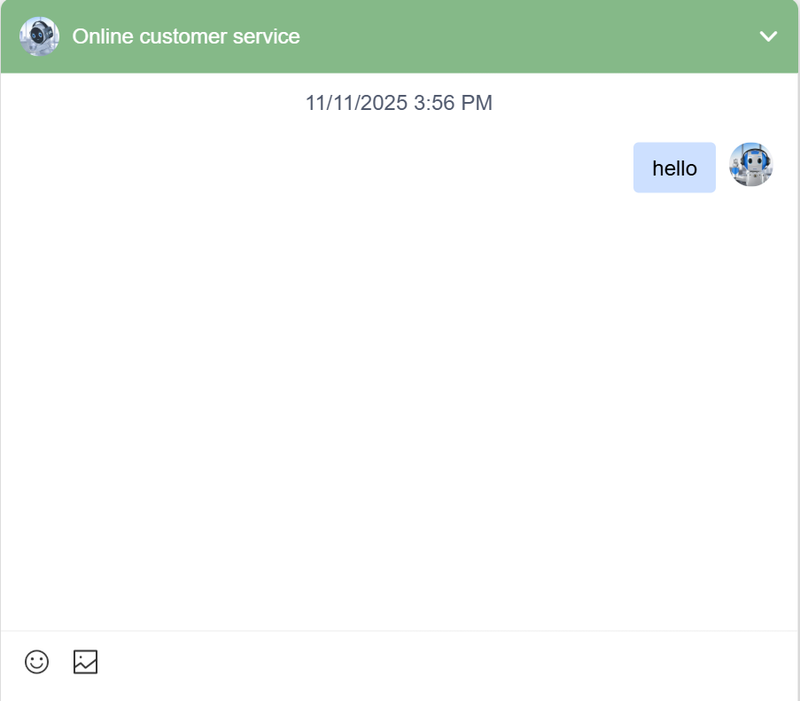
If this were a real contract & AI trading platform with users around the world conducting frequent trades, would it be reasonable for basic online customer service not to function? You can form your own mental picture.
A Circle of "Praise Websites" and "Media Articles" that Seems Like a Self-Crafted Reputation Cloak
If you search for IntBlt on search engines, you'll find a host of websites that appear to be "third-party information sites," "media reports," or "user reviews":
Things like "IntBltExchangeOverview," "IntBltExchangeInformation," "IntBltExchangeReviews," etc.
These pages share several common traits:
- The website names revolve around IntBlt, appearing as though the site was specifically created for this one platform;
- Highly similar content structure: large sections introducing the platform, followed by numerous "advantages," interspersed with a few “user reviews” that barely show any negative content;
- Publication dates of articles and copyright years are concentrated around 2025, with few indicating any earlier accumulation.
For truly independent third parties, it is uncommon to establish so many "specialized sites" densely for a newly launched platform; for a new platform eager to establish an image, this approach is very common—first narrating a story of "safety, transparency, compliance" in a controlled information pool, then using SEO techniques to push these packaged pages to the forefront of search results, so that new users see only positive content at first glance.
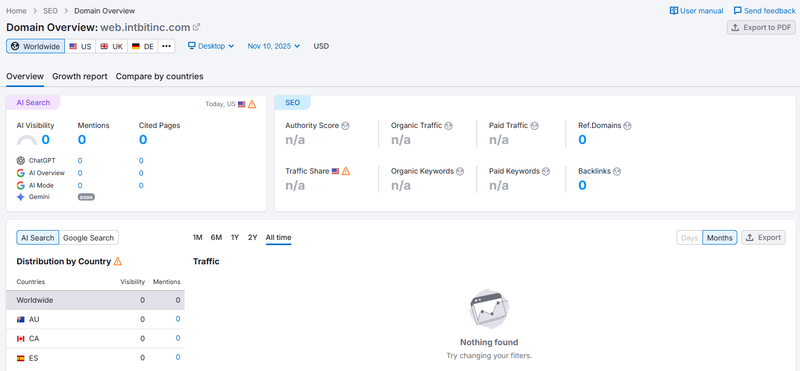
Meanwhile, traffic analysis tools show that IntBlt's main site (web.intbitinc.com) has almost no natural search traffic, keyword rankings, or external links, and very low overall exposure.
While a circle of “praise websites” creates a bustling sound, the trace of real users searching for or discussing the platform is pitifully small, which again raises red flags.
How Do Platforms Like This End Up? Common Patterns Seen
From numerous past examples, platforms with characteristics very similar to IntBlt tend to conclude in a few common scenarios:
- Initially attracting novices with "high returns + AI strategies + professional contract mentors" to continuously invest more money;
- Controlling the backend to manipulate spreads, create “wipeouts,” and slowly “clear” the account funds;
- When users want to withdraw funds, they are refused with various excuses: risk control reviews, tax supplements, thawing margins, needing a further deposit to unlock, etc.;
- Once the complaints pile up, the domain and app are swapped, the team changes its name, and the process starts anew.
This isn't to say IntBlt has already reached any particular stage, but its current behavior patterns align closely with these historically confirmed cases—especially in areas like "lack of transparency + ambiguous regulation + apps not distributed through formal channels."
For ordinary people, the important question has never been "is it already a scam?" but rather, "is the level of risk due to its lack of transparency worth betting your hard-earned money on."
If You Already Have Funds on IntBlt, Here Are Some Steps to Take
If you've already opened an account or even deposited money, it's wise to stay calm and first take these protective measures:
- Immediately stop further deposits
Expressions like "deposit more to unlock" or "add a little margin for withdrawal" are common tactics to ensnare people deeper. - Preserve any available evidence
This includes deposit records, transfer hashes, conversation screenshots, email exchanges, webpage captures, etc., as these are foundational materials for future negotiations with the platform or requests for assistance from regulators, police, or lawyers. - Test withdrawals with small amounts
Do not heed any claims that "only large amounts can be withdrawn" or "tax payments are required for withdrawals"; try a very small withdrawal first to see if the funds actually arrive, what the speed is like, and if there are any additional conditions. - Investigate on your own rather than just listening to the platform
Personally verify each claim through the FinCEN database, local regulatory websites, whois tools, third-party risk control platforms, instead of relying solely on "certificate screenshots" and "award images" sent by the platform. - Consult professional institutions if necessary, without delay
If significant withdrawal obstacles, backend anomalies, or prices deviating heavily from the market are discovered, don't delay. The sooner you collect evidence and seek professional help, the more can be potentially recuperated.
Final Thoughts
The story packaged by IntBlt indeed holds allure for those newly getting into crypto trading:
AI, contracts, a backdrop of large institutions, global presence, technological upgrades, media reports, a host of "user reviews from many years ago"...
But when you compare official promotions with publicly verifiable data, you'll find that the seemingly glamorous labels hide a significant amount of unexplained voids and contradictions.
For such a platform, the most prudent advice is simply:
Rather than risking your hard-earned money to "test" a highly opaque new platform, it is wiser to keep risks outside the door.
No one needs to draw conclusions for you. If you’re willing to spend half an hour to verify these clues yourself, whether IntBlt is trustworthy, you’ll likely have your own answer.