MAS Maintains Monetary Policy, Warns of Weakening Economic Momentum
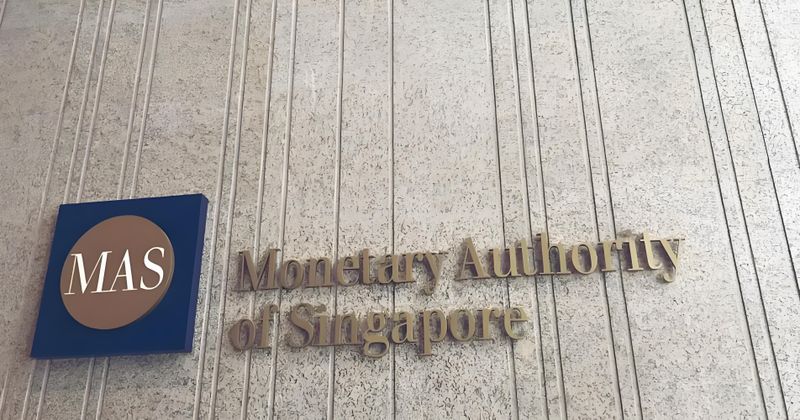
The Monetary Authority of Singapore (MAS) announced on Wednesday that it would keep its current monetary policy settings unchanged. This reflects a cautious and prudent macroeconomic stance amidst global trade tensions and complex economic outlooks. The MAS noted that while economic performance in the first half was strong, a significant slowdown is expected in the latter half of 2025, particularly in industries closely tied to trade.
The MAS statement indicated that it would continue to maintain the existing policy band for the Singapore dollar against a basket of major trading partners' currencies, including its slope, midpoint, and width, demonstrating that the existing policy framework is still considered appropriate and effective.
Singapore Faces External Risks Due to Reliance on Trade
As a typical export-driven economy, Singapore is highly dependent on exports and global supply chains. Amid increasing uncertainty in trade policy, primarily led by the United States, external growth pressures are mounting.
The MAS noted that industries directly linked to global trade, such as manufacturing, logistics, and trade financing, are expected to cool in the second half of the year. This forecast aligns with the recent trend of slowing export growth across East Asia, posing additional challenges to Singapore's "soft landing" economic strategy.
Pressure from Trump's Tariff Policies Remains, US-Singapore Trade Frictions Unresolved
Singapore's Deputy Prime Minister Heng Swee Keat revealed during his visit to Washington this month that the United States has made no commitments to maintain a 10% tariff exemption or discount for Singaporean goods. Despite the free trade agreement (FTA) between the US and Singapore since 2004, Singapore is still subject to the current unified tariff policy framework by the US.
Heng emphasized that, to date, Singapore has not received the so-called "tariff letter" nor reached any updated trade agreements with the US government. This situation casts a shadow over the prospects for Singapore's exports to the US and adds further uncertainty to economic policy formulation.
Monetary Policy Eased Twice, Current Stance Mainly "Observational"
Earlier this year, the MAS twice adjusted the slope of its exchange rate policy as a key measure to address the global slowdown and retreating inflation. The current policy has entered an "observational period," with the MAS stating that its current configuration is "appropriately positioned" to handle mid-term price stability risks.
Unlike most countries that adjust monetary policy through benchmark interest rates, Singapore uses a unique exchange rate-based mechanism, allowing it to respond flexibly to global capital flows and imported inflation.
Rising Economic Uncertainty Calls for Coordination of Fiscal and External Demand
Analysts suggest that with relatively limited monetary policy space, Singapore may rely more on fiscal policy and improvements in external demand to stabilize overall growth trajectory. As tangible improvements in the global trade environment remain elusive, and key export markets are still subject to policy shifts, Singapore's macroeconomic strategies are entering a fine-tuning phase.
Meanwhile, the market is also closely watching whether the government will introduce support measures for small and medium-sized enterprises or consumers to alleviate potential growth pressures in the second half of the year.