
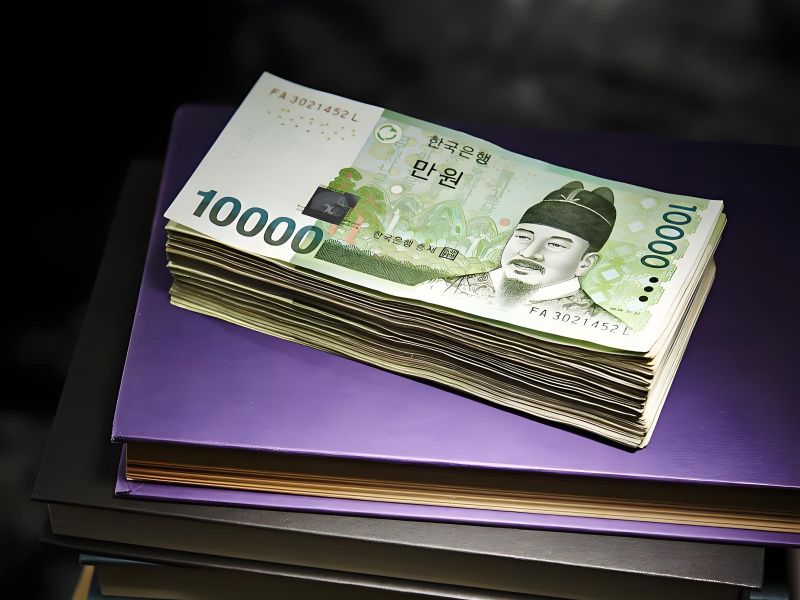
The US Calls for Korean Won Appreciation, Exchange Rate Becomes Negotiation Focus
According to the Korea Economic Daily, during a recent round of US-South Korea bilateral trade talks, the US clearly expressed its position of wanting the Korean won to appreciate. Although the source of the information was not publicly cited, this news has attracted significant attention from financial markets and policy circles. The upcoming US-South Korea finance ministers' meeting on July 31 will be the final round of negotiations, during which the exchange rate issue is expected to once again become the focal point of discussion.
In recent years, the Korean won has remained relatively low against the US dollar, sparking concerns about trade friction and placing political pressure on South Korea's export-driven economy. The US Department of the Treasury has repeatedly emphasized the potential impact of "exchange rate imbalances" on bilateral trade, urging its Asian allies to ensure the transparency and stability of currency markets.
Is the Korean Won Undervalued? Differing Opinions from the Market and Officials
Market analysis widely believes that the Korean won is indeed underperforming based on South Korea's current economic fundamentals. A stable manufacturing sector, consistent export growth, and ample foreign exchange reserves should support a stronger exchange rate for the won. However, its actual performance shows the profound impact of external factors such as risk aversion, global capital flows, and geopolitical risks, keeping the won in a relatively depreciated range.
The South Korean government's response to US demands is mired in a dilemma. On one hand, strengthening the exchange rate could affect export competitiveness; on the other, in the context of rapidly changing global policy environments, rashly intervening in the foreign exchange market could heighten financial market volatility risks.
Limited Policy Response Space, Intervention Disclosure Mechanism as a Potential Bargaining Chip
In terms of negotiation strategy, it may be difficult for South Korea to introduce policy options that directly support the appreciation of the won. Comparatively, a more feasible response could be adjusting intervention transparency. Rumors suggest that the Bank of Korea may consider changing its current practice of quarterly foreign exchange market intervention data publication to monthly disclosures, as a goodwill "bargaining chip" with the US.
While this move won't directly alter the supply and demand dynamics of the won, it could enhance market perception of the transparency of South Korea's foreign exchange policies, thereby alleviating US concerns about "exchange rate manipulation."
Intertwined Political and Economic Interests, Difficulties in Breaking Negotiation Impasse
At this sensitive junction where the US government is intensifying external pressure on trade policies, the issue of the Korean won exchange rate has been incorporated into the broader trade negotiation framework. Considering the US has previously engaged in separate communications on exchange rate issues with countries like Japan and Singapore, the focus on the Korean won can be viewed as a strategic extension.
However, South Korea's situation is more complex than it appears: it needs to balance maintaining export competitiveness, stabilizing capital markets, and sustaining good relations with the US. Against this backdrop, any exchange rate adjustment may have far-reaching implications.

