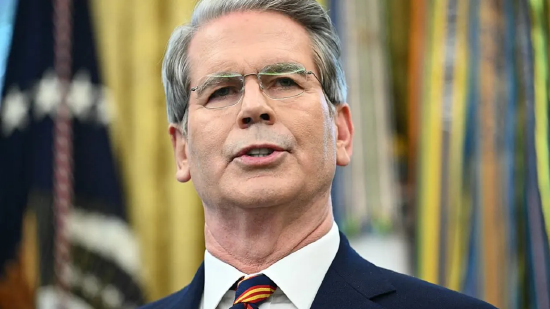
Treasury Secretary Publicly Supports Tariff Policy
U.S. Treasury Secretary Besent recently reiterated his confidence that the Supreme Court will not overturn the Trump administration's tariff measures. He stated that these tariffs are set based on national security and economic interests, and revoking them would have "catastrophic" consequences, including the return of hundreds of billions of dollars in tariff revenue. He also emphasized that he will systematically elaborate in future columns on how to ensure the dollar remains the core global reserve currency.
Supreme Court's Rapid Review Draws Attention
The Supreme Court has agreed to hear the related case in early November, and this tight schedule indicates the court's intention to make a swift decision. The case involves import taxes with broad coverage, affecting trillions of dollars in international trade, and is one of the most controversial tariff measures since 1930. If the court ultimately rules unfavorably, the average effective tariff rate could be halved, significantly impacting U.S. trade policy.
White House Officials Express Unified Stance
Besent emphasized that the International Emergency Economic Powers Act (IEEPA) invoked by Trump grants the president the authority to impose tariff measures in special circumstances. Citing arguments from the government's chief lawyer, he claimed taxing imports is part of the president's legitimate powers. He insisted that if the current measures are invalidated, the government can still utilize relevant provisions from the Smoot-Hawley Tariff Act of 1930 to ensure the continuation of tariff policies.
The Dollar's Status Becomes the Next Focus
Beyond the tariff issue, Besent revealed he would present a comprehensive framework in writing that explains how to maintain the dollar's leading position as a global reserve currency. He emphasized that the U.S. stands at a critical juncture and needs to strengthen systems and policies to prevent the dollar's status from weakening. His statement follows his criticism of the Federal Reserve, highlighting his firm stance on financial governance issues.
Employment Data Revision and Monetary Policy
Besent also used the latest non-farm payroll data revision to call on the Federal Reserve to recalibrate interest rate policy. The data showed that over 910,000 jobs added in the past year were revised downward, reflecting a more severe economic situation than previously thought. Quoting Keynes, he emphasized the need to adjust policies based on new facts and criticized the Federal Reserve for "high rates stifling growth."
Federal Reserve Personnel and Independence Controversy
Beyond monetary policy, Besent also expressed his views on internal governance at the Federal Reserve. He supported Trump's nominee, Stephen Miran, hoping Miran could secure confirmation voting rights before the September 16-17 interest rate meeting. Regarding Trump's controversial dismissal of board member Lisa Cook, he refused to respond directly but insisted the dismissal was "justified."
Interplay of Policy and Justice
The tariff case is not just an economic issue but also a contest between the Trump administration and the judicial system. The Supreme Court's ruling will directly affect trade policy's trajectory in the coming months and indirectly shape the dollar's status and Federal Reserve policy expectations. For the market, it's a complex game involving politics, economics, and law.
Awaiting Supreme Court Ruling
Besent's remarks once again highlight the Trump administration's persistence with its tariff policy. He attempts to reinforce the policy's legitimacy through legal means while reshaping market confidence in the dollar and economic governance through public discourse. As the Supreme Court hearing approaches, the final verdict will not only determine the fate of the tariffs but also serve as a crucial barometer for evaluating the legality and future impact of Trump policies.