The Institutional Tension Behind Controversial Appointments
Stephen Milan, the new Federal Reserve governor, cast a dissenting vote at the latest meeting, advocating for quicker and more substantial rate cuts, starkly opposing the mainstream view of "inflation still poses upward risks." On the surface, this appears to be a technical policy debate; on a deeper level, it reflects the entanglement of personnel appointments, policy orientation, and political demands. The fact that Milan maintains close ties with the White House economic team amplifies market concerns about the "politicization of monetary policy."
The Real "Variable": Congress's Appointments and Oversight
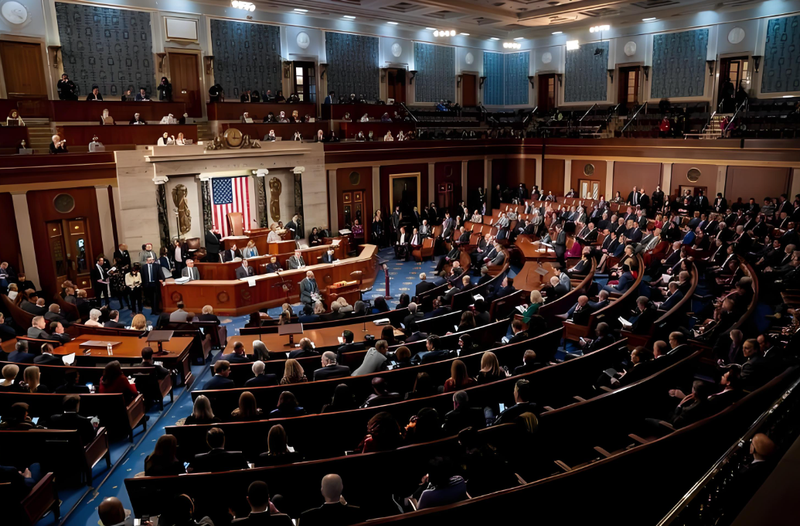
The Federal Reserve's power and "dual mandate" stem from congressional authorization, and its independence requires continuous backing from Congress. The key issue is not whether the White House "wants to influence," but rather the extent to which the Senate is willing to cede its influence over the Federal Reserve to the executive branch, including the timing and standards for confirming governors and chairs, as well as the ongoing evaluation and accountability of the policy framework. When the Senate is polarized and oversight mechanisms are inefficient, the Federal Reserve’s "independence moat" becomes shallower.
How Dysfunctional Oversight Erodes Credibility
In key years of rising inflation and policy shifts, Congress could have systematically evaluated the average inflation target framework, communication guidance, and the conditions for starting and stopping interest rate hikes through hearings and special reviews. However, in reality, oversight demands are diluted by politicized issues, and bipartisan consensus is missing. Dysfunctional oversight does not necessarily mean immediate intervention, but it creates a "vacuum" in social expectations, providing space for the executive branch to expand its power, thereby weakening the central bank's credibility and policy continuity in making difficult decisions.
Market Pricing Concerns: Independence Expectations and Inflation Anchors
Although long-term inflation expectations remain anchored around 2%, this "anchor" relies on stable trust in the central bank's independence and professionalism. Once personnel and procedures are frequently subjected to political tug-of-war, the market's expected range for future anti-inflation efforts and policy consistency will widen, and risk premiums are likely to rise. In the short term, divergence in the dot plot and differing official statements will exacerbate fluctuations in U.S. debt and exchange rates; in the medium term, if Congress's institutional support for the Federal Reserve weakens, asset pricing will rely more on political events than data pathways.
The Path to Restoration: Transparency and "Accountability by Department"
In a noisier political environment, the Federal Reserve can proactively enhance transparency in "policy-forecast integration": by clearly linking each member's interest rate path to their outlook on unemployment, inflation, and growth, reducing the "choice of position"; increasing regularity in framework evaluation publications, strengthening technical dialogues with Senate and House Financial Services and Banking Committees, and refocusing supervision on "rules, processes, and objective functions." External communication should more clearly explain the trade-off logic and timeframe in conflicts under the dual mandate to solidify social expectation anchors.
Protect the "Institutional Anchor," Not Just Slogans
The Milan debate is just a facade; the "White House vs. Federal Reserve" narrative can easily become misguided. The true determinant of independent success lies in Congress’s institutional strength in appointments and oversight, and whether both parties can leave "technical governance" public space for the central bank. When political division weakens this space, market confidence in policy coherence is eroded. To maintain the long-term goals of price stability and full employment, the invisible but crucial institutional line between Congress and the Federal Reserve must first be preserved.