• Home
  • Categories
  • News
  • Community
EN
EN
Home
CategoriesNewsGlossaryCommunityAbout Us
Contact Us
Social Media
Region
🌏International
Region
🌏International

Copyright © 2023-2026 Traderknows Ltd. All rights reserved.

Contact
Home
/
News
/
Won falls for 10th day to 1,479 as dollar demand surges on outflows

Won falls for 10th day to 1,479 as dollar demand surges on outflows

TraderKnowsTraderKnows
01-18
Summary:The won fell for a 10th straight day, briefly hitting 1,479.3 per dollar, near the lowest since 2009. Capital outflows and import FX buying lifted dollar demand, prompting stronger verbal intervention and policy responses.

Korea

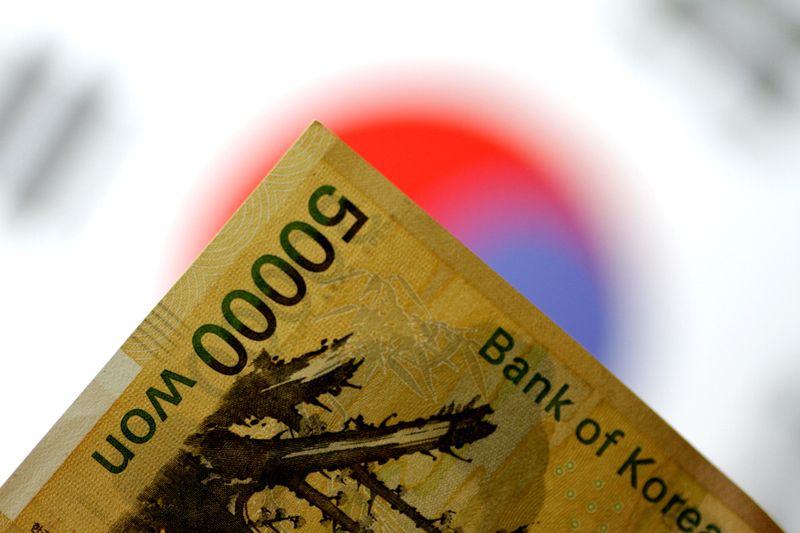
On Wednesday during the Asian trading session, the Korean won weakened again, as market focus on stabilizing exchange rate policies intensified. Intraday, the won fell to around 1479.3 against the dollar, extending its decline for ten consecutive trading days, just a step away from the low range seen since March 2009.

Warning Signal: Record Declines, Lagging Performance This Year

Driven by a "unilateral trading" sentiment, the Korean won has depreciated by over 2.6% this year, being described as one of Asia's weakest currencies. The direct impact of falling exchange rates includes rising import costs and increased inflationary pressures, which might depress consumer spending and corporate profits.

Where Is the Dollar Demand Coming From: Capital Outflows and Import Purchasing

The core of this depreciation pressure lies in strong dollar demand. According to data from the Korea Securities Depository, by January 13, Korean retail investors purchased approximately $2.2 billion in U.S. stocks this year; simultaneously, importers concentrated on purchasing foreign exchange for external payments, which temporarily boosted dollar demand. Foreign investment selling off Korean stocks exacerbated the local currency's weakness in a "tailwind" effect.

External Variables Adding Pressure: Strong Dollar, Weak Yen, and Oil Price Concerns

Besides capital flows, the external environment is also not favorable: Strong U.S. data supports the dollar; news related to Japanese elections unsettles the yen, indirectly dampening regional currency sentiments; concerns about rising oil prices due to Middle Eastern tensions also make exchange rates and inflation chains more sensitive for energy-import-dependent Korea.

What Authorities Are Doing: Beyond Verbal Intervention, Discussing Quicker Measures

In recent weeks, Korea has intensified verbal intervention and implemented measures including reducing related foreign exchange stabilization costs for banks, but the short-term decline has not been reversed. The latest development is that Korea's finance minister announced the rapid introduction of measures to address exchange market fluctuations, partially attributing recent supply-demand imbalances to the expansion of overseas securities investments; central bank researchers also noted that the won above "1,400" does not match economic fundamentals, and market sentiment might be excessively pessimistic.

Business Cooperation Telegram Eng

Risk Warning and Disclaimer

The market carries risks, and investment should be cautious. This article does not constitute personal investment advice and has not taken into account individual users' specific investment goals, financial situations, or needs. Users should consider whether any opinions, viewpoints, or conclusions in this article are suitable for their particular circumstances. Investing based on this is at one's own responsibility.

The End
Previous
Next
Comments
0/1000
TraderKnows
Written byTraderKnows
Created date:2026-01-14 08:47
Last Updated:2026-01-18 10:20
Independent Analysis: Manually researched and fact-checked by the TraderKnows Compliance Team, based on public regulatory records.
Wiki
Currency devaluation

Currency depreciation refers to the decline in the value of a country's currency relative to other currencies in the foreign exchange market.

Recent Post

Trump Invokes Defense Production Act with 850 Million USD for Coal Power to Meet AI Demand

06-05

NY Fed Index Shows High Supply Chain Pressures as Geopolitical Conflicts Raise Global Inflation Con…

06-05

Japan's Real Wages Rise for Fourth Consecutive Month, Fueling June BOJ Rate Hike Bets

06-05

China Flexible Employment Exceeds 300 Million as Blue-Collar Wage Growth Outpaces White-Collar for…

06-05

South Korean Stocks Post Steepest Weekly Drop Since March as Tech Valuations Reset

06-05

China Commercial Paper Rates Drop in Early June Amid Rising Bank Demand

06-05

UK House Prices Unexpectedly Fall in May as Geopolitical Tensions Push Up Borrowing Costs

06-05

Massive Intervention Fails to Save Yen as Short Positions Surge Near Historic Lows

06-05

AI Momentum Pauses as Broadcom Outlook Misses High Expectations; Markets Await Payrolls

06-05

SpaceX Launches 75B USD IPO Roadshow as Access Blocked in Mainland China and Hong Kong

06-05

Global Gold ETFs See $2 Billion Outflows in May as Capital Pivots to Tech Assets

06-05

Nikkei Drops Over 1% on Tech Sector Pullback While Real Wage Growth Provides Support

06-05

South Korea Lifts Mandatory Reporting for Crypto Transfers Over 10M Won

06-05

Amundi Says Asian AI Stocks Supported by Fundamentals as Fed Path Poses Key Risk

06-05

Taiwan Stocks Close 1.33% Lower on Broadcom Drop But Hold Key Technical Support

06-05

Risk Warning

TraderKnows is a financial media platform, with information displayed coming from public networks or uploaded by users. TraderKnows does not endorse any trading platform or variety. We bear no responsibility for any trading disputes or losses arising from the use of this information. Please be aware that displayed information may be delayed, and users should independently verify it to ensure its accuracy.