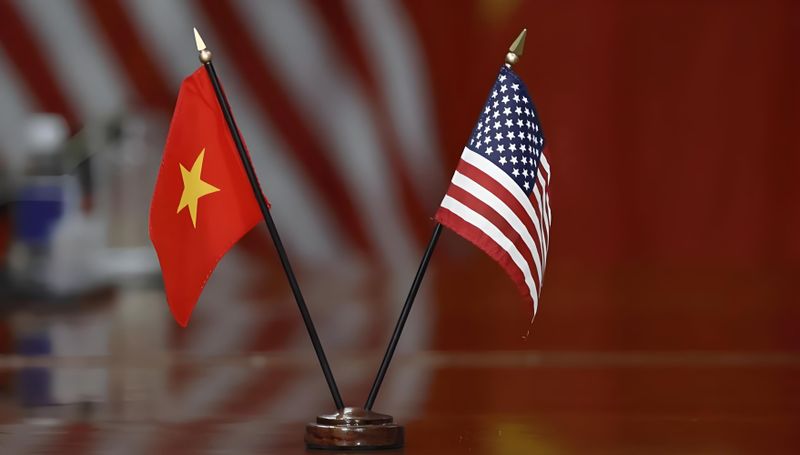
Vietnam Strengthens High-Tech Cooperation with the United States
The Vietnamese government announced on Thursday that Deputy Prime Minister Tran Hong Ha, during a meeting with U.S. Ambassador to Vietnam Marc Knapper, stated that Vietnam will continue to expand economic and trade cooperation with the United States, particularly in high-tech industries and the aviation sector. This statement is seen as a strategic signal under the restructuring of geopolitical economic patterns, indicating Vietnam's desire to play a more active role in global supply chain reconfiguration.
Tran Hong Ha pointed out that Vietnam plans to increase the purchase of U.S.-made aircraft, semiconductor equipment, and critical components to support domestic industry upgrades and the modernization of the aviation industry. Analysts believe that this move will not only help enhance Vietnam's high-end manufacturing capabilities but will also deepen mutual trust between the two countries in technology and supply chain security.
Semiconductors and Aviation as Cooperation Focus
According to the Vietnamese Ministry of Industry and Trade, both sides focused on discussing the prospects for cooperation in the semiconductor industry chain. Vietnam hopes to attract more investment from U.S. chip companies and enhance its competitiveness in chip packaging, testing, and design through technology transfer and training programs.
Tran Hong Ha emphasized at the meeting that Vietnam is promoting the semiconductor industry as one of the national strategic pillars and will build more high-tech parks to attract U.S. investments. He stated, "Vietnam is willing to provide the most favorable conditions for U.S. companies to establish R&D and production bases locally, including tax incentives, land use convenience, and talent support."
In the aviation sector, the Vietnamese government plans to introduce more Boeing aircraft and related technologies to meet the rapid growth demands of the country's air transport. Industry insiders point out that as Vietnam's tourism and logistics markets expand, the demand for advanced aircraft models is increasingly urgent. Cooperation with U.S. manufacturers will help improve aviation safety standards and service quality.
U.S.-Vietnam Relations Continue to Warm, Deepening Economic Ties
In recent years, bilateral relations between the U.S. and Vietnam have continued to warm. Since upgrading their relationship to a "comprehensive strategic partnership" in 2023, cooperation in trade, technology, education, and energy has noticeably accelerated. The U.S. has become Vietnam's second-largest export market, while Vietnam is one of the fastest-growing trading partners for the U.S. in Southeast Asia.
According to official Vietnamese statistics, bilateral trade between the U.S. and Vietnam surpassed $120 billion in 2024, growing nearly 10% year-on-year. Electronics, machinery, and agricultural products are the main trading items. Experts believe that if Vietnam's procurement plan is successfully executed, it will further promote the balanced development of bilateral trade.
Tariff Issues as Potential Points of Friction
Despite strong cooperation intentions, differences in trade policies remain between the two sides. Tran Hong Ha urged the U.S. to fully consider Vietnam's economic realities in tariff negotiations, stating that "as an emerging manufacturing center, Vietnam still needs a certain policy space to support industrial development."
The U.S. has previously imposed tariffs on steel, electronics, and textiles exported from some Southeast Asian countries, attracting regional attention. Analysts point out that Vietnam's statement aims to pave the way for future negotiations and seek more favorable trade conditions.
An economist familiar with the negotiation process stated, "Vietnam's strategy is to balance between cooperation and negotiation, both expanding high-tech field purchases from the U.S. and hoping to reduce trade friction through economic reciprocity."
Vietnam May Become a Key Node in the U.S.-Asia Supply Chain
As the restructuring of global industry chains accelerates, Vietnam is actively planning core high-value-added manufacturing industries, including semiconductors, aviation, and clean energy. The commitment to U.S. procurement is not only a practical need to promote industrial upgrading but also reflects Vietnam's wish to strengthen its strategic position in the regional supply chain.
Market analysis suggests that if U.S. companies expand their investments in Vietnam, the country is poised to become a new center for semiconductor production and assembly after Malaysia. This will not only help reduce supply risks but also further solidify U.S.-Vietnam economic and trade relations, bringing new growth momentum to the Southeast Asian region.