

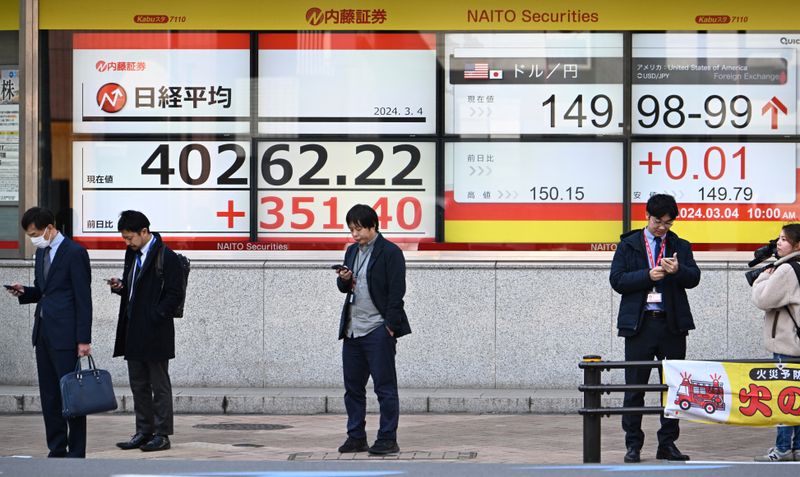
Nikkei Index Soars to New Record at 51,500 Points
On October 31, Tokyo time, the Japanese stock market achieved another historic breakthrough. The Nikkei 225 index reached a record high of 51,513.66 points during Thursday's trading, closing up 0.4% at 51,417.50 points. The Topix index similarly rose 0.4%, ending at 3,290.03 points, indicating sustained strong market sentiment.
Analysts have attributed the strong performance of the Nikkei Index to the continuous rise in technology stocks and support from improved corporate profits, particularly within the semiconductor, automotive, and energy sectors, where buying interest has significantly increased. Investors remain confident in the long-term growth of industries such as artificial intelligence, semiconductors, and new energy.
In contrast, Japanese government bond yields also rose, with the two-year bond yield climbing to 0.95%, approaching a 16-year high. The market perceives this as a precursor to a possible minor adjustment in the Bank of Japan's monetary policy in the coming months.
Market Focuses on Bank of Japan Meeting Amid High Rate Expectations
Despite the heated market atmosphere, investors remain focused on the upcoming Bank of Japan policy meeting. The market generally expects the Bank to maintain its ultra-loose interest rate unchanged at this meeting but may hint at a rate hike window in December or January next year in its statement.
Takashi Takahashi, an economist at Tokyo Mitsubishi UFJ Bank, noted: "With inflation consistently exceeding the target range, the likelihood of the Bank of Japan taking action before the year-end is increasing. This meeting may not directly raise rates, but it could signal an impending policy adjustment."
The yen has slightly strengthened in the foreign exchange market, with the dollar-yen exchange rate at 152.56, showing a slight correction from the previous day's depreciation trend. Analysts suggest that if the Bank of Japan maintains its current stance, the yen may remain under pressure, but subtle changes in policy expectations could lead to increased volatility in the foreign exchange market.
Tech Sector Leads Gains as Foreign Investment Continues to Flow into Japanese Market
The driving force behind this Nikkei rally remains the technology sector. Chip equipment manufacturer Tokyo Electron rose nearly 2%, with major tech stocks like SoftBank Group, Sony, and Nintendo also rising. Analysis indicates that the investment boom in artificial intelligence and the global restructuring of supply chains are benefiting Japanese tech companies.
Additionally, continuous foreign capital inflow into the Japanese stock market has been a contributing factor. According to the latest data from Japan Exchange Group (JPX), foreign investors made net purchases of approximately 1.2 trillion yen worth of Japanese stocks in October, marking the highest level since the beginning of 2023.
UBS Group strategist Masashi Akutsu stated: "Foreign investors see Japan as an 'undervalued growth market.' In a global high-interest-rate environment, Japan's companies' stable cash flow and relatively low financing costs are more attractive."
Policy Uncertainty Persists as Rate Hike Prospects Sway Market
Despite the buoyant stock market atmosphere, there is still disagreement within the market regarding the future policies of the Bank of Japan. Some analysts believe that with inflationary pressure and wage growth occurring simultaneously, there is no longer a reason for the Bank to maintain negative interest rates.
Takeshi Yamaguchi, Chief Economist at Morgan Stanley Japan, stated: "The Japanese economy is at a structural turning point. A tight labor market, moderate price increases, and improving corporate earnings all support exiting ultra-loose policies."
However, other perspectives suggest that the Bank of Japan may remain cautious. A report from Nomura Securities noted that if economic growth slows or global demand fluctuates, the Bank may opt to delay raising interest rates until 2025 to ensure inflation remains steadily above 2%.
Stock Market May Experience Short-Term Correction, Long-Term Potential Remains
Market insiders generally believe that while short-term fluctuations due to policy uncertainty may occur, the long-term outlook for the Japanese stock market remains optimistic. Growth in corporate profits, the advancement of structural reforms, and the return of overseas funds continue to be the three main drivers supporting the market.
Junichi Makino, Chief Strategist at Nikko Asset Management, summarized: "The breakthrough of the Nikkei Index reflects investor confidence in Japan’s economic recovery. However, to sustain the upward trend, a balance among wage growth, inflation, and policy normalization must be established."
As the Bank of Japan meeting approaches, the focus of the Tokyo market has shifted from short-term speculation to policy expectation strategies. It is foreseeable that whether the Bank takes immediate action or not, Japan's financial market will continue to be a core focus for global investors.

