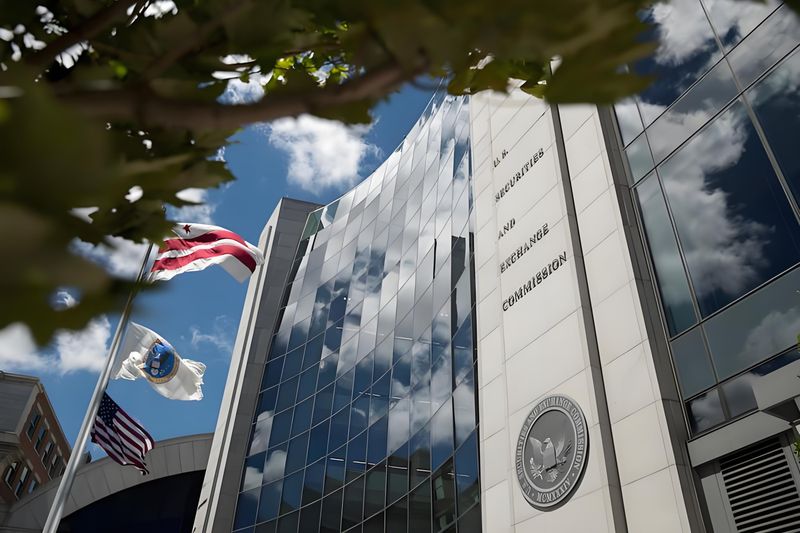
Shift in Regulatory Focus: From Crypto to Financial Disclosure
The Securities and Exchange Commission (SEC) of the United States is signaling a "deregulation" approach under new chairman Paul Atkins. There's a fundamental shift in policy direction, from a previously accommodating stance on cryptocurrencies to now considering easing financial disclosure requirements for public companies. Atkins has clearly stated that regulation should follow the principle of the "minimum effective dose" to avoid excessive intervention in business operations.
Concept of Semi-annual Reports Replacing Quarterly Reports
In his latest speech, Atkins mentioned that the SEC is exploring allowing companies to replace quarterly reports with semi-annual reports. He believes that frequent quarterly reporting not only increases compliance costs but might also lead businesses to overly focus on short-term performance at the expense of long-term development goals.
This proposal aligns closely with President Trump's earlier call to relax reporting frequency, reflecting the SEC's policy alignment with the White House. Should this plan come to fruition, U.S. public companies would enjoy greater flexibility, and the reporting cycle of the capital markets could undergo significant change.
A Departure from Previous Policies
Atkins's stance is interpreted as a direct rebuttal of former chairman Gary Gensler's regulatory approach. During Gensler's tenure, the SEC pushed robustly for climate information disclosure and stringent regulation of crypto assets, drawing criticism as "over-interference." In contrast, Atkins emphasizes the market's self-regulation capability and asserts that regulatory bodies should reduce "mandatory requirements" for businesses.
European Model as a Cautionary Example
Atkins specially criticized the EU's "Corporate Sustainability Reporting Directive" (CSRD) and "Corporate Sustainability Due Diligence Directive" (CSDDD). He contends that these policies force companies to disclose a substantial amount of social or environmental information unrelated to financial materiality, thereby increasing their burden. He cautions that the U.S. should not blindly follow Europe's regulatory model, to avoid impairing market efficiency.
Investor Concerns and Controversies
While the "lightening regulation" is welcomed by some businesses, investor protection groups worry about reduced market transparency. Critics point out that quarterly reports provide critical data to assess a company's operational status; and if reporting frequency is decreased, small investors may find it difficult to access timely information, leading to market inequities.
The Investors Rights Alliance emphasized in a statement that the quarterly reporting system is the cornerstone of stability and transparency in the U.S. capital markets, and weakening this system might deal a long-term blow to investor confidence.
Balancing Regulatory and Market Interests
As the policy debate heats up, it remains uncertain whether the SEC will actually eliminate the quarterly reporting system. Industry observers generally believe that even if adjustments are implemented, some large companies might still choose to continue quarterly disclosures based on market expectations and investor relations management.
In the coming months, how the SEC balances alleviating corporate burdens with protecting investor rights will be a key focus for both Wall Street and policymakers.