

Transatlantic High-Level Dialogue on the Peace Process
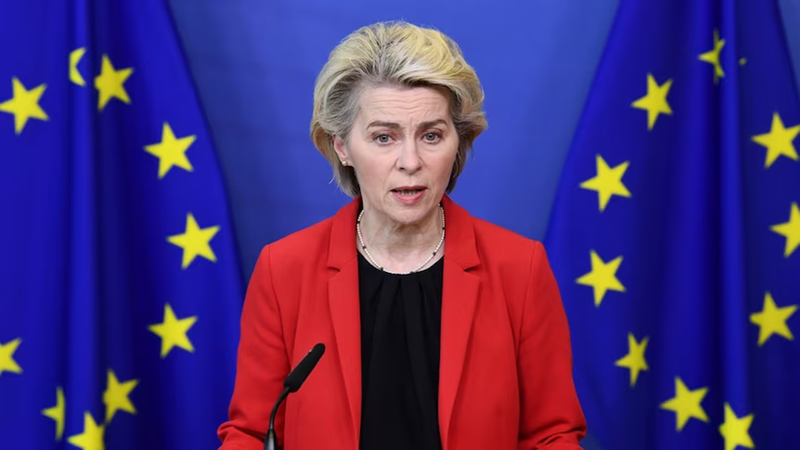
On December 28 local time, European Commission President Ursula von der Leyen publicly confirmed on social media that she engaged in a deep video call lasting an hour with U.S. President Trump, Ukrainian President Zelensky, and several key European leaders. The core agenda of this multilateral communication was to report and discuss the preliminary consensus reached by the U.S. and Ukrainian presidents earlier that day at Mar-a-Lago, Florida, regarding solutions to the Russia-Ukraine conflict.
Von der Leyen warmly welcomed the "good progress" shown in the U.S.-Ukraine meeting. As 2025 winds down, the international community's expectations to end this protracted conflict are being translated into specific action plans. The EU's high-profile involvement in this multilateral consultation not only demonstrates its core role in maintaining regional stability but also sends a strong signal to the outside world that the U.S., EU, and Ukraine are forming a united diplomatic front.
Seeking "Ironclad" Security Guarantees
When discussing future work priorities, von der Leyen used a weighty term—"ironclad." She explicitly emphasized that any discussion about a peace agreement must have, as a crucial premise, the provision of rock-solid security guarantees for Ukraine from day one of negotiations. The EU believes that any agreement without a strong enforcement mechanism is fragile, and Ukraine's sovereignty and territorial integrity must receive firm international backing.
This discussion of security guarantees is gradually moving from abstract concepts to concreteness. According to relevant sources, European leaders are exploring the establishment of a defense monitoring system involving multinational forces and endorsed jointly by the U.S. and Europe. Von der Leyen indicated that Europe is willing to maintain seamless coordination with Ukraine and the United States to ensure this "ironclad guarantee" not only consolidates the current meeting outcomes but also lays the foundation for the European security landscape for decades to come.
Continuing Support for Ukraine and EU Integration Path in 2026
Beyond the current peace talks, von der Leyen reiterated the EU's long-term strategic commitment in her report. She stated that Europe is willing to continue cooperating with Ukraine to consolidate the results of peace negotiations while accelerating Ukraine's integration into the EU. For the EU, including Ukraine in its economic and security system is the most effective means to achieve lasting regional peace.
According to the latest macro trend analysis, 2026 will be a critical juncture determining Ukraine's future direction. Von der Leyen promised that regardless of the progress of negotiations, the EU's established policy of applying pressure on Russia and providing assistance to Ukraine will remain consistent. This "multi-pronged" strategy—supporting U.S.-Ukraine peace initiatives while adhering to high standards for its own defense and expansion plans—has become the core logic under the leadership of von der Leyen's European Commission. This productive hour-long call undoubtedly sets a united and resilient tone for the global diplomatic landscape coming in 2026.

