Trade Policy in 2026: From Intense Disruptions to Stability
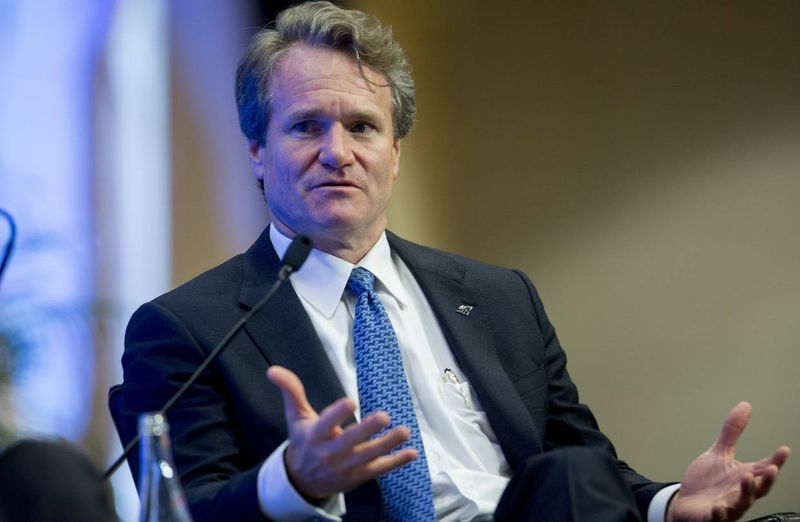
In a recent financial interview, Bank of America Securities CEO Brian Moynihan offered an optimistic forecast on the future direction of trade policy under the Trump administration. He believes that although the intense implementation of tariff policies in 2025 caused significant disruptions to the U.S. economy, this tense situation is expected to turn around next year. Moynihan explicitly noted that Bank of America currently foresees "cooling instead of escalating," providing some relief for investors worried about an escalation in global trade wars.
Moynihan analyzed that following a series of hardline measures, the Trump administration will move towards strategic integration and adjustment in its subsequent actions. This shift from "extreme pressure" to "prudent management" aligns with Wall Street's expectations for policy cycles. He predicts that 2026 will be a marginal turning point for trade tensions, with policy focus shifting from merely punitive tariffs to using tariffs as leverage to facilitate broader trade agreements.
Stepped Tariff Structure and the Anchor of a 15% Average Rate
Regarding specific tariff rate forecasts, Bank of America's research team provided detailed data analysis. Moynihan revealed that the average tariffs for most countries are expected to settle around 15%. He believes that, compared to the previously widely discussed universal 10% rate, adjusting to 15% remains within a controllable impact range, marking a sign of the situation cooling down and entering into normalized management.
This tariff logic exhibits a distinct "reward and penalty" characteristic. For countries willing to commit to purchasing more American goods or actively reducing non-tariff trade barriers with the U.S., 15% will be a benchmark rate; whereas nations refusing to make reciprocal commitments may face higher punitive rates. Moynihan emphasized that this differentiated approach aims to optimize the U.S. trade structure rather than sever global supply chains through complete blockade. Moreover, traditional trade partners like North America will be placed in a special category, enjoying more favorable terms.
Corporate Concerns Shift from Tariffs to Labor Supply
Although tariff issues occupy significant media coverage, Moynihan, through observations of the real economy, found that American small businesses' anxiety points are shifting. For small and medium enterprises, compared to tariffs that can still be absorbed through cost pass-through or supply chain adjustments, the high uncertainty in labor supply is a more worrying problem.
Due to changes in immigration policy and demographic adjustments, the tense labor market situation has directly increased the operational costs for small businesses. Moynihan noted that these companies are more concerned about not being able to recruit enough skilled workers, thus missing out on market recovery opportunities. Bank of America's report indicates that if the government can alleviate external pressures through moderate tariff policies next year while providing clearer guidance on labor policy, the endogenous momentum of the U.S.