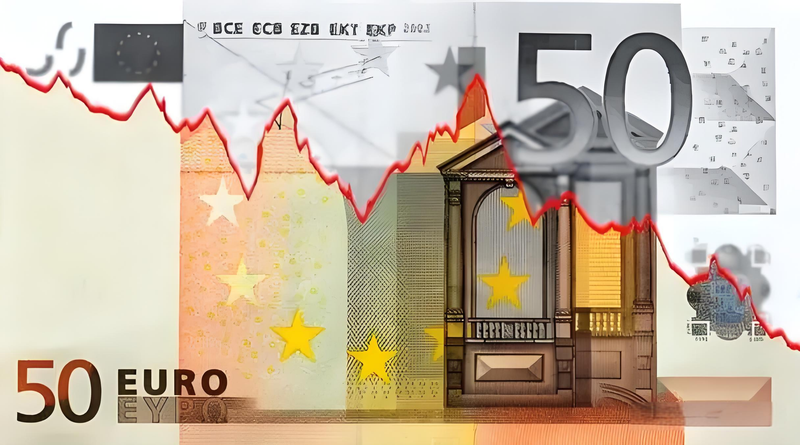
Euro Faces Broad Sell-off, Currency Market Dynamics Shift
Following the announcement of a new trade agreement between the US and Europe, the global foreign exchange market quickly reacted, with the euro declining against the dollar for two consecutive days. Although there was a slight recovery during Tuesday's Asian session, the overall trend remains weak as the market reassesses the structural impacts of the agreement.
Not only has the euro weakened against the dollar, but its exchange rates against the pound and yen are also under pressure. This indicates that the euro's depreciation is not merely a single currency pair adjustment but reflects a broader decline in confidence. Fluctuations in the Australian and Canadian dollars further highlight the dominance of the dollar, given its current interest rate advantage, as market sentiment increasingly aligns with a "dollar as king" scenario.
Trade Agreement Controversy Mounts, EU Criticism Intensifies
The new US-EU agreement, branded as a "framework" agreement, has quickly sparked strong criticisms within the EU. Under the agreement, the US will gain deep cooperation and procurement commitments from the EU in energy and technology sectors, while the payoff is significantly increased average tariff rates.
Several EU leaders have publicly expressed their dissatisfaction. The French Prime Minister called it “Europe's dark moment,” while German leaders noted that the agreement would seriously hinder Germany's manufacturing recovery. The weakening business confidence is already reflected in the stock markets: although the German and French indices briefly rose, the trend could not be sustained, and the market reaction leaned towards caution.
Inflation and Monetary Policy Misalignment Weigh on Euro Outlook
Economists point out that the latest policy adjustments between the US and Europe are likely to cause divergent regional inflation trends. The US, facing higher costs for imported goods, may experience an overall price level rise; conversely, in the Eurozone, limited exports and weakened demand could drive inflation further down.
This divergence in trends implies a widening gap in monetary policy space. The European Central Bank may accelerate its easing steps under market pressure, while the Federal Reserve would have more reason to maintain high interest rates. The expanding interest rate differential further diminishes the euro's appeal as a safe-haven currency.
Investor Perspective Shifts, US Assets Reattract Funds
Despite the considerable uncertainties surrounding the US-EU trade agreement, its strategic clarity has become a catalyst for funds to flow back to US assets. As transatlantic trade tensions clarify, dollar assets are attracting significant safe-haven and arbitrage funds due to their yield and liquidity advantages.
Wall Street generally believes that the essence of the current agreement lies in the US reestablishing its leadership in trade agenda, with its foreign policy evolving towards "targeted pressure" rather than wide-open access. This trend will continue to have far-reaching impacts on the direction of global capital flows.
Exchange Rate Volatility Risks Increase, Investors Need to Reassess
The rapid volatility in currency markets also serves as a reminder for investors to consider asset allocation risks. Against the backdrop of a reshuffled US-EU relationship, traditional forex arbitrage strategies may face adjustment pressures. Analysts suggest that investors should consider more currency hedging tools to cope with the upcoming period of volatility.
Meanwhile, with the European Central Bank's policy leaning towards a more accommodative path, Eurozone assets may face temporary adjustment pressures, necessitating close monitoring in the coming months to see if the euro will breach key technical support levels.