• Home
  • Categories
  • News
  • Community
EN
EN
Home
CategoriesNewsGlossaryCommunityAbout Us
Contact Us
Social Media
Region
🌏International
Region
🌏International

Copyright © 2023-2026 Traderknows Ltd. All rights reserved.

Contact
Home
/
News
/
Pressure from wages might prompt the Bank of Japan to raise interest rates.

Pressure from wages might prompt the Bank of Japan to raise interest rates.

2025-08-25
Summary:Kazuo Ueda stated that the rise in wages is becoming widespread, and employment pressure may force the Bank of Japan to restart the interest rate hike cycle.

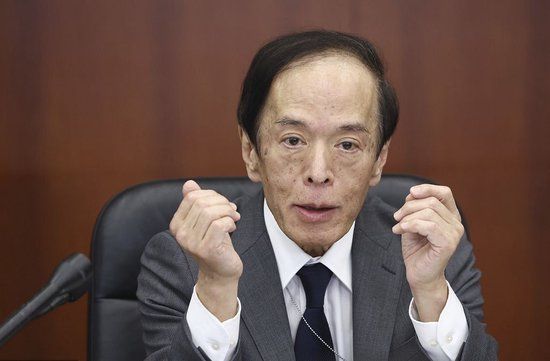
Governor of the Bank of Japan, Kazuo Ueda

Tight Labor Market Becomes Policy Focus

Kazuo Ueda, Governor of the Bank of Japan, stated at the international central bank's annual meeting that Japan's labor market is continuously tightening, with labor shortages spreading from large corporations to small and medium-sized enterprises, driving a trend of wage increases. This statement has strengthened market expectations that the Bank of Japan will resume interest rate hikes this year.

Wage Increase Trend Broadly Spreads

Ueda noted that wage growth is not only concentrated in large manufacturing or export enterprises but is also gradually expanding to small and medium-sized companies and the service sector. This indicates a broader coverage of wage increases, which could provide long-term support for price levels in the future. Analysts believe this diffusion effect will enhance inflation persistence.

Historical Background and Structural Changes

For a long time, Japanese companies have been cautious about price increases and wage hikes due to deeply ingrained deflation expectations. However, with a declining working-age population and global inflation shocks post-COVID-19 pandemic, the original pattern has been disrupted. The aging population and deep-seated changes in the employment structure have significantly increased the pressure on the labor market.

Increased Labor Mobility

At the forum, Ueda specifically mentioned the change in employment attitudes among the younger generation. He pointed out that more and more young people are actively changing jobs in search of higher-paying positions. This behavior forces companies to improve their compensation to retain employees, further intensifying competition for labor. Experts believe this may create long-term pressure for wage increases.

More Complex Policy Transmission

The Bank of Japan previously mainly used monetary easing to combat deflation, but with changes in wages and employment structure, the policy transmission mechanism is also undergoing transformation. Ueda emphasized that the central bank must consider the impact of supply-side adjustments in its operations, including the increased labor participation rate and changes in corporate employment models.

Market Expectations for Rate Hikes Heat Up

After three consecutive years of significant wage increases in spring labor-management negotiations, the Bank of Japan has shown a tendency to shift from easing to normalization. Although interest rates were kept unchanged in July, forecasts for inflation and economic expectations were raised. Market surveys indicate that over 60% of economists expect at least one 25 basis point rate hike within the year.

The Challenge of Balancing Inflation and Policy

Although consumer price increases have exceeded 2% for three consecutive years, core inflation has still not stabilized. Ueda reiterated that the central bank will act cautiously to avoid undermining the fragile economic recovery with overly rapid tightening. However, the combination of strong food prices and sustained wage increases may force the central bank to act sooner to prevent a secondary inflation risk.


Business Cooperation Telegram Eng

Business Cooperation Skype ENG

Risk Warning and Disclaimer

The market carries risks, and investment should be cautious. This article does not constitute personal investment advice and has not taken into account individual users' specific investment goals, financial situations, or needs. Users should consider whether any opinions, viewpoints, or conclusions in this article are suitable for their particular circumstances. Investing based on this is at one's own responsibility.

The End
Previous
Next
Comments
0/1000
Written by
Created date:2025-08-25 03:22
Last Updated:2025-08-25 03:40
Independent Analysis: Manually researched and fact-checked by the TraderKnows Compliance Team, based on public regulatory records.
Wiki
Employment rate

The employment rate refers to the proportion of people who have jobs out of the total labor force (i.e., the population within the working age who are willing and able to work) during a specific period.

Recent Post

Broadcom AI Guidance Triggers Valuation Consolidation as Middle East Ceasefire Eases Oil

4 hours ago

Gold Prices Decline 1.2% as Middle East Tensions Escalate and US Dollar Strengthens

4 hours ago

US Stocks Retreat from Record Highs as Middle East Tensions and Redemption Limits Weigh

4 hours ago

Global Risk-Off Ignited by Fed Rate Hike Bets and Broadcom Revenue Miss

4 hours ago

Global Firms Accelerate Rare Earth Decoupling as Alternative Technologies Commercialize

4 hours ago

Euro Bond Yields Rise as Traders Bet on Three ECB Rate Hikes

4 hours ago

US Treasury Yields Climb as Geopolitical Tensions and Strong Macro Data Fuel Inflation Concerns

4 hours ago

Gold Prices Rebound as Oil and US Dollar Slip Amid Middle East Ceasefire Progress

4 hours ago

Yen Hits Crucial 160 Level as Mid-East Tensions Boost USD Triggering Intervention Fears

4 hours ago

Mideast Tensions Weigh on Asian Equities as Lebanon Truce Eases Oil Prices

4 hours ago

Coinbase Partners with US DOJ and Tech Giants to Freeze 3 Million in Crypto Linked to SE Asia Fraud…

4 hours ago

Jensen Huang Defends AI ROI in Taipei Citing Trillions in Value Created

4 hours ago

Middle East Tensions Spark Risk-Off Sentiment as Stocks Decline and Oil Pulls Back

4 hours ago

Fed Beige Book Shows Inflation Rising on Energy Costs Ahead of Warsh First Meeting

4 hours ago

WSTS Upgrades Forecast: Global Semiconductor Market to Exceed $1.5 Trillion in 2026

4 hours ago

Risk Warning

TraderKnows is a financial media platform, with information displayed coming from public networks or uploaded by users. TraderKnows does not endorse any trading platform or variety. We bear no responsibility for any trading disputes or losses arising from the use of this information. Please be aware that displayed information may be delayed, and users should independently verify it to ensure its accuracy.