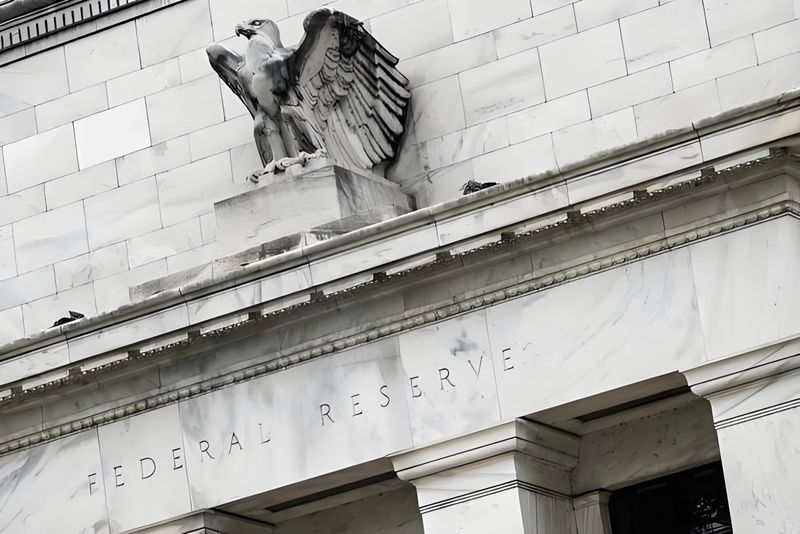
Williams' Speech Eases Inflation Concerns
In early September, John Williams, President of the Federal Reserve Bank of New York, stated in a speech at the Economic Club of New York that there has yet to be a substantial impact on the overall inflation trend from the White House's increased import tariffs. This statement was interpreted as a direct refutation of the market's biggest worry, the "second-round tariff impact," and cleared the way for an interest rate cut at the Federal Reserve's policy meeting on September 16-17.
He noted, "There is no evidence that tariffs have amplified upward price pressures," and emphasized that signs of weakened economic growth and employment markets are more worth attention. This aligns with Federal Reserve Chair Jerome Powell's views at the Jackson Hole meeting and reinforces the possibility of a shift towards more accommodative policy.
Market Highly Anticipates September Rate Cut
Data from the derivatives markets indicate that investors are now almost unanimously expecting the Federal Reserve to cut interest rates by 25 basis points at the September meeting. The prolonged high interest rates have impacted interest-sensitive sectors like housing and automobiles, increasing calls for a policy shift.
Analysts point out that the lack of significant deterioration in inflation, coupled with stagnant employment growth, provides the rationale for a monetary policy shift. The Federal Reserve might risk exacerbating economic downturns if it doesn't adjust soon.
Side Effects of High Interest Rates Increasingly Evident
In his speech, Williams acknowledged that prolonged high interest rates have caused significant cooling in the labor market. Recent data show that since May, employment growth in the U.S. has almost stalled, with sluggish hiring activities in some sectors. He warned that overly tight policies, if maintained for too long, could unnecessarily damage employment stability.
He predicted that the U.S. unemployment rate would gradually rise over the next few months, reaching about 4.5% next year. Additionally, uncertainties in trade and immigration policies will continue to pressure businesses and households, further dragging economic prospects.
Inflation Path Still Volatile
Although the inflation rate could rise above 3% in the short term, Williams expects prices to gradually decrease over the coming years. He believes that by 2026, the inflation rate will decline to 2.5% and return to the Federal Reserve's long-term target level of 2% by 2027.
Analysts note that this forecast provides theoretical support for rate cuts, indicating that the Federal Reserve must be cautious to avoid easing too much before inflation is fully under control.
Internal Disagreements Emerge
While the market remains optimistic about rate cuts, internal disagreements have emerged within the Federal Reserve. Some officials, such as Governors Waller, Bowman, and San Francisco Fed President Daly, lean towards supporting accommodative policies to alleviate labor market pressures. Incoming Governor Milan is also seen as a dovish voice.
On the other hand, Cleveland Fed President Mester, Atlanta Fed President Bostic, and some governors worry that premature rate cuts could weaken the gains made in containing inflation. They argue that recent price pressures have not completely subsided, and the Federal Reserve should not easily change its policy stance.
Conclusion
The speech by New York Fed President Williams heightened market expectations for a September rate cut, yet the internal divisions within the Federal Reserve highlight the complexity of the decision. The negative impact of high interest rates on the economy and employment is becoming more apparent, and although inflation has not worsened further, it remains above the target range. As the FOMC meeting approaches, investors should closely monitor more economic data and official speeches to assess the extent of rate cuts and the path forward.
The Federal Reserve’s policy choices will not only affect the U.S. economy but also have profound impacts on global financial markets.