
France's Policy Shift Sparks New Geopolitical Waves
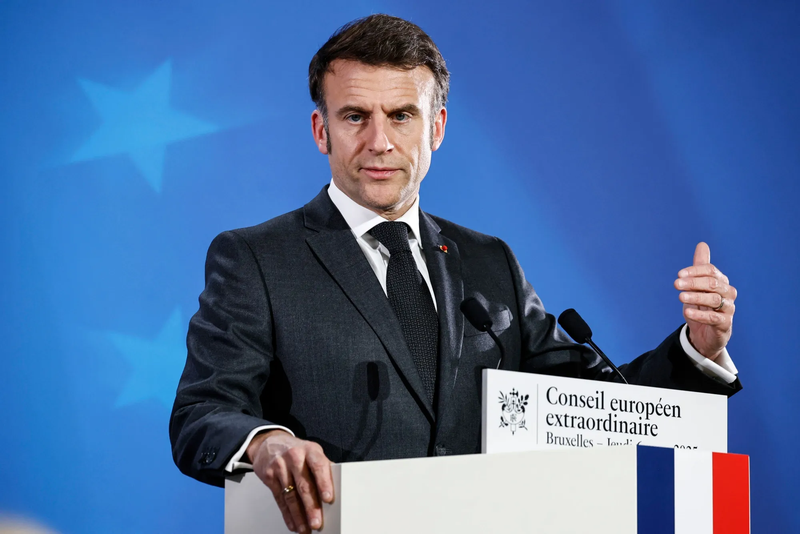
Amid the international community's ongoing focus on the humanitarian crisis in Gaza, French President Macron recently stated that France will officially recognize the State of Palestine by September 2025. This decision is seen as a significant shift in France's Middle East policy and suggests a potential realignment of diplomatic stances within the European Union.
By signaling this decision on the eve of the United Nations General Assembly, Macron aims to refocus international attention on the Israeli-Palestinian issue, highlighting France's strategic intent to seek a breakthrough, especially in the context of long-standing negotiation deadlocks.
Paris Towards a More Independent Diplomatic Stance
Analysts point out that France's move is not only driven by concerns over the conflict in Gaza but also as a countermeasure to Israel's hardline policies. In recent months, France has expressed increasingly open dissatisfaction with the airstrikes in Gaza and the blockade on humanitarian aid.
Though the plan to recognize the State of Palestine has yet to be implemented, its political implications have already prompted widespread interpretations. On one hand, it reflects France's attempt to regain its initiative on the Middle Eastern diplomatic stage; on the other, it underscores the possibility of escalating tensions between France and the Israeli government.
Israel Condemns Strongly, Netanyahu Uses Harsh Words
Israeli Prime Minister Netanyahu quickly took to social media to harshly criticize Macron's statement, calling it "a reward for terrorists" and likening it to "breeding another Gaza" on Israeli soil. These remarks quickly intensified regional tensions and hinted at further diplomatic friction.
Israeli anger is not only rooted in its stance against ongoing military confrontations with Hamas but also in its efforts to maintain control over the Palestinian issue in international discourse.
International Calls Rise, EU May Face Divisions
France's decision is perceived as a signal to pressure other EU member states. While countries like Ireland and Spain have expressed intentions to support Palestinian statehood, most European countries have remained cautious due to concerns about relations with the US and Israel, as well as regional security.
With France taking substantial steps towards recognition, the EU may witness a new wave of debates on its Middle East policy, especially regarding how to balance human rights, state legitimacy, and anti-terrorism strategies.
Humanitarian Disaster in Gaza Becomes Diplomatic Focus
The World Health Organization and UN agencies have recently issued multiple warnings, stating that Gaza is facing an "unprecedented humanitarian crisis." The 2.1 million residents have long been trapped in a state of blockade and conflict, suffering from shortages of supplies, medical collapse, and widespread hunger.
In his past speeches, Macron has repeatedly emphasized that France "cannot stand idly by in the face of humanitarian disaster," recognizing Palestine is seen as a political means to respond to this call. This move not only carries symbolic significance but also pressures other major powers to reassess their roles and responsibilities in the Middle East.
Future Path Filled with Uncertainty
Even though France's position is clearly stated, achieving recognition within the United Nations framework faces multiple obstacles. The stance of Western allies, including the US, remains unclear, and Israel may take countermeasures diplomatically.
Regardless of the eventual progress, Macron's announcement undoubtedly drops a "diplomatic bombshell" in the global political landscape, potentially reshaping the media's narrative basis for Israeli-Palestinian negotiations and also sparking wider geopolitical divisions within Europe. Whether France can open a new chapter in its Middle Eastern diplomacy remains to be proven by time.

