

Central bank officials around the world have finally seen the long-awaited slowdown in inflation, but they worry that this relief will not last. This concern explains the slightly helpless optimism expressed by central bank governors at the Jackson Hole Annual Central Banking Conference regarding whether interest rates have reached their peak in combating inflation.
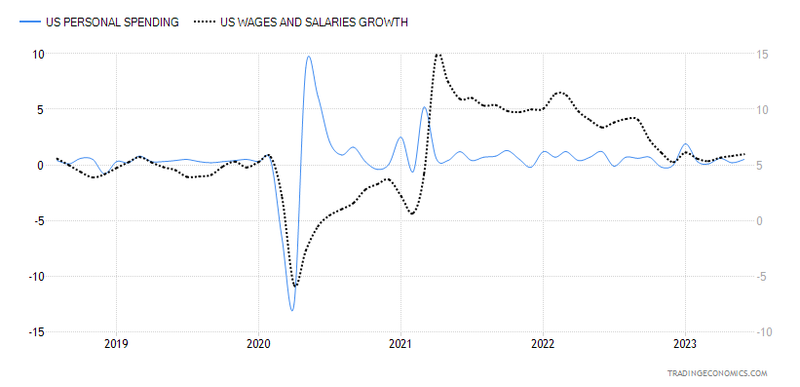
Over the last 18 months, Federal Reserve officials have attempted to slow US inflation by significantly raising interest rates. However, current Federal Reserve officials are now grappling with new economic changes. Boosted by inflation-adjusted wage increases, US consumer spending has grown faster than expected in recent months, and this stronger demand has raised concerns among investors and central bank decision-makers that robust consumer spending and demand could prevent further declines in inflation.
Loretta Mester, President of the Cleveland Fed, stated, "We are very close to a good point where the trend of economic growth will tell us how long interest rates will remain high."
On the question of at what interest rate level inflationary pressures can be gradually cooled without harming the economic growth outlook, Professor Kristin Forbes of the Massachusetts Institute of Technology likened the task of central bank governors to mountain climbing. You know where you want to go, you know where the peak is, but without more signs, you have to figure it out yourself. Even if you have completed most of the journey, the last part will be the steepest and most difficult, which is precisely the position central banks around the world find themselves in.
Last month, Federal Reserve officials raised the federal funds rate by 0.25 percentage points to a range of 5.25% - 5.5%, marking a 22-year high. At the central bank annual meeting last Friday, Fed Chairman Jerome Powell hinted at the possibility of further rate hikes.
Mester mentioned that she is assessing whether the rise in bond yields would offset strong consumer spending, possibly leading the Fed to raise rates again, but not necessarily in September. Mester pointed out that a slight rate hike followed by suppressing potential inflation through real interest rates could be more ideal, as long as there is a steady trend of inflation slowing down.
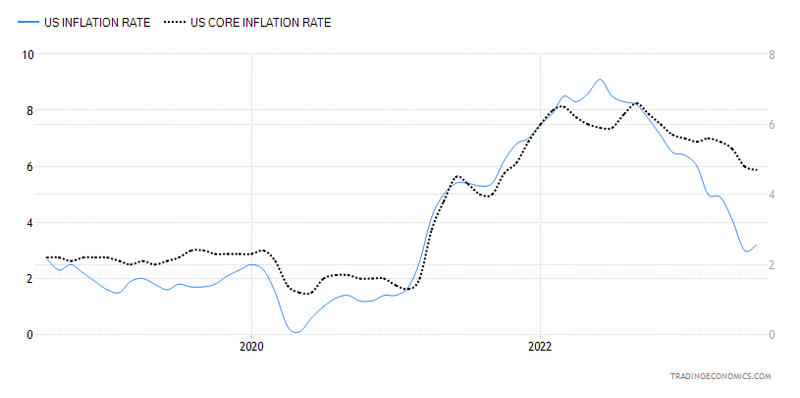
Currently, the US inflation rate has fallen from a 40-year high of 9.1% in June 2022. In the 12 months up to July this year, the Consumer Price Index rose by 3.2%. Excluding food and energy, core prices rose by just 0.2% month-over-month in June and July, reflecting a general trend of slowing inflationary pressures.
Mester said that if the rapid growth in workers' income is the main reason for the robust demand, or if businesses raise the prices of goods to cover personnel costs, then the likelihood of inflation falling to the Fed's 2% target is lower, requiring the Fed to tighten monetary policy more significantly to curb consumer demand and the job market.
Kristin Forbes, a former member of the Bank of England's Monetary Policy Committee, stated that the most challenging part is lowering the inflation of services and wages. It seems things are moving in the right direction, but can the recent slowdown trend in inflation last long enough?
Austan Goolsbee, President of the Chicago Fed, said that if everything becomes as insensitive to interest rates as the service industry, the Fed's job would not only become more difficult, but future inflation stickiness could also worsen.
Officials have emphasized that they are trying to strike the right balance between raising rates too little and too much. Ben Broadbent, Deputy Governor of the Bank of England, stated that due to the inflation problem being more severe than expected, the central bank may need to take further action. In the medium to long term, the risk of raising rates too little will be higher than the risk of raising them too much.
Central bank officials have faced pressure from some lawmakers and economists who have called for the central bank to adjust its inflation target to accommodate moderately higher inflation. However, both Fed Chairman Jerome Powell and European Central Bank President Christine Lagarde have rejected calls to change the inflation target.
Mester stated that if the economy slows down faster than expected, she would be more willing and flexible to lower rates. However, due to inflation being high for the past two and a half years, the risk of raising rates too little and allowing high inflation remains greater than the risk of raising rates too much and dragging down the economic growth outlook.