
Political Turmoil in Europe Spurs Market Anxiety
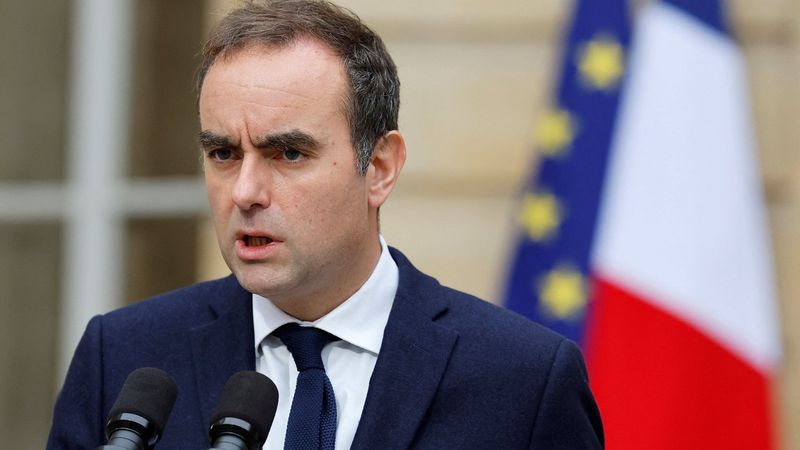
As political instability in the major economies of France and Japan continues, international financial markets are once again entering a period of high volatility. Despite French Prime Minister Sébastien Lecornu's vow to "focus on resolving the current crisis" after his re-election, deep political divisions are undermining the stability of his government. Analysts point out that the instability of the French government has become a significant disruptive factor for global risk assets.
The opposition in the French National Assembly is currently contemplating an impeachment motion against Lecornu's government. Although the motion has not yet entered formal proceedings, investors are generally concerned that if the government collapses, France could face a new wave of fiscal uncertainty and budget delays. This would weaken the confidence in the eurozone's second-largest economy, further dragging down the euro's performance.
According to Le Figaro, the formation of Lecornu's new cabinet is still underway, with key appointments yet to be decided. Those regarded as potential candidates for the 2027 presidential election will be excluded, a political strategy seen as an attempt to avoid premature internal power struggles but also potentially reducing government stability.
Political Risks Spread, European Market Confidence Under Pressure
The uncertainty in French politics, coupled with the ongoing U.S. government shutdown, has significantly increased market demand for safe havens. The simultaneous political deadlock in these two major Western countries is prompting investors to reassess their risk exposure.
The Centre for Economic Policy Research (CEPR) in Europe warns that a prolonged political stalemate in France could indirectly affect fiscal coordination and inflation management in the eurozone. With the European Central Bank entering a policy transition period, any political interference could amplify market volatility.
Deutsche Bank, in its report, noted that the euro has been weakening against the dollar recently, with some funds beginning to shift out of European stocks into gold and dollar assets. French 10-year bond yields have risen by nearly 15 basis points, indicating the market is demanding a higher risk premium.
Changes in Japanese Politics Add to East Asian Uncertainty
Outside of Europe, changes in Japan's political landscape have also become a focal point for markets. Newly appointed ruling party leader Sanae Takaichi indicated after taking office that she would continue a loose fiscal policy to boost the domestic economy, but her policy stance has raised concerns in the market. Some analysts believe Takaichi may continue with ultra-loose monetary policy, thereby weakening the yen and prompting funds to flow further into safe-haven assets like gold.
Data from the Tokyo Financial Exchange show that since the new leadership took office, the yen has depreciated by over 3%, hitting a new low for the year. This trend not only diminishes the international appeal of Japanese assets but also indirectly pushes up global gold prices.
Economists at the International Monetary Fund (IMF) point out that Japan's political transition could lead to a re-evaluation of fiscal spending plans, with this policy uncertainty disrupting capital flows in Asia and prompting regional investors to turn to more stable asset classes.
Gold Regains Favor as Central Banks Continue Accumulating
Against the backdrop of rising political risks in both Europe and Asia, gold has once again become a key safe-haven asset in global investment portfolios. FxPro senior analyst Alex Kuptsikevich noted in his latest commentary that the strong performance of gold is driven not only by expectations of a Federal Reserve rate cut but also by the "systemic insecurity" fueled by political turmoil.
He observed, "Political turmoil often causes funds to quickly return to precious metals in the short term, and this trend is further reinforced by the increase in gold reserves by central banks this year."
According to data from the World Gold Council (WGC), the net gold purchases by global central banks reached 780 tons in the first three quarters of 2025, a 14% increase over the same period last year. Central banks in some European countries have restarted gold purchase programs for the first time, seen as a direct response to geopolitical tensions.

