
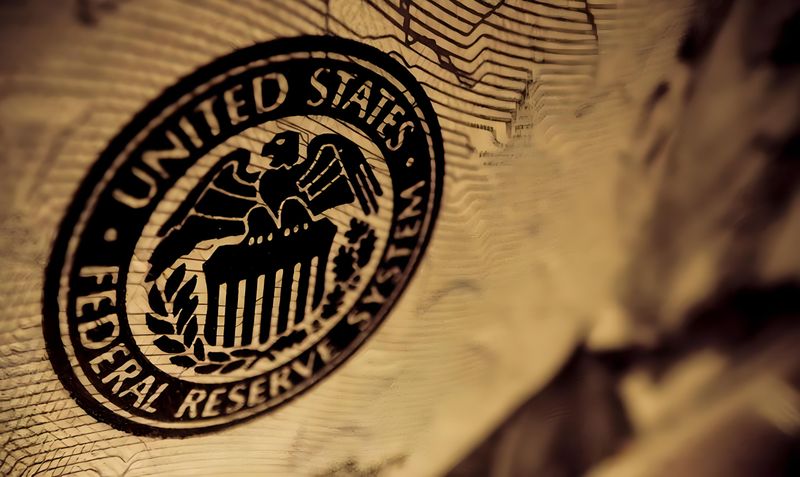
Federal Reserve Policy Shift as a New Engine for Gold Price Increase
Amid continuous global focus on U.S. monetary policy trends, gold prices have recently gained upward momentum. As expectations for Federal Reserve rate cuts rise, the appeal of the dollar has significantly diminished, prompting investors to reallocate into safe-haven assets. Analysts commonly believe that the Federal Reserve’s "moderate shift" is becoming a crucial supporting factor for the rise in gold prices.
According to the latest data from the Chicago Mercantile Exchange (CME) FedWatch tool, the market expects the Federal Reserve to cut interest rates by 25 basis points in both October and December, with a 97% probability for the October cut and a 92% probability for a subsequent cut in December. These expectations have been nearly fully absorbed by the market, providing a solid foundation for the rise of gold.
Officials Signal "Cautious Easing"
In recent public statements, several Federal Reserve officials have hinted at further monetary policy easing. St. Louis Federal Reserve President Alberto Musalem suggested that there might still be room for one more rate cut to stabilize employment and support the labor market. However, he also emphasized caution, noting that inflation remains above the 2% target range.
Meanwhile, Federal Reserve Board member Christopher Waller indicated that private sector data shows signs of weakness in the employment market, and further rate cuts would be a reasonable choice if inflation continues to fall. He emphasized: "Future policy adjustments should remain within 25 basis points to avoid excessive market volatility."
This "gradual easing" monetary policy path has further increased gold's appeal in global investment portfolios. Analysts point out that a low-interest-rate environment typically means the opportunity cost of non-yielding assets like gold declines, thus stimulating continuous inflows into the gold market.
Government Shutdown and Data Interruptions Amplify Market Uncertainty
Apart from monetary policy, the U.S. government shutdown reaching its tenth day has become an important factor heating up risk-averse sentiments. The shutdown has delayed the release of some key economic data, complicating the market’s ability to assess the economic health. The absence of labor market and consumer confidence indicators increasingly worries investors about future growth prospects.
The latest consumer confidence survey from the University of Michigan shows that the confidence index for October, while slightly above expectations, has declined for the third consecutive month. The survey indicates growing concerns among U.S. consumers about job stability and future price trends, with a significant rise in the number of people believing the economy is entering a "slowdown cycle."
In the context of a data vacuum and fiscal uncertainty, demand for safe-haven assets has quickly risen. Investment firms note that in such macroeconomic environments, gold often outperforms other asset classes, with its stable characteristics and inflation hedging functions attracting substantial long-term capital.
Gold’s Stellar Historical Performance During Rate Cut Cycles
Historically, every rate cut cycle has typically been a robust driver for gold. During the 2008 financial crisis and the 2020 pandemic, gold prices significantly increased within a loose monetary environment. Experts believe that although the current rate cut cycle is gradual, its persistence is strong enough to push gold prices higher in the coming months.
UBS forecasts in its latest report that if the Federal Reserve achieves two rate cuts this year, gold may break through the $4,100 per ounce mark. Goldman Sachs also noted that the increasing trend of central banks purchasing gold globally will be an important long-term factor supporting gold prices.
Analyst Opinion: Gold May Enter "Slow Bull" Phase
Several institutions believe that gold is currently in the middle phase of a "slow bull" market. Jeff Currie, the head of commodities research at Goldman Sachs, pointed out that the rise in gold is not due to short-term speculation, but rather a result of shifts in global capital allocation logic. He stated: "As central banks around the world gradually shift toward easing monetary policy, investor concerns over long-term inflation have not dissipated. This means that demand for gold will remain high."

