Trump's Statement May Rewrite the Russia-Ukraine Situation
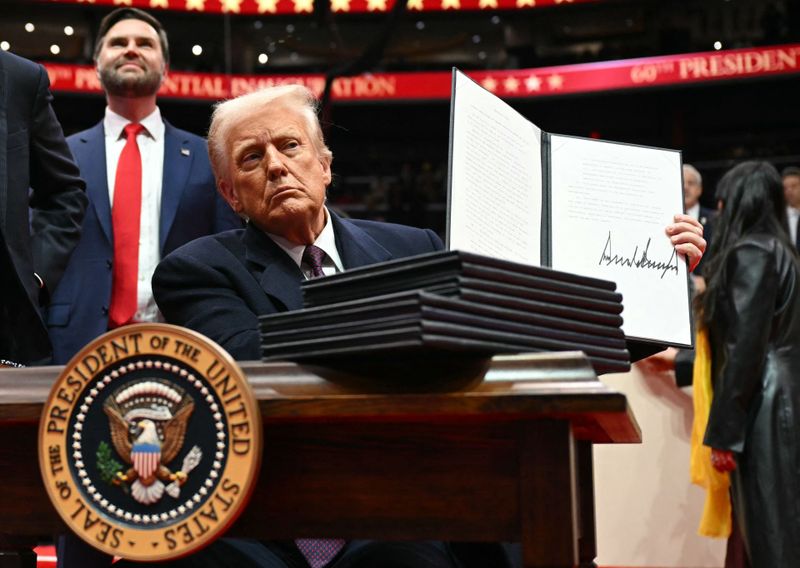
On October 12 local time, U.S. President Trump, while en route to Israel, told reporters that if the Russia-Ukraine conflict remains at an impasse, he might approve providing Ukraine with "Tomahawk" cruise missiles. This statement immediately drew intense attention from the international community and is seen as an important signal of a possible adjustment in U.S. military aid strategy to Ukraine.
When asked about the U.S. aid plan aboard Air Force One, Trump said bluntly, "If the situation does not improve, I will tell Putin that the United States might provide 'Tomahawk' missiles to Ukraine." He added that Ukraine has repeatedly expressed the desire to obtain these missiles to enhance its long-range strike capabilities.
Analysts point out that this remark implies the U.S. may consider for the first time providing Ukraine with long-range cruise missiles capable of strategic strikes, which would give Ukrainian forces greater tactical depth.
Subtle Shift in U.S. Stance: Testing Russia's Limits
This statement was not without warning. As early as late September, U.S. Vice President JD Vance publicly stated that the U.S. is studying the feasibility of indirectly sending "Tomahawk" missiles to Ukraine through NATO allies. If implemented, this plan would break previous U.S. restrictions on long-range weapon assistance.
Insiders from Trump's team reveal that this remark was both a diplomatic test of Russia and a signal to NATO allies that "the U.S. is still leading the situation." White House aides indicated that Trump hopes to force Moscow to reconsider its stance on Ukraine through this "controlled deterrence" approach.
However, multiple diplomatic experts warn that this move could provoke new risks of geopolitical escalation. The Center for Strategic and International Studies (CSIS) analyzed that the "Tomahawk" missile has a range of over 2,000 kilometers, and once deployed to Ukraine, it would be seen by Russia as a direct threat to its national security.
Russia Responds Strongly: U.S.-Russia Relations Tense Again
Russia responded swiftly. Kremlin spokesperson Dmitry Peskov stated on the same day that if the U.S. indeed approves supplying "Tomahawk" missiles to Ukraine, it will be viewed as "highly provocative behavior."
President Putin previously warned at the Valdai International Discussion Club's annual meeting that such actions would "utterly destroy" the emerging signs of detente in U.S.-Russia relations. The Russian Foreign Ministry also warned that this move by the U.S. could force Russia to take "reciprocal countermeasures," including strengthening strategic deployments in western regions.
Moscow military analysts point out that if Ukraine acquires the "Tomahawk," its theoretical strike range would cover major cities like Moscow and St. Petersburg, significantly increasing the pressure on Russia's security defenses.
The Strategic Significance of the "Tomahawk" Missile
The "Tomahawk" cruise missile, developed by Raytheon Technologies, has long been a mainstay of U.S. Navy long-range strike weapons. The missile can fly at subsonic speeds, has a maximum range of over 2,000 kilometers, and is capable of carrying high-explosive or nuclear warheads, launched from surface ships, submarines, and land-based platforms.
Since the Cold War, "Tomahawks" have been used in multiple U.S. overseas operations, including the 1991 Gulf War and the 2011 Libya operation. Deploying them to the Ukrainian battlefield would mark a significant shift of Western aid from defensive to strategic attack weapons.
International Community Reacts Cautiously, Calls to Avoid Escalation
Several European leaders expressed concern over Trump's remarks. German Chancellor Scholz called for "restraint from all parties" and emphasized that "any action that could exacerbate conflict is not conducive to peace efforts." NATO Secretary-General Jens Stoltenberg stated that the alliance has not yet received formal notification but will closely monitor U.S. policy shifts.
Meanwhile, a spokesperson from the Chinese Foreign Ministry reiterated that the conflict should be resolved through dialogue and negotiations, warning against military interventions by external forces that could further worsen the situation.
Political Declaration or Strategic Layout?
Although Trump's remarks have yet to form official policy, their strategic intent has already sparked global discussion. Some analysts believe this is more of a diplomatic "probing," aimed at pressuring Russia, stabilizing NATO allies, and demonstrating a tough stance in domestic politics.
However, others argue that this move may further complicate the already fragile international security landscape. If Ukraine indeed receives the "Tomahawk," escalation of the conflict seems almost unavoidable.