
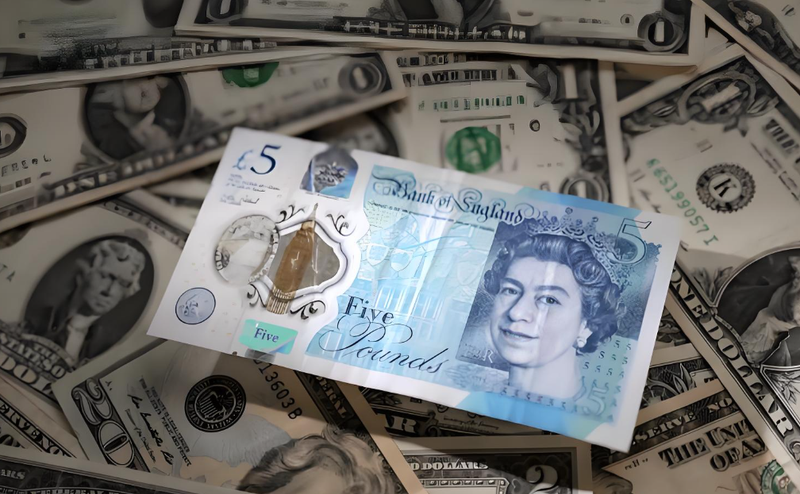
Dollar Hit by Shutdown Concerns
As the last week of September begins, investors are refocusing on the U.S. government budget deadlock. If Congress fails to approve the funding plan in time, parts of the federal government may face shutdown risks. The market's risk aversion sentiment has increased, with the dollar index dropping to near 97.95 under pressure for consecutive days. This trend created a short-term breathing space for the pound and other non-U.S. currencies.
The divide between the Republican and Democratic parties remains prominent, with healthcare funding cuts being a major point of contention. President Trump has even stated that if negotiations cannot reach an agreement, "the government will be forced to shut down." This statement has further exacerbated market uncertainty and caused the dollar to lose its previous upward momentum.
UK Employment Slows Amid Policy Maneuvering
Meanwhile, new signals have emerged from UK domestic economic data. The latest survey indicates that UK recruitment activity experienced its first year-over-year decline in over a year in August, suggesting a cooling job market. Weak employment may undermine economic momentum and bring new pressure on the Bank of England's monetary policy.
Bank of England Monetary Policy Committee member Dingra has publicly called for a quick interest rate cut to support the labor market amid declining inflation risks. She argues that excessive caution will only hinder growth and that there is room for policy adjustment. Nevertheless, the market widely expects the Bank of England to maintain the 4% interest rate level at the upcoming meeting, indicating that most officials are still on hold.
Pound Benefits in Short Term but Reversal in Doubt
Amidst a weak dollar and rate cut expectations, the pound hit the 1.3450 mark against the dollar in Monday's European trading session, continuing its rebound. Technically, the pound fell below the key support level of 1.3439 but quickly rebounded and reclaimed the short-term moving average, sparking speculation about a potential V-shaped reversal.
However, multiple technical indicators still show lingering bearish pressure. Both MACD and RSI suggest weakness, and the trendline formation hints that the rebound's momentum might be limited. If the market fails to maintain a level above 1.3439, the pound risks testing the 1.3400 support again.
Investors Focus on Future Data and Policies
In the short term, the tug-of-war between the dollar and the pound will still depend on bilateral fundamentals. In the U.S., whether the government shutdown can be avoided and the performance of the nonfarm payrolls report will be crucial to the dollar's movement. If weak data coupled with shutdown risks emerge, the dollar may face further pressure. Conversely, a breakthrough in negotiations could see the dollar quickly recover.
In the UK, the market will closely monitor employment and inflation-related indicators to assess whether the Bank could possibly initiate rate cuts earlier. If the job market continues to weaken while inflation pressures ease, Dingra's dovish stance may gain more support.
Summary
The pound rebounded amid dollar weakness, but whether it can achieve a trend reversal depends on macroeconomic data and policy signals in the coming weeks. Investors need to be cautious in short-term trading, wary of market sentiment fluctuations and news impacts, especially the ongoing interplay between U.S. political deadlock and Bank of England policy maneuvering.

