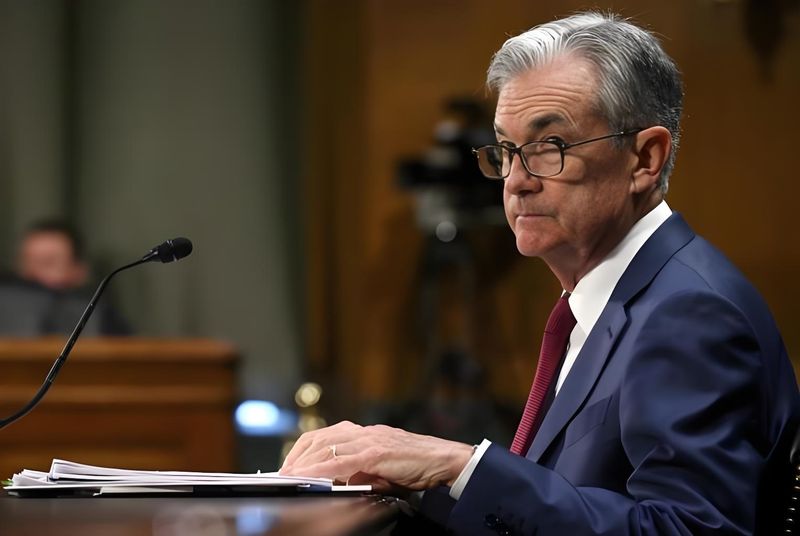
Federal Reserve Chairman Jerome Powell spoke at the Thomas Laubach Research Conference in Washington on Thursday, indicating that the United States might have entered a "new normal of higher long-term interest rates" as the economic environment and policy background change. He stated that the era of near-zero interest rates may be difficult to return to, and future inflation could be more volatile.
This speech served as a prelude to the Federal Reserve's ongoing policy framework assessment. It has been five years since the last assessment, during which the Fed experienced post-pandemic inflation surges, aggressive rate hikes, and global supply chain shocks. Powell noted that this new era might be accompanied by more frequent and even more persistent "supply shocks," increasing policy uncertainty and setting higher demands on how the central bank communicates policy signals.
Reflection in a High-Interest Rate Environment
Since the 2008 financial crisis, the Federal Reserve kept interest rates near zero for a long period until inflation resurged. Since December 2024, the Fed's overnight borrowing rate has remained in the 4.25%-4.5% range, currently at 4.33%. Powell clarified that although long-term inflation expectations remain roughly near the Fed's 2% target, the past low-interest-rate environment is unlikely to recur.
When discussing the challenges of policymaking, Powell emphasized the keyword "supply shock," hinting that this could mean the central bank will have a more difficult time balancing inflation control and maintaining employment. He also mentioned that although Trump's recent slowdown in promoting high tariffs has temporarily alleviated the impact, its potential influence remains noteworthy.
Framework Review Targets Policy Tone for the Next Five Years
Currently, the Federal Reserve is conducting a policy framework assessment aimed at developing a guiding plan for the next five years and optimizing communication with the public regarding these decisions. Powell stated that this review will not only reassess the previous "flexible average inflation targeting" approach but also consider how the Fed articulates its economic outlook, as well as key economic goals such as deficits and unemployment.
Looking back to 2020, the Federal Reserve introduced an "average inflation target" strategy, allowing inflation to slightly exceed 2% to support fuller and more inclusive employment. However, in the face of rapidly rising prices after the pandemic, this strategy proved ineffective and instead forced the Fed to adopt an aggressive rate hike path.
Powell admitted that many officials maintained low rates when faced with rising inflation because they underestimated the persistence of inflation, exposing the limitations of the policy framework at that time in addressing nonlinear risks.
Strengthening Communication Becomes a New Focus
Another major focus of this assessment is enhancing policy communication. Powell noted that despite the market's general belief in the effectiveness of the Fed's message delivery mechanisms, the central bank needs to more clearly convey uncertainty about the future economic path in an era of "more dramatic, more frequent, and even more varied shocks."
"We will explore how to better articulate the uncertainty we understand amid changing outlooks," Powell added, expressing hope to complete this assessment "in the coming months," even though no clear deadline has been set yet.
Although he did not directly mention Trump's tariff policies in his speech, his warning of high inflation risks indirectly responded to the impending trade policy changes.
As the Federal Reserve enters a period of policy redefinition, Powell's speech conveyed a clear signal to the market: high interest rates might not only be a present policy tool but could become the norm for several years to come. The new challenge for the central bank is not only the decisions themselves but also how to clearly and effectively explain the logic and expectations behind these decisions.