Deteriorating UK Economic Outlook: Government's Promises May Be Broken
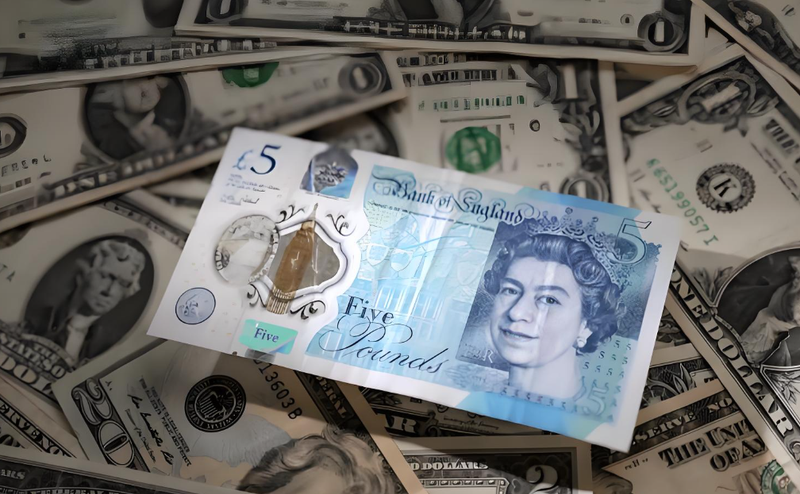
On October 30 in London, both the UK's political scene and financial markets are in turmoil. Prime Minister Keir Starmer refused to reaffirm the "no tax increase" promise during his parliamentary speech, hinting at a significant shift in fiscal policy. Investors reacted swiftly, with the GBP/USD exchange rate dropping sharply, briefly falling below the 1.32 mark.
It is reported that UK Chancellor of the Exchequer Rachel Reeves is busy preparing for the budget announcement on November 26. Many economists believe that due to the widening public finance gap, the government is likely to consider raising income taxes or adjusting the National Insurance contributions to alleviate budgetary pressures. If implemented, this move will become the Labour party's biggest political test since coming to power.
Market analysts pointed out: "The uncertainty in UK fiscal policy is making the pound the weakest link among major global currencies."
Downgraded Productivity Expectations May Widen Fiscal Deficit Over £20 Billion
According to sources, the UK's Office for Budget Responsibility (OBR) is expected to lower its national productivity growth forecast by about 0.3 percentage points, indicating a significant reduction in estimated fiscal revenue. This could force the government to delay its long-term fiscal balance goals.
Preliminary estimates suggest that the UK public finance deficit could widen to £20 billion, equivalent to $26.8 billion USD. Without austerity measures, the government risks its plan to balance the "day-to-day budget" by 2030 being derailed.
Paul Johnson, an economist at the Institute for Fiscal Studies (IFS), commented: "The Starmer government faces a dilemma—either break campaign promises and increase taxes or accept higher debt levels. Both options will test the government's political credibility."
Starmer Criticizes Legacy Issues from Previous Administration
In response to opposition queries, Starmer did not directly address whether tax rates would increase, but attributed the UK's economic woes to the 14-year legacy of Conservative governance. He pointed out that the latest economic data indicate that the UK's structural problems are more severe than expected, including weak investment, stagnant productivity, and widening regional growth disparities.
"We have inherited an economy that has been hollowed out," said Starmer, "Stagnant productivity is not an overnight issue; it is the cumulative result of 14 years of misguided policies."
Analysts believe that such remarks are intended to lay the groundwork for potential policy shifts by attributing responsibility to the previous government, thus gaining political space for upcoming fiscal adjustments.
Market Reaction: Pound Under Pressure, Bond Yields Rising
Due to fiscal concerns, volatility increased in the London financial markets on Wednesday. The pound fell to as low as 1.3170 against the dollar, a three-week low, while the yield on the UK 10-year gilts rose to 4.21%, reflecting investor worries about the expansion of future debt issuance.
Forex traders noted that the pound's short-term movement will mainly depend on the details of the budget and tax policy direction. "If the government announces any form of tax increase, the market will interpret it as a sign of economic pressure, potentially causing the pound to fall further."
Meanwhile, a report from Morgan Stanley indicated that the UK's fiscal risk premium is significantly rising, and investors are questioning the sustainability of long-term debt. The report highlighted that unless productivity rebounds, the UK's fiscal path "will fall into a deeper structural predicament."
Pressure Mounts on Labour Government, Policy Credibility Tested
Since being elected in 2024, the Starmer government pledged not to "increase the tax burden on working people" to maintain public trust. However, faced with fiscal realities, fulfilling this promise may prove difficult. Some Labour MPs are concerned that if a tax increase plan is implemented, it could erode voter trust and destabilize party unity.
Political scholar Alan Bennett noted: "Starmer is entering a dangerous zone—balancing fiscal stability against credibility. The outcome of this struggle will determine the Labour government's fate over the next three years."
Complex UK Economic Signals: Government Must Balance Growth and Discipline
In terms of economic data, UK GDP growth in the second quarter slowed to 0.2%, while consumer confidence has declined for three consecutive months. Although inflation has eased to 3.8%, real wage growth remains weak. Business investment is subdued due to high interest rates and policy uncertainty, with manufacturing output stagnant.
Analysts noted that if the government opts for a tax increase policy, it may further suppress consumption and growth in the short term. However, if debt expansion is allowed, it may face pressure from international credit ratings. Finding a balance between fiscal discipline and economic recovery will be a critical challenge for UK policymakers.
The UK is at a new fiscal turning point. The next steps of the Starmer government will not only affect the pound's trajectory but will also determine global markets' trust in the UK's economic management capabilities. As the budget announcement looms, the market holds its breath, and London's political atmosphere has already entered a tense countdown.