The Federal Reserve Signals Caution: December Policy Path Undecided
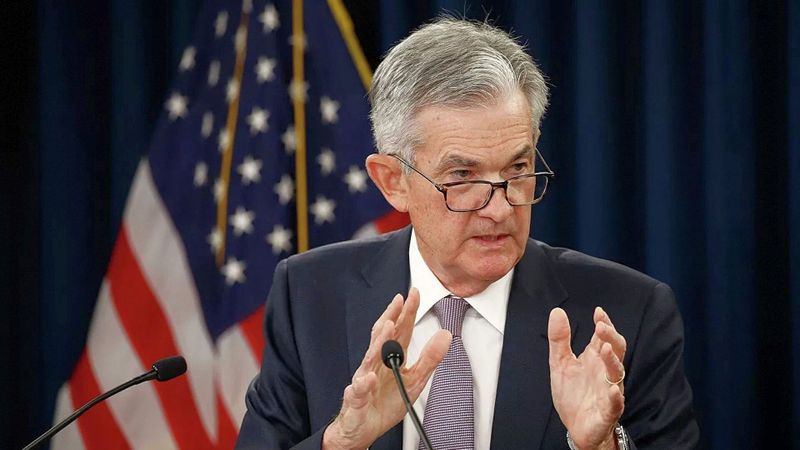
On October 30th local time, Federal Reserve Chairman Powell held a press conference following the monetary policy meeting, clearly stating that whether to further cut interest rates in December is "far from certain." He noted that there is significant division within the committee, with some officials suggesting a pause to observe economic reactions, while others are concerned about rising employment risks and advocate for continued easing.
Powell stated that the Federal Reserve has lowered the federal funds rate target range to 3.75%-4.00%, marking the fifth rate cut this year and the second consecutive meeting adopting easing measures. He emphasized that this move is intended to address the "dual risks" of a cooling labor market and sticky inflation, but future actions will still depend on data.
"We do not predetermine a policy path," Powell said at the press conference, "the divergence among committee members reflects the uncertainty of the economic outlook."
Government Shutdown Impacts Decisions, Data Gaps Make the Fed More Cautious
In his speech, Powell specially mentioned that the loss of economic data due to the U.S. government shutdown might impact future policy judgments. He described the situation as "driving in dense fog," needing to slow down. "We can still understand trends through private channels and regional data, but the lack of official data will make the decision of the December meeting more difficult."
Currently, Federal Reserve officials generally believe that although economic activity is maintaining moderate expansion, the labor market is gradually cooling. Powell stated that job growth has significantly slowed, mainly due to a reduction in labor supply. Although the unemployment rate remains low, companies' hiring intentions have decreased, with position vacancies and actual hiring declining simultaneously.
Inflation Still Above Target, Tariffs Bring "Short-Term Upward Pressure"
On the issue of inflation, Powell pointed out that U.S. inflation has clearly fallen from its peak but remains above the long-term target of 2%. He mentioned that September's core PCE inflation remained around 2.8%, with about 0.3 percentage points attributed to the recently implemented tariff policies.
"If we exclude the impact of tariffs, core inflation is not far from the target of 2%," Powell explained, "but the price effect driven by tariffs may persist until next spring."
He emphasized that the Federal Reserve's fundamental judgment is that tariff inflation is a "one-off increase" and will not create sustained pressure. However, if the labor market tightens again or inflation expectations become unanchored, this impact could extend.
End of Balance Sheet Reduction, Balance Sheet Structure to Adjust
Regarding balance sheet policy, the Federal Reserve announced the end of the balance sheet reduction operations starting December 1st. Powell explained that the current reserve level has reached the "abundant" standard, making further reduction in the balance sheet less meaningful. Next, the Federal Reserve will maintain the balance sheet size through reinvesting short-term treasuries and gradually shorten the asset duration to more closely match the average market structure.
This adjustment is seen as a sign of monetary policy entering a "stable phase." Powell emphasized that this is not a shift towards easing but an effort to avoid excessive tightening in the funding markets.
Committee Disagreement Evident, Future Policy Pace May Slow
During the Q&A session, Powell acknowledged that there is "evident disagreement" within the committee about the path of future rate cuts. Some members believe that the current rate level is nearing the neutral range and should "pause and observe," while others worry about further deterioration in employment and wish to continue with the rate cut pace.
Market data shows that the probability of another rate cut by the Federal Reserve in December has dropped from 90% before the meeting to around 65%. Powell stated that this uncertainty reflects the complexity of the economic structure: "Inflation risks are tilted upwards, employment risks are tilted downwards, and we can only find a balance in the middle."
Market Reaction Cautious, Investors Focus on Powell's Tone
After Powell's speech, U.S. stock markets fluctuated in the short term, with the Dow Jones Industrial Average retreating, and the Nasdaq closing slightly up. The yield on two-year treasury notes temporarily rose to 3.6%, and the dollar index rebounded to around 98.8.
Analysts noted that Powell's remarks reinforced the expectation of "cautious rate cuts." James Knight from Capital Economics commented, "Powell clearly does not want to be led by the market; he wants to retain flexibility."
Meanwhile, emerging market currencies stabilized as the dollar temporarily weakened, and gold prices fell below $3930 per ounce during trading. Investors generally believe that the Federal Reserve's next decision will depend on the duration of the government shutdown and the recovery of employment data.
In the closing remarks of the press conference, Powell reiterated that the core goals of the Federal Reserve remain unchanged—to ensure price stability and achieve full employment. He emphasized, "Policy must be based on reality, not market sentiment. We are dealing with a complex economy that is neither in recession nor overheating."
This statement indicates that the Federal Reserve has entered a phase of policy fine-tuning, and the December meeting will be a critical moment to verify whether the rate cut cycle is nearing its end.