

Veto Mechanism Again in the Spotlight - Lagarde Criticizes EU Decision-Making as "Hijacked"
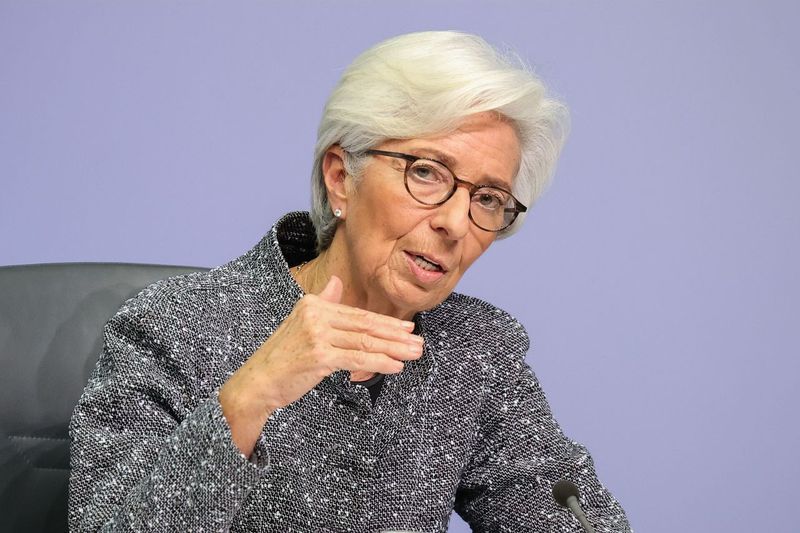
On October 30th, during a speech in Florence, Italy, ECB President Christine Lagarde once again issued a strong criticism of the EU decision-making mechanism. She pointed out that the EU often becomes paralyzed by the "veto mechanism" when addressing common challenges, resulting in delays that severely undermine the consistency and effectiveness of policy execution.
"Even if there is consensus among member states on the direction of action, the current governance structure can turn the smallest disagreements into the greatest obstacles," Lagarde stated bluntly. "This situation, where a single member state can hold the others at ransom, is weakening the EU's overall strategic autonomy."
She warned that, given the complex and ever-changing international landscape and geopolitical risks, an alliance that requires "everyone's nod" is prone to internal consumption and struggles to act swiftly in times of crisis. This statement continues her longstanding reform stance and reflects the widespread concerns within EU institutions regarding governance efficiency.
"Passerelle Clause" as a Reform Breakthrough
Lagarde did not advocate overturning the current system but suggested utilizing the existing "passerelle clause" in the EU Treaty as a means of improvement. This clause allows for some decisions to be shifted from unanimity to a qualified majority without amending the treaty, thereby enhancing decision-making speed in critical areas.
She noted that this mechanism could be effective in areas of common interest such as foreign affairs, security, fiscal coordination, and energy policy, preventing overall policy from becoming stalled due to opposition from individual countries. "We do not need a systemic revolution, but the EU must learn to move forward amidst disagreements."
Currently, the EU still employs unanimity in several areas, including foreign policy, taxation, and budgeting. This means the opposition of any single member state can block decisions, leading to prolonged stalling of key proposals.
Political Realities and Institutional Inertia Blocking Reforms
Although Lagarde's proposal has received support from some European Parliament members and policy scholars, significant opposition remains. Politicians from various countries worry that a majority voting system might weaken the political voice of smaller member states, concentrating decision-making power further in core economies like Germany and France.
Marta Costa, an analyst at the Brussels-based think tank Bruegel, noted, "Politically, such reforms imply relinquishing part of a country's sovereign veto power, which is a psychological and institutional 'red line' for many member states."
However, discussions about reforming the veto mechanism are heating up within the EU. Both French President Macron and Italian Prime Minister Meloni have indicated that if the EU wants to stay globally competitive in defense, trade, and fiscal coordination, it must move away from the "unanimous consent" constraint.
ECB's Concern: Decision Deadlock Could Weaken Policy Transmission
From an economic standpoint, Lagarde's concerns are closely related to the ECB's responsibilities. She pointed out that while monetary policy is uniformly determined by the central bank, fiscal, energy, and industrial policies still require cooperation at the EU level. When political deadlock delays decisions, the ECB's monetary transmission mechanism also suffers.
"If monetary policy is working hard to stabilize the economy while fiscal policy lingers in political debate, Europe's growth will struggle to gain momentum," she emphasized.
Market analysts believe Lagarde's speech not only reflects her stance on EU institutional reform but also reveals the ECB's concerns about future policy coordination. As the EU economy faces "triple pressures" of geopolitical tensions, declining inflation, and weak growth, governance efficiency will be a key variable determining the EU's competitiveness.
Incremental Consensus Replacing Institutional Stagnation
Scholars generally believe that if the EU is to move forward with reforming its decision-making mechanism, it may pilot majority voting in some policy areas in the short term. For instance, implementing "qualified majority voting" on issues like diplomatic sanctions and green transition funds could test the feasibility of the system.
Lagarde's speech is seen as a signal of pressure on EU leadership, aimed at prompting discussions on optimizing governance structures at the upcoming EU summit. She concluded, "The EU's strength lies in unity, but unity should not come at the expense of action."
These remarks have sparked extensive discussion in European political and academic circles, once again putting "veto reform" at the center of the EU political agenda. With calls for internal reform growing louder, whether Europe can escape "procedural deadlock" will likely be a core test in the coming years.

