

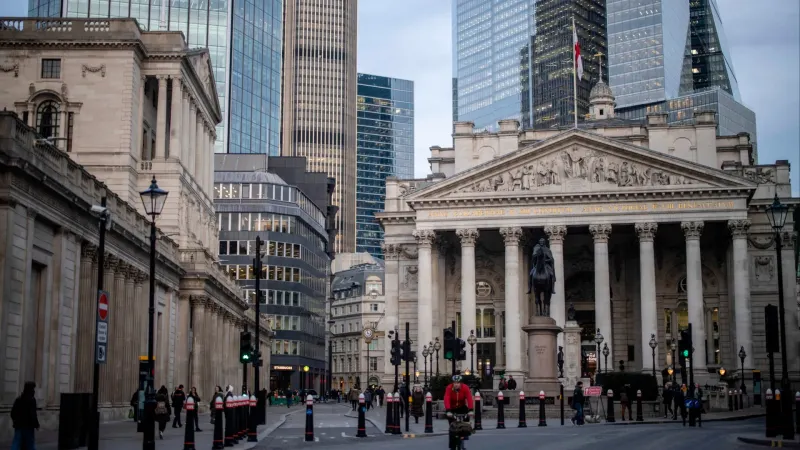
Policy Divergence Emerges, Bank of England Pauses Easing
In its latest monetary policy meeting, the Bank of England unexpectedly held steady, keeping the benchmark interest rate at 4%. This decision marks the end of its "once per quarter rate cut" easing pace over the past year and formally diverges from the Federal Reserve's path of rate cuts. The market widely believes that policymakers' caution reflects concerns over inflation risks and uncertainties in fiscal policy.
Currently, UK inflation remains nearly twice the target, and the fall budget announcement is imminent. Analysts point out that under the dual pressure of fiscal tightening and high prices, the Bank of England is opting for a wait-and-see approach to avoid secondary risks of overly loose policies.
Meanwhile, the Federal Reserve continues to emit signals of easing, maintaining high dollar yields, which further suppress the room for a rebound in the pound. Currency market data suggests that the exchange rate of the pound against the dollar may remain in a weak and volatile state in the short term.
Weak Economic Signals, Rate Cut Expectations Persist
Although the current meeting paused rate cuts, it does not mean the tightening cycle is restarting. Recent UK economic data has generally fallen short of expectations, with industrial output, retail sales, and the labor market all showing signs of weakness. Several institutions anticipate that the Bank of England may resume rate cuts in December or early next year.
Financial institutions analyze that if inflation continues to decline over the next two months, the dovish camp of the policy committee will gain greater voice, driving another rate cut within the year. Nomura Securities noted that current market pricing shows that the probability of a December rate cut has exceeded half, and if the budget includes further tax increases, easing policies might arrive earlier.
At the same time, the cooling of the UK housing market and weak consumption also provide room for rate cuts. High loan interest rates have significantly lowered housing demand, continuously increasing the burden on middle and low-income groups. If the central bank does not take action, the risk of economic slowdown will further expand.
Bailey's Stance Swings, Policy Signals Under Focus
Bank of England Governor Andrew Bailey's statements have become a focal point for the market. As a key swing vote in the Monetary Policy Committee, he maintains a cautious balance between hawks and doves. Bailey recently emphasized that the timing and magnitude of future rate cuts will depend on inflation trends, but he also warned that easing too soon could undermine policy credibility.
Industry insiders point out that Bailey faces a tough decision—preventing inflation from rising again while avoiding economic stagnation. Barclays' chief economist stated, "If inflation significantly slows in the fourth quarter while economic activity remains sluggish, Bailey may be forced to lean dovish."
Market expect that if this week's policy statement leans dovish, the pound will be pressured downward; if it emphasizes determination against inflation, it could gain short-term support.
Pound's Movement Constrained by Multiple Factors
In the short term, the pound's movement will depend on three main factors: inflation data, fiscal policy, and global risk sentiment. If the forthcoming budget announcement suggests an expanded scale of tax increases, investors may lower economic growth expectations, pushing the pound further down. Conversely, if the budget remains moderate, market sentiment will be eased.
Additionally, the global economic situation also affects the pound's prospects. Risk aversion sentiment triggered by a potential US government shutdown enhances the dollar's safe-haven attribute, and uncertainties in trade frictions also weaken the pound's appeal.
Analysts believe that before policy signals and economic data become clear, the pound is unlikely to form a one-way trend. In the coming weeks, the exchange rate may continue to fluctuate within the 1.31 to 1.33 range, awaiting further guidance from central bank and fiscal policies.
Cautious Observation Becomes the Main Tone
The Bank of England's abrupt pause on rate cuts lays the groundwork for its future policy path. While maintaining rates in the short term helps stabilize inflation expectations, the risk of economic slowdown continues to accumulate.
The market generally believes that UK monetary policy has entered a "transition period"—where the central bank needs to find a balance between controlling inflation and maintaining stable growth. As for pound bulls, the real test may come when the December rate cut window opens.

