

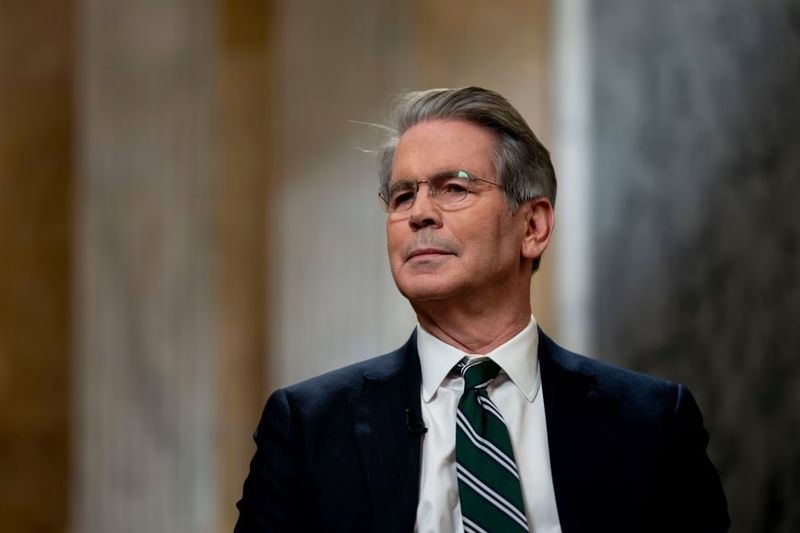
Besenth Warns of Economic Shadows, Fed Faces Policy Choices
Recently, U.S. Treasury Secretary Besenth issued a warning, indicating that certain sectors of the U.S. economy are showing signs of recession, urging the Federal Reserve to adopt more aggressive easing policies to prevent the economic downturn from spreading. He stated that the current high-interest rate environment is creating "systemic stress" on the real economy, particularly in housing, consumption, and small and medium-sized business credit.
Besenth pointed out that although the overall data seems robust, there is a diversified pattern within the economy. "The recession in certain industries is quietly underway, and if monetary policy is not adjusted in time, other sectors may be dragged into the same predicament," he said in an interview.
Analysts believe this statement reflects the Treasury's anxiety over the current policy path and highlights the potential differences in economic strategy between the government and the Federal Reserve.
Housing Market a "Pain Point," Low-Income Groups Hit First
Besenth particularly mentioned the vulnerability of the housing market, noting that high-interest rates have caused mortgage costs to soar, leading to a "structural recession." Data shows that housing sales across many parts of the U.S. continue to decline, with new home starts falling to their lowest level in three years. For middle- and low-income families, housing affordability has become a heavy economic burden.
Besenth indicated that a moderate interest rate cut by the Federal Reserve would help reduce loan rates, alleviating pressure on homebuyers and tenants. He emphasized, "When interest rates are high, it's always the low-income groups that are crushed first, as their debt costs far exceed the pace of asset growth."
Scholars generally believe that if the housing sector does not stabilize quickly, overall consumer momentum in the U.S. will be suppressed. Due to the extensive impact of the real estate industry chain, its recession effects might spread to the construction, home improvement, and durable goods markets.
Policy Struggle Intensifies, Central Bank Independence Tested Again
Although the Federal Reserve announced a slight rate cut last week, its cautious approach to subsequent actions surprised the market. Previously, investors widely anticipated consecutive rate cuts in December, and the central bank's "wait-and-see signal" broke this expectation, causing temporary stock market fluctuations.
The White House continues to pressure the Federal Reserve to take quicker easing measures to maintain economic growth momentum. The Trump administration believes that monetary tightening is dragging down employment and consumption, posing a threat to the pre-election economic situation. Analysts note that the conflict between political intervention and central bank independence is intensifying.
Market commentators believe that the Federal Reserve's move is intended to demonstrate its policy-making independence from government intervention, but it also reveals complex judgments about the economic situation—concerns that aggressive rate cuts might trigger an inflation rebound, while maintaining high-interest rates could deepen the recession.
Data Gaps Increase Uncertainty
Meanwhile, the ongoing impact of government shutdowns is affecting the release of economic data. Delays in several key statistical indicators have made the market's judgment of economic trends more ambiguous. Economists warn that the lack of data support will weaken the basis for policy decisions, further increasing financial market volatility.
Investment institutions generally believe that with unclear economic signals and growing discrepancies between fiscal and monetary policies, the U.S. economy may enter a "technical uncertainty period." In the coming months, how the Federal Reserve balances growth and inflation will determine whether the United States can avoid a full-scale recession.
Rate Cuts in Focus, Trust Crucial
Besenth's warning casts a shadow over the U.S. economic outlook and reignites market discussions about rate cuts. Whatever the Federal Reserve decides, its policy direction will impact not only inflation and employment but also public trust in the economic management system.
Against the backdrop of missing economic data and rising political pressure, every adjustment in monetary policy will become a key point in the trust game. The U.S. economy stands at a new crossroads.

