
Canada's Consumer Price Index increased by 2.0% year-over-year (August):
A report released by Statistics Canada on Tuesday showed that Canada's annual inflation rate (as measured by the Consumer Price Index CPI) rose by 2.0% in August. This figure was below market expectations and also lower than the 2.5% increase in July. Monthly data showed that after excluding highly volatile prices such as food and energy, the core CPI rose by 0.1%, while the overall CPI fell by 0.2%. Additionally, the Bank of Canada's core consumer price index rose 1.5% year-over-year, lower than the 1.7% growth in July.
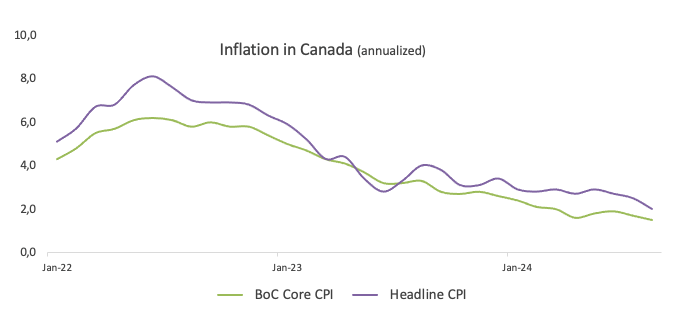
What is the Consumer Price Index (CPI)?
The Consumer Price Index measures the average change over time in the prices of a basket of consumer goods and services. It is a key indicator of inflation, helping policymakers and consumers understand the purchasing power of the Canadian dollar.
Key drivers of the increase:
The 2.0% increase in the CPI was driven by several factors:
Energy Prices: The rebound in energy prices, including gasoline and electricity, significantly contributed to the increase. Rising fuel costs, after several months of volatility, put upward pressure on overall inflation.
Food Prices: Food costs, especially fresh produce and dairy products, continued to trend upward, reflecting supply chain disruptions and increased input costs for farmers.
Housing Costs: Housing-related expenses, such as mortgage interest and rent, also saw significant growth, in line with ongoing challenges in the housing market.
What can we expect for Canada's inflation rate?
Analysts expect the price pressure in Canada to continue its downward trend, although it may still remain above the Bank of Canada's target. However, ongoing deflationary pressures should lead the Bank of Canada to maintain its easing cycle at its upcoming meeting. It is worth noting that since the start of the easing cycle at the beginning of the year, the central bank has lowered rates by 75 basis points.
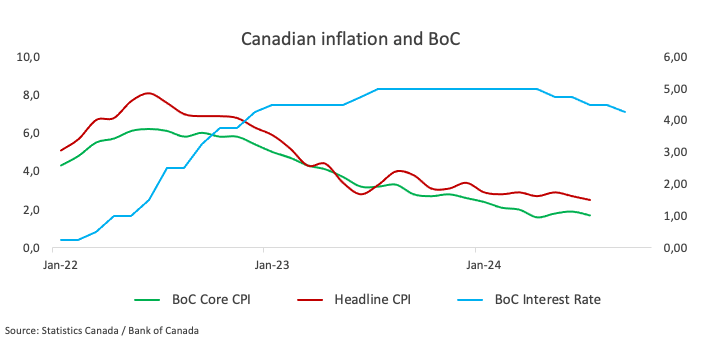
Following the Bank of Canada's rate cut on September 4, Governor Tiff Macklem indicated that the 25 basis point cut was appropriate, though larger cuts might be considered if the economy weakens more than expected.
Regarding inflation, Governor Macklem stated in a speech to the Canada-UK Chamber of Commerce in London on September 10 that global trade disruptions might make it challenging for the central bank to consistently achieve its 2% inflation target. He explained that the Bank of Canada needs to balance the risks of controlling price increases and supporting economic growth.
Macklem pointed out that with the slowdown in globalization, the cost of global goods might not decrease as it did previously, potentially leading to increased upward pressure on inflation. He mentioned that "trade disruptions might also increase the volatility of inflation," indicating the impact of supply shocks on prices. He added that these disruptions could lead to "larger deviations from the 2% target." Therefore, he stated that the Bank of Canada is focusing on risk management to balance inflation and economic growth and is investing in better understanding global supply chains.
Analysts from TD Securities noted that "base effects will lead to a sharp slowdown in overall CPI (by 0.4 percentage points), while core metrics will further improve as softer energy prices and seasonal headwinds keep prices flat month-over-month."
Impact of the Bank of Canada:
The Bank of Canada closely monitors inflation data to determine the direction of its monetary policy. With inflation hovering around the 2.0% target, the central bank may not feel immediate pressure to adjust interest rates. However, a sustained trend in inflation could prompt future rate hikes to control price growth.
Economic Outlook:
The rise in CPI aligns with global inflation trends, with many economies dealing with post-pandemic supply chain issues and volatile energy prices. Although the 2.0% increase is modest compared to global peers, it underscores the importance of closely monitoring inflationary pressures.
As the Canadian economy navigates these challenges, the Bank of Canada may carefully weigh inflation data in the future to decide its next steps in monetary policy, balancing the goals of supporting economic growth and maintaining inflation stability.
This moderate rise in inflation suggests that consumers should prepare for potential price increases in key areas, with energy, food, and housing likely to continue driving cost increases.