• Home
  • Categories
  • News
  • Community
EN
EN
Home
CategoriesNewsGlossaryCommunityAbout Us
Contact Us
Social Media
Region
🌏International
Region
🌏International

Copyright © 2023-2026 Traderknows Ltd. All rights reserved.

Contact
Home
/
News
/
The Trump-Powell conflict intensifies, adjusting market expectations for an interest rate cut.

The Trump-Powell conflict intensifies, adjusting market expectations for an interest rate cut.

TraderKnowsTraderKnows
2025-05-09
Summary:The disagreement between Trump and Powell over monetary policy intensifies, while the US-UK trade agreement shifts market expectations for rate cuts, with the economic and political game continuing to escalate.

2025.5.9   Trump

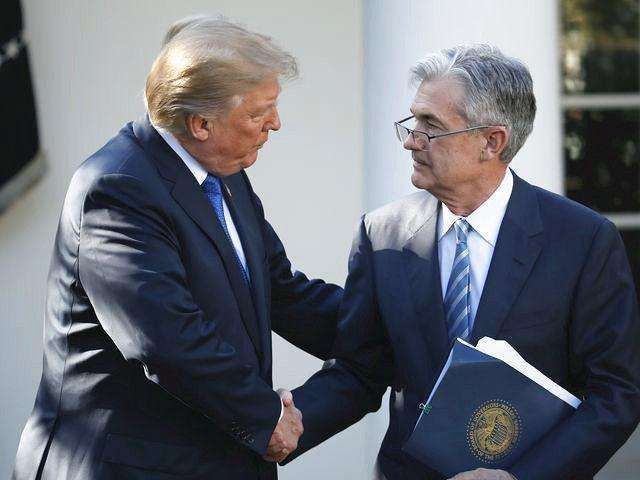
On May 8 local time, Trump once again lashed out at Federal Reserve Chairman Powell on his Truth Social platform, calling him a "fool" and a "total loser," accusing Powell of refusing to cut interest rates to boost the U.S. economic recovery. This public accusation has escalated into a rare direct confrontation in American financial history between a president and the central bank governor. Trump unapologetically stated, "Cutting interest rates would boost the economy like jet fuel, but Powell just won't do it." He also pointed to personal grievances between the two, bluntly stating, "Powell does not like me."

The core of this conflict lies in their fundamental disagreement on monetary policy. The Federal Reserve decided this week to keep the benchmark interest rate unchanged at the 4.25%-4.50% range, marking the seventh time since December last year. Powell emphasized at a press conference that although the new tariff policy of the Trump administration may drive up inflation and unemployment rates, current economic data does not show clear signals. Therefore, the Federal Reserve needs more time to observe the economic trend. Powell's cautious approach stands in sharp contrast to Trump's radical call for immediate rate cuts.

Trump retorted on social media, "Oil and energy prices are falling sharply, almost all costs are declining, and there is almost no inflation..." He further challenged the Federal Reserve's data-driven decision-making approach and insisted that the current economic situation does not require further rate hikes. It is noteworthy that Trump appointed Powell as the Federal Reserve chairman in 2018, and Powell was reappointed for a four-year term by Biden in 2022.

Amid this escalating monetary policy battle, Trump announced a "breakthrough trade agreement" with UK Prime Minister Starmer, which quickly caused market fluctuations. Traders swiftly adjusted their expectations, lowering the probability of a rate cut in July from 68% to 52%, and the expectation for the total rate cuts this year was reduced from more than three to around two. JP Morgan analysts noted that this agreement reduced economic uncertainty, thereby reducing the need for an emergency rate cut by the Federal Reserve.

This conflict is not Trump's first challenge to the Federal Reserve's independence. As early as 2018, he publicly criticized his appointee Powell over rate hikes. However, this confrontation is more intense, even in the last month, when Trump hinted at replacing Powell, causing a double whammy in the stock and bond markets and severely undermining investor confidence. Powell exhibited professional restraint typical of a central bank governor at a Wednesday press conference, refusing to directly respond to Trump's criticism, only stating, "I plan to complete my term." This statement conveyed Powell’s clear rejection of political interference in monetary policy, and he also remarked, "It's always been the opposite," suggesting communication issues between the Federal Reserve and the White House.

The fundamental reason for this conflict is not only the differences in monetary policy but also closely linked to Trump's new tariff policy. The tariff policy enforced by Trump could further drive up prices, while the Federal Reserve remains steadfast in fighting inflation. This contradiction not only influences the direction of monetary policy but also complicates the coordination of economic policy. The chief U.S. economist at Oxford Economics noted, "We are witnessing a rare policy triangle game—a trade policy that creates inflationary pressure, a president demanding rate cuts in response, and the Federal Reserve attempting to maintain policy coherence. This contradiction may persist until after the election."


Business Cooperation Skype ENG

Business Cooperation Telegram Eng

Risk Warning and Disclaimer

The market carries risks, and investment should be cautious. This article does not constitute personal investment advice and has not taken into account individual users' specific investment goals, financial situations, or needs. Users should consider whether any opinions, viewpoints, or conclusions in this article are suitable for their particular circumstances. Investing based on this is at one's own responsibility.

The End
Previous
Next
Comments
0/1000
TraderKnows
Written byTraderKnows
Created date:2025-05-09 05:21
Last Updated:2025-05-09 05:38
Independent Analysis: Manually researched and fact-checked by the TraderKnows Compliance Team, based on public regulatory records.
Wiki
Interest rate cut

A rate cut refers to the central bank adjusting the interest rate level so that it is lower than before, as a form of monetary policy. It is a means by which the central bank affects the supply and demand relationship in the money market, money creation, and the level of interest rates by changing the level of interest rates. Rate cuts are usually used to counter inflation, stimulate economic growth, or alleviate economic downturn pressures.

Organization

Active

TraderKnowsTraderKnows
Recent Post

Trump Invokes Defense Production Act with 850 Million USD for Coal Power to Meet AI Demand

06-05

NY Fed Index Shows High Supply Chain Pressures as Geopolitical Conflicts Raise Global Inflation Con…

06-05

Japan's Real Wages Rise for Fourth Consecutive Month, Fueling June BOJ Rate Hike Bets

06-05

China Flexible Employment Exceeds 300 Million as Blue-Collar Wage Growth Outpaces White-Collar for…

06-05

South Korean Stocks Post Steepest Weekly Drop Since March as Tech Valuations Reset

06-05

China Commercial Paper Rates Drop in Early June Amid Rising Bank Demand

06-05

UK House Prices Unexpectedly Fall in May as Geopolitical Tensions Push Up Borrowing Costs

06-05

Massive Intervention Fails to Save Yen as Short Positions Surge Near Historic Lows

06-05

AI Momentum Pauses as Broadcom Outlook Misses High Expectations; Markets Await Payrolls

06-05

SpaceX Launches 75B USD IPO Roadshow as Access Blocked in Mainland China and Hong Kong

06-05

Global Gold ETFs See $2 Billion Outflows in May as Capital Pivots to Tech Assets

06-05

Nikkei Drops Over 1% on Tech Sector Pullback While Real Wage Growth Provides Support

06-05

South Korea Lifts Mandatory Reporting for Crypto Transfers Over 10M Won

06-05

Amundi Says Asian AI Stocks Supported by Fundamentals as Fed Path Poses Key Risk

06-05

Taiwan Stocks Close 1.33% Lower on Broadcom Drop But Hold Key Technical Support

06-05

Risk Warning

TraderKnows is a financial media platform, with information displayed coming from public networks or uploaded by users. TraderKnows does not endorse any trading platform or variety. We bear no responsibility for any trading disputes or losses arising from the use of this information. Please be aware that displayed information may be delayed, and users should independently verify it to ensure its accuracy.