• Home
  • Categories
  • News
  • Community
EN
EN
Home
CategoriesNewsGlossaryCommunityAbout Us
Contact Us
Social Media
Region
🌏International
Region
🌏International

Copyright © 2023-2026 Traderknows Ltd. All rights reserved.

Contact
Home
/
News
/
The U.S. stock market suffered a sharp decline, with the Nasdaq entering a bear market.

The U.S. stock market suffered a sharp decline, with the Nasdaq entering a bear market.

TraderKnowsTraderKnows
2025-04-07
Summary:The comprehensive imposition of tariffs by the United States has caused severe turbulence in the global market, with the three major stock indices declining for two consecutive days, marking the largest drop since the pandemic began.

2025.4.7 Stock

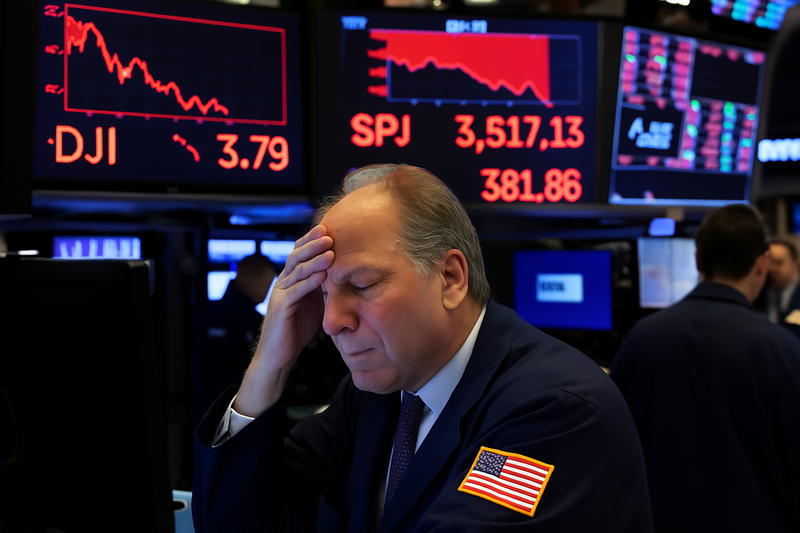
Last Friday, U.S. stocks plummeted for the second consecutive day, with the Nasdaq officially entering a bear market and the Dow Jones Industrial Average confirmed to be in a correction phase. As U.S. President Trump announced a comprehensive increase in tariffs, global trade tensions escalated sharply, triggering the largest sell-off since the outbreak of the COVID-19 pandemic, and investor panic surged.

The three major indices experienced the worst two-day performance outside of the early COVID period during Trump's administration. From Thursday to Friday last week, the Dow Jones dropped 9.3%, the S&P 500 fell 10.5%, and the Nasdaq plunged 11.4%.

The Trump administration's move to raise tariffs to their highest level in over a century has not only raised deep concerns about the U.S. economic outlook but also heightened expectations of potential retaliation from major global trade partners. Under this dual pressure, market confidence took a significant hit, with the CBOE Volatility Index closing at its highest point since April 2020.

As of last Friday's close, the Nasdaq plummeted 5.82% to 15,587.79 points, significantly dropping from the all-time high of 20,173.89 points set on December 16 last year, technically entering a bear market. The Dow Jones fell 5.50% to 38,314.86 points, more than 15% below its peak from last December, marking an entry into the correction territory. The S&P 500 also plunged 5.97% to close at 5,074.08 points, the lowest closing level in nearly 11 months.

Market analysts generally believe this crash is not just a short-term technical adjustment but a focused release of deep-seated policy direction concerns. Steve Sosnick, chief strategist at Interactive Brokers, noted: "Currently, the market's behavior clearly indicates a lack of buy-in to the new tariff policy, and the question is whether the government will truly stick to this path."

Governments around the world swiftly responded to U.S. tariff policies, intensifying fears of a comprehensive economic slowdown. In its latest report, JPMorgan Chase noted that the probability of a global recession before year-end has risen to 60%, significantly up from the previous estimate of 40%.

Meanwhile, Federal Reserve Chairman Powell also commented on the situation for the first time. He warned that the scale of this tariff increase "far exceeds expectations," with inflationary pressures and risks of an economic slowdown not to be underestimated, but the Fed is currently uncertain about the measures to take in response.

U.S. Treasury yields fell, further impacting the financial sector, particularly bank stocks, which were severely dragged down. The S&P banking sector fell by 7.3%, and the increased market expectation of global central banks lowering interest rates also weakened the profitability outlook for financial institutions.

All 11 sector indexes of the S&P 500 fell that day, with declines exceeding 4.5%. The energy sector led the decline for the second consecutive day, dropping 8.7%. U.S. crude oil prices also fell sharply by 7.3%, reflecting the market's extremely pessimistic outlook for future demand.

Currently, market participants are closely watching the upcoming policy moves from the government and whether the Federal Reserve will intervene, making the coming weeks a critical period for determining the direction of U.S. stocks.


Business Cooperation Skype ENG

Business Cooperation Telegram Eng

Risk Warning and Disclaimer

The market carries risks, and investment should be cautious. This article does not constitute personal investment advice and has not taken into account individual users' specific investment goals, financial situations, or needs. Users should consider whether any opinions, viewpoints, or conclusions in this article are suitable for their particular circumstances. Investing based on this is at one's own responsibility.

The End
Previous
Next
Comments
0/1000
TraderKnows
Written byTraderKnows
Created date:2025-04-07 01:56
Last Updated:2025-04-07 02:38
Independent Analysis: Manually researched and fact-checked by the TraderKnows Compliance Team, based on public regulatory records.
Wiki
Stock Market Volatility

Stock market volatility is an indicator measuring the fluctuation of stock prices, and it holds significant value for investors and traders in devising risk management strategies and predicting market trends.

Organization

Active

TraderKnowsTraderKnows
Recent Post

Gold Prices Hit 11-Week Low as US-Iran Tensions Fuel Oil Rally

15 hours ago

US Air Strikes on Iran Spark Hormuz Crisis; Spot Gold Drops Below 200-Day MA

15 hours ago

Why Didn't Oil Prices Hit $200 Despite 100-Day Hormuz Crisis? Global Buffers Revealed

15 hours ago

Price Volatility and Geopolitical Conflict Reshape China May Commodity Imports

15 hours ago

Reliance Partners with Meta for AI Data Center Boosting Indian Shares

15 hours ago

Asian Stocks Drop and Oil Rises as US-Iran Clashes Escalate Ahead of US CPI

15 hours ago

South Korea Clears $1.5 Billion SpaceX IPO-Related FX Demand as Regulators Step In

15 hours ago

Goldman Sachs Warns of AI Capex Shifting to Monetization, $100B Leverage Poses Market Risk

15 hours ago

Trump Warns Strait of Hormuz Could Be Blocked For Months If US-Iran Talks Fail

15 hours ago

Japan Bond Yields Rise as Hot Inflation Data Shadows Long-Term Debt Auction

15 hours ago

China Surpasses Japan as Saudi Arabia's Largest Auto Import Source

15 hours ago

China Bond Yields Reverse Early Decline as Fund Redemptions and Auction Cultivate Caution

15 hours ago

US May CPI Expected to Rise to 4.2% as Gasoline Prices Fuel Inflation Concerns

15 hours ago

US Expands DOD Chinese Military Companies List to Include Alibaba and BYD Market Reacts Mutedly

15 hours ago

Japan Bond Yields Rise as Inflation Shocks and 30-Year Auction Demand Hits One-Year Low

15 hours ago

Risk Warning

TraderKnows is a financial media platform, with information displayed coming from public networks or uploaded by users. TraderKnows does not endorse any trading platform or variety. We bear no responsibility for any trading disputes or losses arising from the use of this information. Please be aware that displayed information may be delayed, and users should independently verify it to ensure its accuracy.